-
 Paolo P.
 - 12 feb, 2026
Dubbing for Fitness Creators: How to Expand into Global Markets
Fitness is one of the few truly universal industries. A squat is a squat in Italy as in Japan, a stretching routine works the same way in São Paulo as in Berlin. Yet, 90% of fitness creators limit their audience to those who speak their language. I started working with fitness creators a year ago, and the results surprised me. An Italian trainer with 50,000 subscribers reached 180,000 total subscribers in 8 months, simply by dubbing his videos into English and Spanish. He didn't have to create new content - he just made what he already had accessible. 🚀 Why Fitness is Perfect for Dubbing Fitness content has unique characteristics that make it ideal for multilingual expansion: Dominant visual content: 70-80% of the value is in the exercise demonstration. The voice guides, but it's not the central element like in a podcast or video-essay. Universal instructions: "10 reps", "keep your back straight", "breathe" - fitness language is relatively standardized and simple to translate. Routine-based engagement: Those who find a trainer they like tend to follow entire playlists. One user won = dozens of views. Underserved markets: While English YouTube is saturated with fitness content, markets like Portugal, Italy, Brazil have much less quality content.Important: The global fitness market is worth $96 billion (2024). Fitness content on YouTube has seen 40% year-over-year growth. You're leaving money on the table if you're not multilingual.💡 How Dubbing Works for Workout Videos The process is simpler than you think, but requires attention to some fitness-specific details: The Typical Structure of a Workout VideoIntro (30 seconds - 2 minutes): Who you are, what we'll do today Warmup (3-5 minutes): Important verbal instructions Main workout (15-40 minutes): Mix of counting, instructions, motivation Cool down (3-5 minutes): Stretching with voice guidance Outro (30 seconds - 1 minute): CTA, next videoAI dubbing handles all these sections well, but with some considerations: Counting and Numbers "5, 4, 3, 2, 1" works in all languages, but some trainers prefer to count in the target language. AI handles both options, but you need to decide which you prefer. Motivational Phrases "You got this!" doesn't translate literally effectively. Modern AI is smart enough to adapt these expressions, but always verify motivational phrases in the dubbed video. Background Music Most workout videos have music. AI separates voice and music, dubs the voice, and puts them back together. If the music is too loud in the original, there might be some artifacts - but in most cases it works well.Pro Tip: If you're recording new content, keep music at -10dB relative to voice. This will give significantly better dubbing results.📊 Case Study: From 50K to 180K in 8 Months Luca, an Italian personal trainer, had a channel with excellent content but stuck at 50,000 subscribers for two years. Here's what he did: The Strategy Month 1-2: He dubbed his 20 best-performing videos into English and Spanish using NovaDub. Month 3-4: He created two satellite channels (one for English content, one for Spanish) and optimized titles and descriptions for each market. Month 5-6: He started publishing new videos simultaneously in 3 languages. Month 7-8: He consolidated and optimized based on data. The ResultsMetric Before After 8 MonthsTotal subscribers 50,000 180,000Monthly views 200,000 950,000AdSense revenue €400/month €2,100/monthProgram sales €800/month €3,500/monthThe key point: He didn't create new content. He simply made existing content accessible to more people. 🎯 Which Videos to Dub First Not all videos are equal. Here's how to prioritize: High Priority (Dub Now)Evergreen videos: Basic routines that always work Best performers: Videos with most views and best retention Gateway videos: Those that convert visitors into subscribers Complete series: Full body workouts, 30-day challengesMedium PrioritySeasonal videos (bikini body, New Year fitness) Specific content (exercises for back pain, office routines) Q&A and informational videosLow Priority (Wait)Personal vlogs with little educational content Very dated videos with obsolete information Ultra-specific content for the local marketWarning: Avoid dubbing videos where you mention products, brands, or services only available in your country. These references confuse international audiences.📺 Managing Multiple Channels vs. Multi-Audio You have two options for your multilingual strategy: Option 1: Separate Channels Pros:SEO optimized for each market Clean analytics per language Separate communitiesCons:More complex management Fragmented audience More publishing workOption 2: Multi-Audio on Single Channel Pros:One channel to manage Unified audience Easier to maintainCons:Less optimized SEO Aggregated analytics Some platforms don't support multi-audioMy recommendation: For serious fitness creators, separate channels perform better in the long term. Multi-audio is a good compromise to start or for those with limited resources. 💰 Monetization for Multilingual Fitness Creators Dubbing doesn't just multiply views - it multiplies monetization opportunities: Amplified Revenue StreamsAdSenseCPM varies enormously by country (USA $4-8, Brazil $0.50-1, India $0.30-0.60) Even with lower CPMs, volume largely compensatesPrograms and CoursesA €49 training program can be sold globally Some markets (USA, UK, Australia) pay premiumAffiliationsGlobal fitness brands (Nike, Adidas, MyProtein) have international affiliate programs Amazon Associates works in many countriesOnline CoachingEnglish coaching allows working with high-ticket clients worldwide One hour of coaching at $100 vs €30 changes the business modelInternational Brand DealsGlobal brands look for creators with multilingual audiences The value of a sponsor deal increases with geographic reachNote: A fitness creator with 100K multilingual subscribers has more commercial value than one with 200K mono-language subscribers, because they can offer access to diversified markets.✅ Checklist for Fitness Creators Before starting your multilingual expansion: Preparation: Identify your 20 best videos by views and retention Verify they don't contain ultra-local references Prepare optimized titles and descriptions for each marketDubbing: Test first with 3-5 videos to verify quality Check synchronization with movements Verify translated motivational phrasesDistribution: Decide: separate channels or multi-audio? Prepare localized thumbnails (if they contain text) Plan a sustainable publishing calendarOptimization: Monitor performance by market Collect feedback from new community Iterate based on data🎯 Conclusion Fitness content is perfect for global expansion via dubbing. The content is visual, instructions are universal, and millions of people are searching for quality workouts in their language. Fitness creators adopting multilingual strategies are seeing 3-5x growth compared to those staying mono-language. Not because they create more content, but because they make what they already have accessible. If you have a library of workout videos, you're sitting on an asset that could be worth 3-5x what it's worth today. AI dubbing has made this transformation accessible to everyone. Start dubbing your workouts with NovaDub - 5 free minutes to test the quality.Are you a fitness creator who expanded globally? Share your experience at [email protected]!
10 Fatal AI Dubbing Mistakes (and How to Avoid Them)
Over the past two years, I've dubbed hundreds of videos with AI and made practically every mistake possible. Some cost me hours of extra work, others compromised the quality of important projects. The good news? Now I know exactly what NOT to do. This guide collects the 10 most common mistakes I see repeated constantly - both in my early projects and in those of other creators who ask for my help. If you're starting with AI dubbing, this article will save you time, money, and frustration. ❌ Mistake 1: Poor Original Audio Quality The problem: AI can't work miracles. If your original audio has background noise, echo, or inconsistent volume, the dubbed result will amplify these defects. Why it happens: Many think AI "cleans up" audio automatically. In reality, AI analyzes and replicates what it finds - defects included. The solution:Always record in a quiet environment Use a decent microphone (even a €50 USB one makes a difference) Apply noise reduction BEFORE uploading the video Verify that volume is consistentPro Tip: Audacity is free and has an excellent noise reduction filter. 5 minutes of audio post-production before dubbing can transform the final result.❌ Mistake 2: Translating Titles with Google Translate The problem: You dubbed a video perfectly, but the literally translated title doesn't work in the target market. Nobody finds the video, nobody clicks. Why it happens: It seems logical to translate the title along with the content. But the keywords that work in English aren't necessarily what people search for in Spanish or Portuguese. The solution:Do keyword research in the target language (see our SEO article) Don't translate - recreate the title optimized for that market Use native expressions, not literal translationsPractical example:❌ "How to make authentic carbonara pasta" → "Cómo hacer pasta carbonara auténtica" (literal translation) ✅ "How to make authentic carbonara pasta" → "Receta Carbonara Original - El Secreto del Chef Italiano" (optimized for Spanish keywords)❌ Mistake 3: Ignoring Cultural Differences The problem: The content works great in your market but falls flat in others. References, humor, examples don't translate. Why it happens: We focus on linguistic translation forgetting that culture matters as much as language. The solution:Identify culture-specific references before dubbing Consider whether to replace them with local equivalents For very culturally-specific content, consider different versions instead of translationsCommon problem examples:References to local TV shows Jokes based on wordplay Idiomatic expressions without equivalents References to national events or personalitiesWarning: Some content simply doesn't translate. A video entirely based on an American meme might not make sense to a Brazilian audience. Better to recognize this and not dub it.❌ Mistake 4: Not Verifying Results The problem: You upload, dub, publish without ever watching the result. Then you discover that the AI mistranslated a key term or there's a sync problem. Why it happens: Excessive trust in AI or rush to publish. The solution:ALWAYS watch at least the first 2-3 minutes of the dubbed video Check passages with numbers, proper names, or technical terms Have a native speaker verify if possible For critical content (courses, corporate videos), complete review is mandatoryQuick verification checklist: Audio synced with lips? Numbers pronounced correctly? Proper names handled well? Technical terms translated correctly? Volume consistent?❌ Mistake 5: Forgetting Subtitles The problem: You dubbed the video but didn't add subtitles in the new language. You lose SEO, accessibility, and those who prefer watching on mute. Why it happens: Dubbing seems sufficient. Subtitles seem redundant. The solution:Always add CC (closed captions) in the dubbing language YouTube uses subtitles for SEO - they're essential NovaDub automatically generates subtitles along with dubbingImportant: According to YouTube, videos with subtitles have on average 15% more watch time. Many people watch on mute or in noisy environments.❌ Mistake 6: Dubbing Videos with Too Many Speakers The problem: Your video has 5 people talking, often simultaneously. The AI produces a confused and unnatural result. Why it happens: AI works best with single speakers or well-defined turn-taking. More people = more difficulty. The solution:Ideally, dub videos with 1-2 speakers If there are more people, ensure they never speak simultaneously For interviews/podcasts with many guests, evaluate if dubbing is the right choiceWhen NOT to use AI dubbing:Chaotic group discussions Videos with lots of overlapping speech Content where each speaker's vocal identity is crucial❌ Mistake 7: Expecting Miracles with Music Videos The problem: You upload a video with loud music and quiet voice hoping the AI will magically separate everything. Why it happens: AI can separate voice and music, but it's not infallible. If the original mix is unbalanced, the result will be compromised. The solution:During production, keep voice at least 6-10 dB above music If possible, export a version with lower music for dubbing For actual music videos (sung), AI dubbing isn't the right tool❌ Mistake 8: Publishing Everything Simultaneously The problem: You dub 20 videos and publish them all on the same day. YouTube doesn't know which to prioritize, the audience is overwhelmed. Why it happens: The excitement of finally having content in multiple languages. The solution:Distribute content over time For new channels in new languages, 1-2 videos per day maximum Let each video have time to perform before publishing the next Plan a sustainable content strategyPro Tip: Start with your 5-10 best videos. See how they perform, collect feedback, optimize the process. Then scale.❌ Mistake 9: Using the Same Thumbnail for All Markets The problem: Your thumbnail with Italian text is used for the Spanish version too. Or worse, the thumbnail shows something that doesn't work in that market. Why it happens: It seems like a minor detail compared to the dubbing itself. The solution:If the thumbnail contains text, translate it Verify that visual elements work in the target market Consider A/B testing different thumbnails per market Keep branding consistent but adapt the details❌ Mistake 10: Not Measuring Results The problem: You dub videos without ever analyzing which work and which don't. You keep making the same mistakes. Why it happens: Lack of time, lack of system, or simply not knowing what to look at. The solution:Set up tracking for each language/market separately Monitor CTR, retention, and conversions by market Identify patterns: which content works where? Iterate based on data, not assumptionsMetrics to compare between markets:CTR (if it varies a lot, title/thumbnail problem) Average retention (if it drops vs. original, dubbing quality problem) Engagement rate (if low, cultural resonance problem)Note: Create a simple spreadsheet to track each video's performance in each language. After a few months, you'll have valuable data to optimize your strategy.✅ The Anti-Mistake Checklist Before publishing each dubbed video, verify: Pre-Dubbing: Original audio clean and clear Single speaker or defined turns Culturally adaptable contentPost-Dubbing: Audio quality verified Sync checked Technical terms correct Subtitles generatedPre-Publishing: Title optimized (not just translated) Description localized Appropriate tags Thumbnail adapted Strategic scheduling🎯 Conclusion Most AI dubbing mistakes aren't technical AI errors, but human errors in the process. The AI does its job - it's us who must prepare the material correctly, verify results, and optimize for each market. By avoiding these 10 mistakes, you'll save hours of work, avoid frustrations, and get significantly better results from your dubbed videos. AI dubbing is a powerful tool - but like any tool, it requires being used correctly to deliver maximum results. Start dubbing with NovaDub - 5 free minutes to test the quality with no commitment.Have you made other mistakes you'd like to share? Write to us at [email protected] - we'll update the guide!
YouTube SEO for Dubbed Videos: Optimizing Titles, Tags, and Descriptions
Dubbing your videos is only half the work. I've seen too many creators invest time and money to create multi-language versions of their content, only to publish them with literally translated titles and descriptions copied from the original. The result? Videos that nobody finds. One of my Spanish dubbed videos was languishing at 2,000 views while the original had 50,000. Same content, same quality. The difference? The original was optimized for Italian keywords, the Spanish one simply had the title translated with Google Translate. After fixing the SEO, title, and description with appropriate Spanish keywords, that video reached 45,000 views in three months. In this guide, I'll show you exactly how to do this for every market. 🚀 Why SEO Changes for Each Language The most common mistake is thinking that translation is enough. But YouTube SEO doesn't work that way. Each market has: Different search volumes: "How to edit videos" has millions of monthly searches. The same query in other languages has a fraction. But proportionally, the smaller market keyword might be less competitive. Different search intents: German users search differently than Americans. More specific, more technical. Keywords reflect this difference. Different competitors: In English you compete with thousands of creators. In Brazilian Portuguese, you might be among the top 10 for keywords that would be impossible in English. Different trends: What's trending in one country might not be in another. Seasonal keywords vary.Important: YouTube is the second largest search engine in the world. Treating dubbed video SEO as a secondary activity means giving up most of the potential traffic.💡 The Optimization Framework Here's the process I use to optimize every dubbed video: Step 1: Keyword Research in the Target Language Don't translate keywords - research them from scratch. Here are the tools I use: YouTube Search Suggest: Start typing your topic in the YouTube search bar (with VPN set to the target country or in private mode). Suggestions show what users actually search for. Google Trends: Compare search volumes between countries and see seasonal trends. Use the "YouTube Search" filter. VidIQ/TubeBuddy: Both offer data on volumes and competition for YouTube keywords in different languages. Keyword Tool: The YouTube version shows long-tail keywords in any language. Step 2: Local Competitor Analysis Before optimizing, look at what successful creators do in that market:Search your main keyword on YouTube with target country VPN Analyze the top 10 results: How do they structure titles? How long are descriptions? What tags do they use? (VidIQ shows them) What do thumbnails look like?Identify common patterns and differentiation opportunitiesPro Tip: Create a document with best practices for each market. After a few analyses, you'll notice recurring patterns that will speed up future optimizations.📝 Title Optimization The title is the most important SEO element. Here's how to optimize it for each language. Effective Structure A good YouTube title follows this formula: [Main Keyword] + [Benefit/Curiosity] + [Specifier] Example: "How to Edit Videos in Premiere Pro - Complete Beginner Tutorial 2026" DON'T translate literally. Adapt to the market culture:Language Title Style ExampleEnglish (US) Direct, numbers, benefit "Video Editing in Premiere Pro: Complete Beginner Guide (2026)"Spanish More descriptive "Aprende a Editar Videos en Premiere Pro desde Cero - Curso Completo"Portuguese (BR) Colloquial, emoji ok "Como Editar Vídeos no Premiere Pro 🎬 Tutorial COMPLETO"German Precise, technical "Premiere Pro Tutorial: Videobearbeitung für Anfänger [2026]"Optimal LengthDesktop: Titles truncate after ~60-70 characters Mobile: ~50 visible characters Rule: Main keyword in the first 50 charactersMistakes to Avoid ❌ Literal translation with Google Translate ❌ Keyword stuffing (too many keywords) ❌ Clickbait that doesn't reflect content ❌ Generic titles without specific keywords ❌ ALL CAPS (except single words for emphasis) 📊 Description Optimization The description is where you can really differentiate SEO by market. Recommended Structure First 2-3 lines (visible without clicking "show more"):Main keyword Brief hook that encourages watching Call to action if relevantDescription body:Content summary (150-200 words) Secondary keywords integrated naturally Timestamps/chapters Links to mentioned resourcesFooter:Social links Relevant hashtags (3-5) Channel informationTemplate for Each Language English: Learn [MAIN KEYWORD] step by step in this complete tutorial.[2-3 sentences expanding content with secondary keywords]📌 TIMESTAMPS: 00:00 Introduction [timestamps]🔗 RESOURCES: [links]👉 SUBSCRIBE for more tutorials: [link]#keyword1 #keyword2 #keyword3Warning: Don't use the same translated descriptions for all videos. YouTube might penalize duplicate content. Customize at least the first 150 words for each video.🏷️ Tag Optimization Tags have lost importance over the years, but remain useful for:Helping YouTube understand context Appearing in "related videos" Handling common spelling errorsTag Strategy for Dubbed Videos Primary tags (3-5): Exact keywords you want to rank for Secondary tags (5-10): Variations and long-tail Brand tags (2-3): Channel name, series Common error tags (2-3): Alternative spellings of the keyword 🎨 Localized Thumbnails Thumbnails aren't technically SEO, but they impact CTR which influences ranking. When to Localize Thumbnails Always localize if:They contain text They show culturally specific examples The creator's face/expression might not work in that marketKeep the same if:They're purely visual without text The brand is recognizable and works globallyBest Practices by MarketMarket Thumbnail PreferencesUSA Expressive faces, large text, vivid colorsGermany More sober, focus on content, less clickbaitBrazil Vivid colors, emoji, exaggerated expressions OKSpain Similar to USA but slightly less "hype" tone📈 Monitoring and Iteration Optimization doesn't end at publishing. Metrics to Monitor For each dubbed video, track:Impressions (how many times thumbnail appears) CTR (click-through rate) Average retention Traffic sources (search vs. suggested vs. external)How to Interpret Data Low CTR (<4%) + High Impressions = Title/thumbnail not convincing High CTR (>8%) + Low Impressions = Keyword/SEO problem Low Retention (<30%) = Content doesn't match expectations created by title When to Optimize Again After 2-4 weeks from publishing:Analyze performance If CTR is low, test new title/thumbnail If impressions are low, review keywords and description YouTube allows changes - use them!Note: YouTube takes 2-4 weeks to "understand" a video. Don't make drastic changes in the first 7 days, let the algorithm do its initial work.✅ SEO Checklist for Dubbed Videos Before Publishing: Keyword research in target language completed Title optimized with keyword in first 50 characters Unique description (not translated) with natural keywords Appropriate tags for the market Thumbnail localized if it contains text Subtitles/CC in the correct languageAfter Publishing: Verify metadata is correct Add to appropriate playlists Share on target market social media Monitor performance after 2 weeks Optimize if necessary🎯 Conclusion Dubbing a video is just the first step. Without optimized SEO for each market, you're leaving most of the potential traffic on the table. The good news? Once you have a system, optimization becomes fast. Create templates for each language, maintain a keyword database, and the process will become a natural part of your workflow. Creators who take multilingual SEO seriously see 3-5x better results than those who just translate. The time invested in optimization pays off enormously. Start dubbing your videos with NovaDub and then apply these SEO strategies to maximize visibility in every market.Have questions about SEO for dubbed videos? Write to us at [email protected] or leave a comment!
Multilingual Corporate Videos: Training, Onboarding, and Product Demos
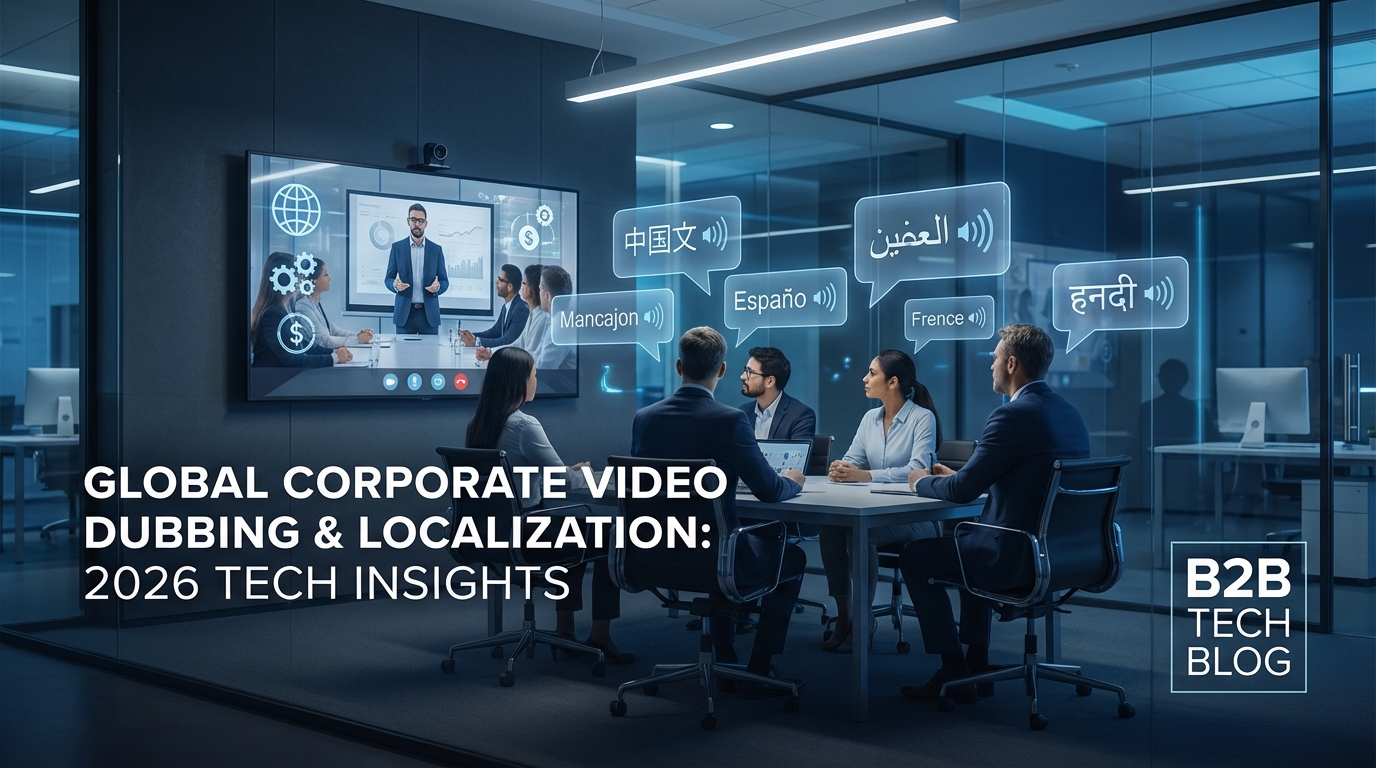
Last year I worked with an Italian manufacturing company that had a problem common to many expanding SMEs: they had opened offices in Germany, Spain, and Brazil, but all their training materials were in Italian. New foreign employees received hastily translated manuals, videos with rough subtitles, and spent their first weeks more confused than trained. After dubbing their entire training library into German, Spanish, and Portuguese, onboarding time decreased by 40% and operational errors from new hires dropped dramatically. It's not magic - it's effective communication. If your company operates internationally, this guide will show you how corporate video dubbing can transform your internal communication. 🚀 The Problem of Multilingual Corporate Communication Global companies face a constant challenge: how to ensure all employees, regardless of language, receive the same quality of training and information? Traditional solutions all have limitations: Written translation: Effective for documents, but training videos with only translated text lose the visual-narrative impact that makes them effective. Subtitles: Better than nothing, but retention drops by 40%. Also, many training videos are watched while doing other activities - impossible with subtitles. Complete remake: The ideal solution but prohibitive. Remaking a professional training video costs €5,000-15,000 per language. Traditional dubbing: High quality but high costs (€150-300/hour) and long timelines (weeks for an average project).Important: According to a Deloitte 2025 study, companies with localized training programs have 34% less turnover in the first 6 months. Training language directly impacts employee retention.💡 Types of Corporate Videos to Dub Not all corporate videos have the same priority for dubbing. Here's a classification by impact: High Priority Onboarding Videos: A new employee's first days determine their long-term success. Welcome videos, company presentations, and basic procedures must absolutely be in the employee's language. Safety Training: It's not just about effectiveness - it's a legal requirement in many countries. An employee who doesn't fully understand safety procedures is a risk. Standard Operating Procedures: Videos showing how to perform specific tasks. A comprehension error can be costly in terms of quality, time, or safety. Medium Priority Product Demos for Sales Teams: If your sales team operates in multiple countries, having demos in the local language significantly increases close rates. Software/Tools Training: Tutorials on CRM, ERP, or other business tools. Essential for daily productivity. Management Communications: Town halls, quarterly updates, CEO messages. Important for company culture. Variable Priority Marketing/Brand Videos: Depends on strategy. For some markets it may make sense, for others less. Employer Branding Content: Videos for recruiting in specific markets.Pro Tip: Start with onboarding and safety videos. They have the greatest immediate impact and the most easily measurable ROI.📊 The ROI of Corporate Video Dubbing Let's talk concrete numbers. Here's how to calculate the return on investment for your company. AI Dubbing Costs With NovaDub, costs for a typical corporate library:Content Duration Cost per Language 3 LanguagesOnboarding Kit 2 hours ~€120 ~€360Safety Training 1 hour ~€60 ~€180Operating Procedures (10 videos) 3 hours ~€180 ~€540Product Demo (5 videos) 1.5 hours ~€90 ~€270Total 7.5 hours ~€450 ~€1,350Measurable Benefits Reduced onboarding time:Average onboarding time without localized videos: 3 weeks With localized videos: 2 weeks Savings: 1 week of lost productivity per new hire Value: If you hire 20 people/year abroad with average salary €3,000/month, you save ~€15,000/yearReduced operational errors:Average cost of an operational error: €500-5,000 Error reduction with localized training: 30-50% For a company with 10 errors/month: savings €15,000-30,000/yearReduced turnover in first 6 months:Cost of replacing an employee: 50-200% of annual salary Turnover reduction with effective onboarding: 20-30% For a company with 5% turnover on 100 foreign employees: significant savingsOverall ROI: Investment of ~€1,350 vs. benefits of €30,000-50,000/year = ROI 20-35xNote: These calculations are conservative and don't include intangible benefits like improved company culture, higher engagement, and positive employer brand perception.🛠️ How to Implement Dubbing in Your Company Phase 1: Video Library Audit Before starting, do a complete inventory:List all existing videos with duration and original language Classify by priority using the scheme above Identify obsolete content not worth dubbing Estimate total volume in minutesPhase 2: Language Selection Base the decision on:Where you have employees: Locations with more than 10-15 employees justify localized content Where you're hiring: Expanding markets are priority Legal requirements: Some countries require training in the local languagePhase 3: File Preparation For optimal results:Export in high quality: MP4 with clear audio Remove dated elements: If the video mentions "the new 2022 system," consider an update Prepare glossary: Company-specific technical terms that the AI must translate consistentlyPhase 4: Dubbing Process With NovaDub:Create a business account for centralized management Upload videos in batch for efficiency Select target languages for each video Activate voice cloning if you want to keep the original presenter's voice Download and organize in folders by languagePhase 5: Quality Control Crucial in the corporate environment:Internal review: Have native-speaking employees verify Attention to legal terms: Safety, compliance, HR must be perfect Test with end users: Before full rollout, test with a small groupWarning: For safety and compliance videos, consider an additional professional review. An error in these contexts can have legal consequences.Phase 6: Distribution Options for making videos available:Corporate LMS: Integrate into existing learning management system Intranet: Dedicated section with language filter Dedicated platform: For companies without LMS, platforms like Vimeo Business Mobile access: Ensure videos are viewable on smartphones💼 Specific Use Cases Remote Employee Onboarding With widespread remote work, video onboarding has become essential. A new employee in Brazil must be able to access the same quality content as one in headquarters. Recommended structure for onboarding kit:CEO welcome (5 min) Company history and values (10 min) Organizational structure (10 min) HR benefits and policies (15 min) IT tools and access (20 min) First 30 days: what to expect (10 min)Franchise Training If you manage an international franchise network, training consistency is fundamental. Every franchisee must offer the same customer experience. Essential videos:Service standards Operating procedures Cash and inventory management Complaint handling Hygiene and safety (if food service)Product Demos for International Sales Local sales teams perform better when they have materials in their language. A dubbed product demo allows the salesperson to focus on the relationship instead of simultaneous translation. Crisis Communications In emergency situations, clarity is everything. Having pre-dubbed communication templates allows for rapid response in all markets. ✅ Implementation Checklist Preparation: Complete inventory of existing videos Prioritization by impact Budget approved Responsible team identifiedExecution: NovaDub account configured Videos uploaded and dubbed QA completed for each language Feedback collected from test usersDistribution: Videos organized by language in LMS/intranet Internal communication about new content Training for managers on how to use Feedback system for improvementsMaintenance: Process for video updates Annual budget for new content Designated person for maintenance🎯 Conclusion Corporate video dubbing is no longer a luxury for large multinationals. With AI, even SMEs can offer their international employees quality training content in their language. The benefits are concrete and measurable: faster onboarding, fewer errors, lower turnover, better communication. The cost is a fraction of what it was even two years ago. If your company operates internationally - or is planning to - investing in corporate video dubbing is one of the most impactful decisions you can make for the success of your global operations. Request a NovaDub business demo to see how we can help your company communicate effectively in every language.Have specific questions about your company's needs? Contact us at [email protected] for a personalized consultation.

How to Dub Online Courses for Global Sales: Complete Guide
When I launched my first online course three years ago, I made a mistake that cost me tens of thousands of euros in missed sales: I only published it in Italian. The course did fine, sure - a few hundred sales per year, enough to cover expenses. But I was ignoring 98% of the global market. A year ago I decided to dub it into English, Spanish, and Portuguese. The result? Sales quadrupled. Not because the course had improved, but simply because more people could understand it. If you have an online course and haven't localized it yet, you're literally leaving money on the table. In this guide, I'll show you how to change that. 🚀 The Global E-Learning Market in 2026 First, let's talk numbers. The e-learning market is worth over 400 billion dollars in 2026, with annual growth of 14%. But here's the interesting data: only 25% of this market is in English. The remaining 75% is distributed among Spanish, Portuguese, Chinese, German, French, and other languages.Important: The Spanish-language e-learning market grows 20% annually, Portuguese 25%. These markets are hungry for quality content and competition is much lower than in English.Most trainers instinctively target English when they decide to expand. It's not wrong, but it's not optimal either. The English-speaking market is saturated with content, while markets like Latin America or Brazil are hungry for quality training and have much less competition. 💡 Why Dubbing Beats Subtitles You might think: "Can't I just add subtitles?" Technically yes, but you'd lose most potential sales. Here's why: Content retention: Studies show that students watching videos in their native language have 40% higher retention compared to those reading subtitles. For an online course, this translates to better reviews, fewer refund requests, and more word-of-mouth. Value perception: A professionally dubbed course is perceived as premium. Subtitles, however accurate, communicate "budget adaptation." Accessibility: Many people consume courses while multitasking - while cooking, exercising, or driving. With dubbing, they can listen. With subtitles, they can't. Completion rates: Dubbed courses have 30-50% higher completion rates. Students who complete the course leave positive reviews, buy other courses, and recommend you.📝 How to Prepare Your Course for Dubbing Not all courses lend themselves equally well to dubbing. Here's how to prepare yours for optimal results. Analyze the Content Before starting, audit your course: Universal vs. local content: Identify sections that work universally and those too specific to your country. A digital marketing course is highly universal. A course on Italian taxation is not. Cultural references: Look for examples, metaphors, or references that might not work in other countries. Currency and measurements: If you talk about euros, consider whether it makes sense to convert or maintain. For business courses, it often makes sense to use dollars for the global market.Pro Tip: Create an "international" version of the course by eliminating or replacing overly local references. This version becomes the base for all translations.Prepare Source Files To get the best result from AI dubbing: Separate audio: If possible, export audio tracks separately from background music. Dubbing quality will be superior. Updated script: Make sure you have the updated transcript for each lesson. It will be useful for verifying the translation. Support materials: Slides, PDFs, and workbooks will need to be translated separately. Consider using tools like DeepL for texts. 💰 The Numbers: How Much It Costs and Returns Let's do the concrete math for a typical course. Example: 10-Hour Course Dubbing costs with NovaDub:10 hours = 600 minutes With Business plan (€149/month for 200 minutes): 3 months of plan = €447 per language For 3 languages (EN, ES, PT): ~€1,350 totalTraditional costs (for comparison):Professional voice actor: €150-300/hour 10 hours × €200 × 3 languages = €6,000 Plus script translation, editing, etc. = €8,000-10,000 totalSavings with AI: 85-90% Potential ROI Suppose your course costs €297 and sells 200 copies/year in Italian:Annual revenue: €59,400With three additional languages (assuming lower initial sales):English: 150 copies × €297 = €44,550 Spanish: 100 copies × €297 = €29,700 Portuguese: 80 copies × €297 = €23,760 New total revenue: €157,410 (+165%)Investment of ~€1,350 for a potential increase of ~€98,000 in annual revenue. The ROI is over 70x.Note: These numbers are conservative. Many trainers see even better results, especially in niches with little coverage in target markets.📊 Which Languages to Choose for Your Course The choice of languages depends on your niche. Here's a guide:Niche Priority Languages NotesBusiness/Marketing EN, ES, PT Very active marketsTech/Programming EN, ES, PT, DE Germans pay premiumPersonal growth ES, PT, EN Latam very receptiveFitness/Health EN, ES, PT, DE Mature global marketCreativity/Design EN, ES, FR France strong in designPersonal finance EN, DE, PT Attention to local regulationsThe Special Case of Brazilian Portuguese Brazil deserves special mention. It's the fifth largest e-learning market in the world, but has very few quality contents in Portuguese. Most courses are poorly translated from English or locally produced with low production values. A quality European course dubbed in Brazilian Portuguese can dominate entire niches. I've seen Italian courses become bestsellers on Hotmart (Brazil's main platform) simply because they were better than any local alternative. 🛠️ The Step-by-Step Process Phase 1: Preparation (1-2 days)Export all course videos in MP4 format Create an international version of scripts if necessary Prepare a list of lessons with duration of each Sign up on NovaDub and choose the appropriate planPhase 2: Dubbing (depends on length)Upload videos one at a time or in batch Select target language Activate voice cloning if you want to maintain your voice Wait for processing (about 1 minute per minute of video) Download and verify each dubbed videoPhase 3: Quality Control (1-2 days per language)Watch each dubbed lesson verifying audio is synchronized Check technical terms specific to your niche Verify numbers and data are correct Ask for feedback from a native speaker if possibleWarning: Don't skip quality control. A translation error at a key point can compromise the entire lesson. Better to invest a few hours in review than receive refund requests.Phase 4: Localization of Support Materials (2-3 days)Translate slides and PDFs using DeepL or professional translator Adapt any templates (Excel, Notion, etc.) Create localized landing pages for each market Prepare email sequences in the target languagePhase 5: Publishing and Marketing (ongoing)Choose platforms for each market (Teachable global, Hotmart for Brazil, Domestika for Spain/Latam) Optimize SEO for keywords in target language Launch localized ad campaigns Collect testimonials in the new language⚠️ Common Mistakes to Avoid Mistake 1: Translating Everything Literally Literal translation doesn't work for courses. Idiomatic phrases, cultural examples, and even humor must be adapted, not translated. NovaDub's AI handles this well, but always do a check. Mistake 2: Ignoring Price Differences Purchasing power varies enormously. A €297 course may be premium in Italy but prohibitive in Brazil. Consider differentiated pricing by market. Mistake 3: Launching Without Local Presence Dubbing the course isn't enough. You need minimal presence in the market: social page in the language, customer support that responds in the language, local testimonials. Mistake 4: Underestimating Customer Support If you sell in Spanish, you must be able to respond in Spanish. Consider automatic translation tools for emails or collaborate with a bilingual VA. ✅ Pre-Launch Checklist All videos dubbed and verified Support materials translated Localized landing page Pricing appropriate for market Payment system accepts local currency Automated emails translated FAQ in target language Customer support plan🎯 Conclusion Dubbing your online course is no longer a risky investment reserved for those with large budgets. With AI, the cost has dropped 90% and timelines have been reduced from weeks to days. If you have a course that works in your language, the odds that it will work in other markets are very high. The only difference is the language - and that problem can now be solved in a few hours. The global e-learning market continues to grow at impressive rates. Trainers who localize their courses now will build dominant positions in still-uncompetitive markets. Those who wait will find increasing competition. Try NovaDub free with 5 minutes of dubbing included. Test the quality with a lesson from your course and see the potential for yourself.Want personalized advice for dubbing your course? Write to us at [email protected] - we're happy to help you plan international expansion.
Multilingual Instagram Reels: How to Monetize Your Videos in 5+ Markets
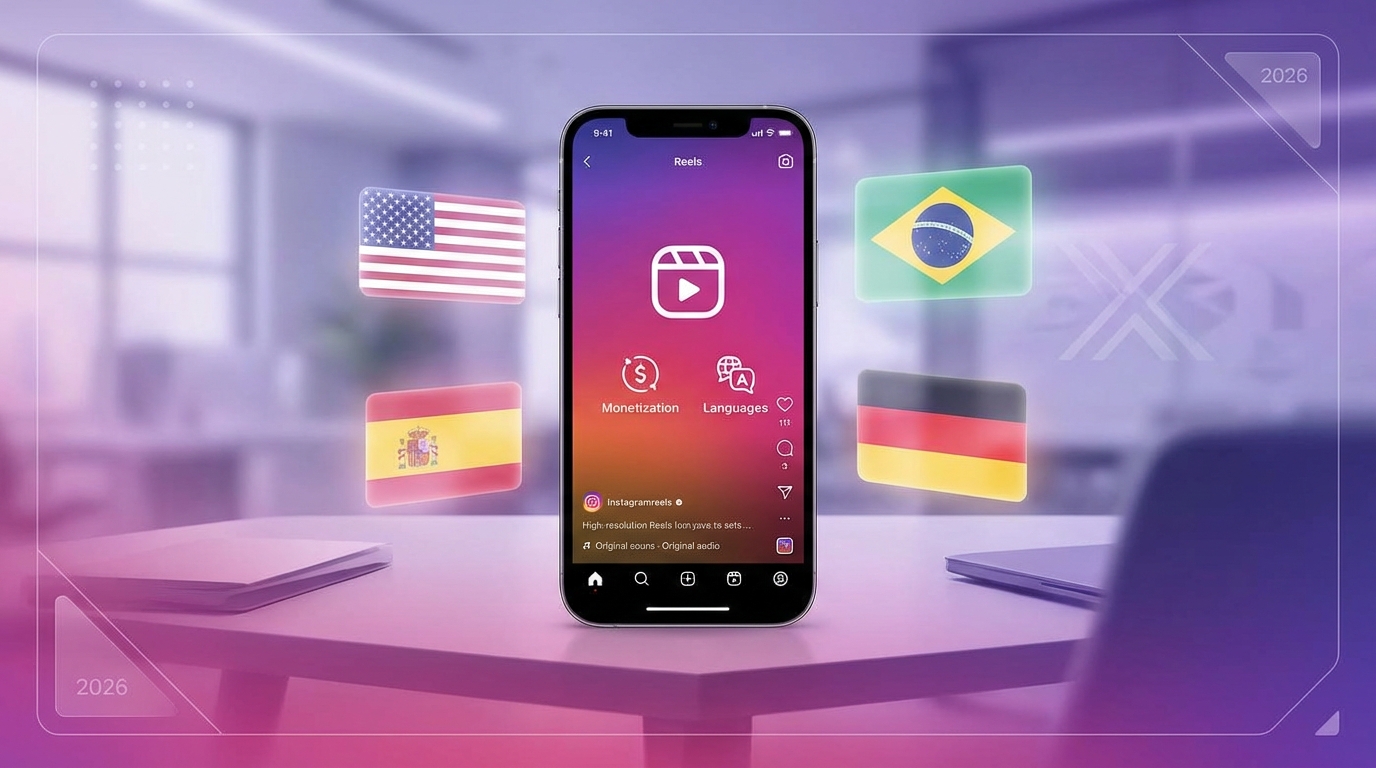
Last year I ran an experiment that completely changed my perspective on Instagram. I took one of my Reels that had gotten 80,000 views in Italy - a tutorial on how to organize your desk for remote work - and dubbed it into English, Spanish, and Portuguese. Within three weeks, that single piece of content had accumulated over 1.2 million views across all accounts combined. It's not luck. It's math and strategy. And in this article, I'll show you exactly how to replicate this approach. 🚀 Why Instagram Reels is Different from TikTok Before diving into strategies, it's important to understand what makes Instagram a unique opportunity compared to TikTok. Many creators think they're interchangeable platforms, but they're not. Instagram has an integrated ecosystem that TikTok doesn't have. When someone discovers you through a Reel, they can immediately see your Stories, visit your profile, click the link in bio, and interact with your posts. It's a complete funnel within the same app.Important: Instagram generates 20% more engagement per follower compared to TikTok, according to 2025 Hootsuite data. This means an Instagram follower is worth more in terms of conversions.The Instagram audience also tends to be slightly older and with greater purchasing power. For creators selling products, courses, or services, this demographic difference is crucial. 💰 The Instagram Monetization Model in 2026 Instagram has finally launched a serious monetization program for Reels. Here's how it works in 2026: Reels Play Bonus: Performance-based payments for your Reels. Requirements vary by country, but generally you need:10,000+ followers 100,000+ Reels views in the last 30 days Active professional accountCreator Subscriptions: Your followers can subscribe for exclusive content. Works in all major markets. Live Badges: Donations during live streams, available globally. Affiliate and Shopping: Tag products directly in Reels with commissions. The key point is that all these tools work better with more followers. And the fastest way to increase followers is to reach new language markets.💡 The Multi-Account Strategy for Instagram Unlike YouTube where you can use Multi-Audio on a single channel, Instagram requires separate accounts for each language if you want to maximize reach. Instagram's algorithm is highly localized - it shows content in the language the user uses. How to Structure Your Accounts Main Account (native language):Your main brand Original content Most engaged communitySecondary Accounts (one per target language):Consistent username: @yourname_en, @yourname_es, @yourname_br Same visual branding Translated and optimized bioPro Tip: Use the same thumbnail style and colors across all accounts. When a user switches from one account to another, they should immediately recognize your brand.Which Languages to Choose For Instagram, the most strategic markets in 2026 are:Language Instagram Users Average Ads CPM CompetitionEnglish (US) 170M High Very HighSpanish 140M Medium MediumPortuguese (BR) 120M Medium-low LowHindi 230M Low Very LowGerman 32M Very High MediumMy advice for starting: English + Spanish + Brazilian Portuguese. They cover over 400 million Instagram users with manageable competition. 📝 The Dubbing Process for Reels Reels have specific characteristics that make them ideal for AI dubbing:Short duration: 15-90 seconds means very fast processing Prominent audio: Voice is often the central element Vertical format: Already optimized for global mobileHere's the workflow I use: Step 1: Select the Right Reels Not all Reels deserve to be dubbed. Ideal candidates are:Practical tutorials: "How to do X" works universally Personal storytelling: Stories that emotionally connect transcend cultures Tips and hacks: Short, actionable advice Before/After: Visual transformations with narrationAvoid Reels that are too tied to local trends, regional memes, or specific cultural references. Step 2: Prepare the Audio For optimal results:Record with good audio quality (even a smartphone is fine, but in a quiet environment) Speak with natural pauses between sentences Avoid background music that's too loud and covers your voiceStep 3: Dub with NovaDub The process is simple:Go to NovaDub Upload the original Reel Select target languages Wait 1-2 minutes for processing Download the dubbed versionsNovaDub uses ElevenLabs technology, the best on the market for voice quality. The generated voices are incredibly natural - I've shown dubbed Reels to friends without telling them it was AI, and no one noticed. Step 4: Optimize for Each Market Once you have the dubbed videos, customize for each market: Captions: Don't translate literally, adapt. Use native expressions and local hashtags. Hashtags: Research trending hashtags in each country. #fyp becomes #parati in Spanish, #viral in Portuguese. Posting times:USA: 11:00 AM-1:00 PM and 7:00-9:00 PM EST Spain/Latam: 1:00-3:00 PM and 8:00-10:00 PM local Brazil: 12:00-2:00 PM and 7:00-9:00 PM BRTWarning: Don't post the same Reel on all accounts at the same time. Instagram might flag it as spam. Space them at least 2-3 hours apart.📊 Real Numbers: What to Expect After six months of multilingual strategy on Instagram, here are my results: Starting situation:Italian account: 45,000 followers Earnings: ~€200/month (affiliate + collaborations)After 6 months:Italian account: 58,000 followers (+29%) English account: 67,000 followers Spanish account: 41,000 followers Portuguese account: 35,000 followers Total: 201,000 followers Earnings: ~€1,100/month (+450%)The jump in earnings isn't proportional to followers because international brands pay more for collaborations, and affiliate marketing on Amazon US/UK has better commissions. 💸 The Costs: How Much to Invest Let's do the math for a creator publishing 5 Reels per week:5 Reels × 1 minute average × 3 languages × 4 weeks = 60 minutes/month With NovaDub's Creator plan (€49 for 50 minutes) + some extra minutes: ~€60/monthROI: Investment of €60/month to potentially go from €200 to €1,000+ in monthly earnings. The return is obvious.Note: NovaDub offers 5 free minutes to test the quality. Enough to dub 2-3 Reels and see the results before committing.⚡ Advanced Tips for Multilingual Instagram Smart Cross-Promotion Occasionally, create a Story on your main account saying "If you speak English/Spanish, follow me also on @yourname_en/@yourname_es for content in your language!" Local Collaborations Look for local creators in target markets for duets or collaborations. A Brazilian creator with 50K followers mentioning you can bring thousands of new followers. Market-Exclusive Content Occasionally, create exclusive content for a specific market. A Reel about "best cafés in New York" only for the English account, for example. This rewards followers and makes each account unique. Separate Analytics Use Instagram Insights for each account separately. You might discover that certain types of content perform better in some markets. My tech tutorials crush it in English, while lifestyle content does great in Portuguese. ✅ Action Plan: Start This Week Days 1-2:Create secondary Instagram accounts (2-3 languages) Set up consistent bio and branding Sign up on NovaDubDays 3-5:Select your 5 best Reels Dub them in your chosen languages Post on the new accounts (1-2 per day)Weeks 2-4:Dub every new Reel you publish Start engaging with the local community (comment, reply, follow similar creators) Analyze which content performs best per marketMonth 2+:Scale what works Consider collaborations with local creators Evaluate adding a fourth language🎯 Conclusion Multilingual Instagram Reels is no longer optional - it's a necessity for anyone who wants to grow seriously on the platform. With over 2 billion monthly active users, limiting yourself to one language market means giving up 95%+ of your potential audience. AI dubbing has made this expansion accessible to everyone. What used to require thousands of dollars and weeks of work now costs a few dozen euros per month and takes minutes per video. Creators who adopt this strategy now will have an enormous competitive advantage. The time to start is now. Try NovaDub free with 5 minutes of dubbing included and discover how easy it is to reach a global audience with your Reels.Have questions about multilingual Instagram strategy? Write to us at [email protected] or leave a comment!
Best Languages for Dubbing Your Videos: ROI Guide 2026
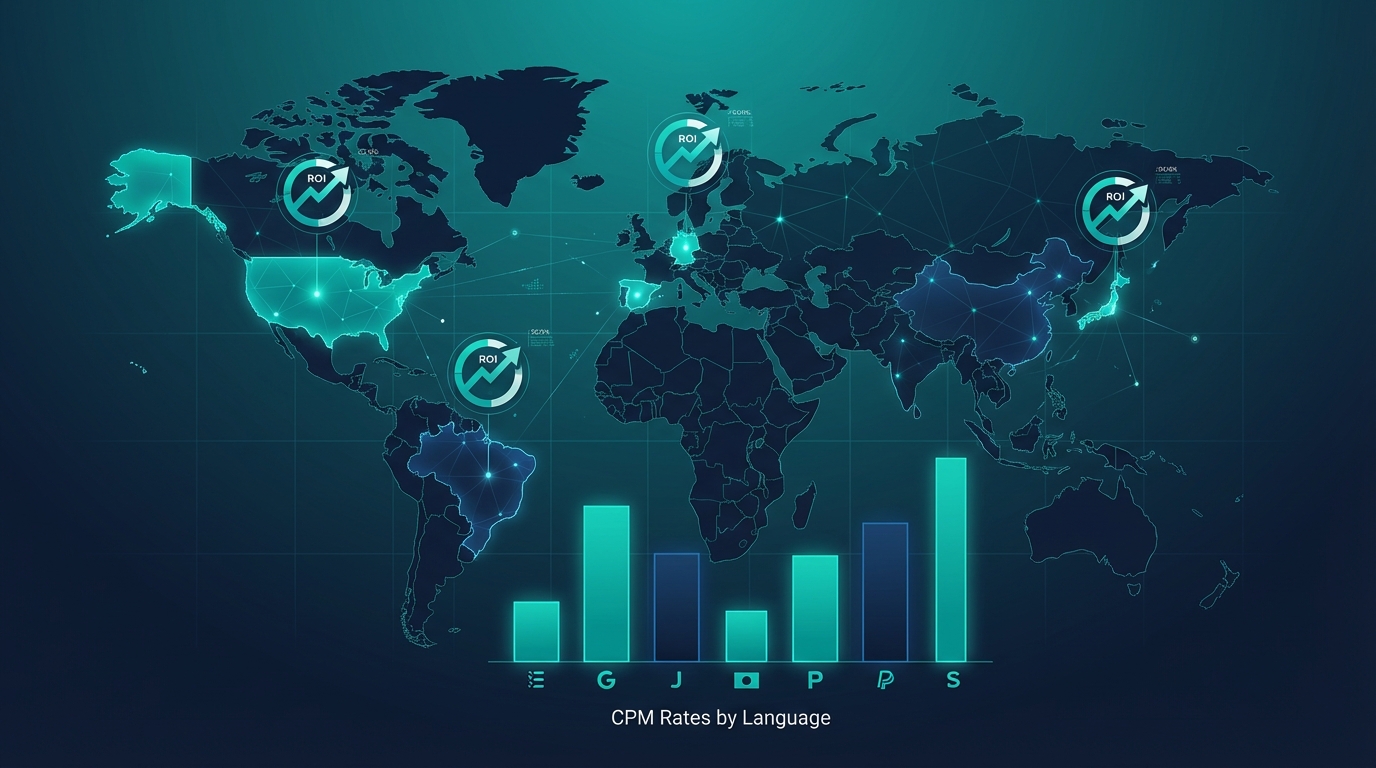
Not all languages are equal when it comes to dubbing. Some offer huge markets but low CPMs. Others have smaller audiences but excellent monetization. Some are saturated with content, others still virgin territory. In this guide, I analyze real data to help you choose where to invest your dubbing budget to maximize return.Important: language choice depends on your content and niche. This guide provides general data - the final decision must consider your specific audience.📊 Overall Ranking: Top 10 Languages for ROI Based on a combination of market size, average CPM, competition, and growth, here's the ranking:Rank Language Online Speakers YouTube CPM Competition ROI Score1 🇪🇸 Spanish 550M $1-2.5 Medium ⭐⭐⭐⭐⭐2 🇧🇷 Portuguese 280M $0.8-1.5 Medium-Low ⭐⭐⭐⭐⭐3 🇩🇪 German 100M $3-4 Medium ⭐⭐⭐⭐4 🇯🇵 Japanese 120M $3-5 High ⭐⭐⭐⭐5 🇫🇷 French 280M $1.5-2.5 Medium ⭐⭐⭐⭐6 🇮🇳 Hindi 600M $0.3-0.8 Low ⭐⭐⭐7 🇰🇷 Korean 80M $2-3 Medium-High ⭐⭐⭐8 🇮🇩 Indonesian 200M $0.5-1 Low ⭐⭐⭐9 🇸🇦 Arabic 400M $0.8-1.5 Medium-Low ⭐⭐⭐10 🇮🇹 Italian 65M $1.5-2.5 Medium ⭐⭐⭐🇪🇸 Spanish: Massive Volume Why dub in Spanish:550 million speakers (including Latin America) Rapidly growing market Relatively less saturated than English content Lower advertising costs = interesting ROIChallenges:Lower CPM than English Differences between European and Latin American Spanish Geographic fragmentation (20+ countries)Ideal for: Entertainment, tutorials, lifestyle, gaming Typical ROI: 150-300% view increase Important note: Latin (neutral) Spanish reaches more people than European Spanish. NovaDub supports both variants.Pro Tip: for maximum reach, use Latin American Spanish as your default. It's understood across all Spanish-speaking countries.🇧🇷 Portuguese: The Hidden Opportunity Why dub in Portuguese:Brazil = 210 million super-active social media users Competition still relatively low Very engaged audience Strong growth on YouTube and TikTokChallenges:CPM not the highest Brazilian Portuguese ≠ European Portuguese Volatile economyIdeal for: Gaming, music, tech, how-to, fitness Typical ROI: 100-250% view increaseNote: the Brazilian market is particularly receptive to translated content. Creators entering now build a competitive advantage that's hard to close.🇩🇪 German: Premium CPM Why dub in German:Among the highest CPMs in the world High purchasing power audience Rooted dubbing culture (they accept synthetic voices) Includes Austria and German-speaking SwitzerlandChallenges:Smaller market (100M speakers) Very high quality standards Technical and demanding audienceIdeal for: Tech, business, automotive, B2B, professional tutorials Typical ROI: 100-200% view increase but revenue can be higher due to CPM 🇯🇵 Japanese: The Difficult but Profitable Market Why dub in Japanese:Very high CPM (comparable to USA) Loyal audience that watches content completely Very developed otaku/geek culture Willing to pay for premium contentChallenges:Complex language for voice synthesis Specific cultural standards Very closed market to "outsiders"Ideal for: Gaming, anime, tech, software tutorials, J-culture Typical ROI: Variable - can be very high for right niches, low for others 🇫🇷 French: Solid but Competitive Why dub in French:Mature and stable market Includes France, Belgium, Switzerland, French Canada, Francophone Africa Good purchasing power audienceChallenges:Significant competition Language purists (quality must be high) Fragmentation between regional variantsIdeal for: Lifestyle, cooking, fashion, culture, education Typical ROI: 80-150% view increase 📈 Decision Matrix by NicheNiche 1st Language 2nd Language 3rd LanguageTech/Software Spanish German JapaneseGaming Spanish Portuguese FrenchLifestyle/Vlog Spanish French PortugueseBusiness/B2B German Spanish FrenchBeauty/Fashion Spanish Portuguese FrenchFood/Cooking Spanish French PortugueseFitness Spanish Portuguese GermanEducation Spanish Hindi FrenchMusic/Entertainment Spanish Portuguese FrenchAutomotive German Spanish FrenchWarning: this matrix is a general guide. Always analyze your specific channel data (where current international views come from) before deciding.💡 How to Analyze YOUR Market Potential Before investing in dubbing, do this analysis: Step 1: Check YouTube Analytics Go to Analytics → Audience → Geography. Look at:Which countries already send views (existing interest) Which countries have higher watch time (engagement)Step 2: Research Competitors Find similar creators who already have multilingual channels:Which languages did they choose? How many subscribers do their secondary channels have? How do their dubbed videos perform?Step 3: Keyword Research Use TubeBuddy or VidIQ to search for:Search volume for your main keywords in each language Competition on those keywords Growth trendsStep 4: Test with Limited Budget Before dubbing your entire catalog:Choose 3-5 evergreen videos Dub them in 2 candidate languages Publish and monitor for 1-2 months Decide based on real data🎯 The Optimal 2026 Strategy Based on data, here's the recommended strategy: Limited Budget ($50-100/month):Focus: Spanish Dub best 3-4 videos per month Build solid foundation before expandingMedium Budget ($100-300/month):Focus: Spanish + Portuguese 5-8 videos per month per language Consider separate channel for Spanish when you reach 5K subscribersHigh Budget ($300+/month):Focus: Spanish + Portuguese + (German or French depending on niche) Dub all new content Separate channels for main markets Consider additional languages for specific content📊 ROI Calculation by Language Simplified formula: ROI = (Additional views × CPM / 1000) - Dubbing costPractical example:10-minute video, dubbing cost: $17 Expected views in Spanish: 5,000 Spanish CPM: $1.50ROI = (5,000 × $1.50 / 1000) - $17 = $7.50 - $17 = -$9.50 first month But consider:Views continue for months/years More videos = network effect Some videos explodeIn practice, long-term ROI is almost always positive for main languages. ✅ Conclusion Language choice for dubbing shouldn't be random. With the right data, you can build a strategy that maximizes your ROI. Golden rules:Spanish for volume - massive market, manageable competition Portuguese for opportunity - growing market, window still open German for revenue - premium CPM, premium audience Test before scaling - data > intuition Consistency beats everything - 2 solid languages better than 5 abandoned onesWith NovaDub you can test any language with minimal investment. Start with your best videos, measure results, then scale what works.Ready to conquer new markets? Try NovaDub free and start testing the languages best suited to your content. Which language worked best for your channel? Share your experience in the comments!
Video Dubbing for E-commerce: Boost International Sales
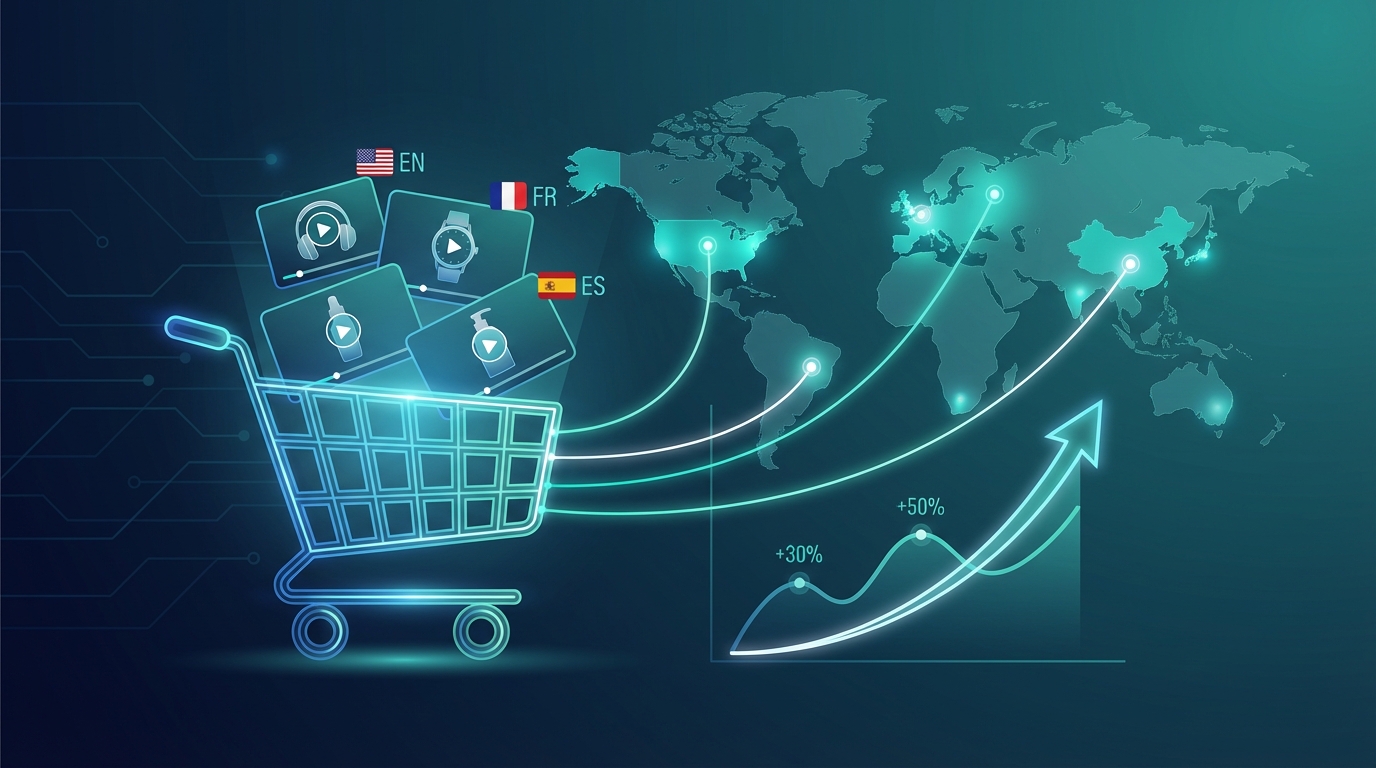
76% of online consumers prefer buying from sites in their own language. Yet most e-commerce businesses attempting international expansion simply translate product pages, completely ignoring video marketing. It's a costly mistake. Product videos increase conversions by 80% on average. But a video in a foreign language? It reduces that effectiveness by 60%. The solution is dubbing, and in 2026 AI has made it accessible even to small merchants.Important: product videos increase conversions by 80%, but only if they're in the customer's language. A non-localized video loses 60% of its effectiveness in foreign markets.💰 Why Videos Are Crucial for International E-commerce The numbers speak clearly:88% of consumers watch product videos before purchasing 73% are more likely to buy after watching a video 64% of customers buy online after seeing brand social videos Videos in local language: +40% time on page, +25% conversionsFor an e-commerce selling in multiple countries, every percentage point of conversion counts. On $100,000/month revenue, a 5% conversion increase means $5,000 more. Every month. 🎯 Which E-commerce Videos to Dub Not all videos have the same impact. Here's the priority: 1. Product Videos (Maximum ROI) Videos showing the product in action. Demonstrating use, quality, details. Why dub: The voiceover explains features that images can't convey. "This fabric is water-resistant" has more impact when said in the customer's language. Where to use: Product pages, Amazon Listings, landing pages 2. Tutorial/How-To Videos How to use the product, installation, maintenance. Why dub: They reduce returns and support requests. A customer who understands how to use the product is a satisfied customer. Where to use: Support page, post-purchase emails, YouTube 3. Brand/About Us Videos Who you are, your story, your values. Why dub: They build trust. Foreign customers are more skeptical - a story told in their language creates connection. Where to use: Homepage, "About Us" page, brand awareness campaigns 4. Testimonial Videos Customer reviews in video format. Why dub: More complex (need subtitles or dubbing of original speech), but very effective for social proof. Where to use: Landing pages, retargeting adsPro Tip: start with product videos of your 10 bestsellers. These have the highest and most immediate ROI.📊 Case Study: Italian Fashion E-commerce → Spain + Germany An Italian fashion brand with $2.2M/year revenue decided to expand into Spain and Germany. Here are the results after 6 months. Initial situation:Site translated to ES and DE Videos only in Italian Conversion rate IT: 2.8% Conversion rate ES: 1.1% Conversion rate DE: 0.9%Intervention:Dubbed 25 product videos in ES and DE Dubbed 3 brand/storytelling videos Dubbed 5 sizing/fit tutorial videos Total investment: ~$1,650 (via NovaDub)Results after 6 months:Conversion rate ES: 2.3% (+109%) Conversion rate DE: 2.1% (+133%) Revenue ES: +$200,000/year Revenue DE: +$165,000/year Dubbing ROI: 22,000%Yes, you read that right: $1,650 investment, $365,000/year return in additional revenue.Note: these results are real but represent a success case. Results vary based on product, market, and overall execution quality.💡 How to Implement a Localized Video Strategy Phase 1: Audit Existing Videos List all videos you have:Product videos Brand videos Tutorial videos Social videos Ad videosFor each, evaluate:Duration Importance (how much it impacts sales) Original audio qualityPhase 2: Prioritize by Market and Product Priority formula: Priority = (Product revenue) × (Market potential) × (Video type impact) Example:Product A generates $55K/year, Germany expansion (high potential), product video (high impact) → HIGH PRIORITY Product Z generates $2K/year, Poland expansion (medium potential), social video (medium impact) → LOW PRIORITYPhase 3: Dub in Batches Use NovaDub to dub efficiently:Upload all priority videos Select target languages (start with 2-3) Process in batch Download and organize by marketCost example - E-commerce Catalog:30 product videos × 2 minutes average × 2 languages = 120 minutes With NovaDub Pro: ~$200Phase 4: Distribute Strategically Product pages: Replace or add localized version Amazon/Marketplace: Each local listing should have video in local language Ads: Create separate campaigns per market with dubbed videos Social: Post on local channels (if you have them) or use geographic targeting Phase 5: Measure and Optimize KPIs to track:Conversion rate per country (pre/post localized videos) Time on product page Bounce rate per market Revenue per marketWarning: don't just dub. Make sure the entire customer journey is localized: site, checkout, emails, support. Videos are one piece of the puzzle.🛒 E-commerce Platforms and Multilingual Video Shopify Shopify natively supports multiple or translated stores (with apps like Langify). You can:Upload different videos for each language version Use metafields to manage localized video URLs Integrate with YouTube/Vimeo for hostingWooCommerce With WPML or Polylang:Each product can have different media per language Custom fields for localized videos Conditional shortcodes to show the right videoAmazon Seller/Vendor Central Each marketplace is separate:Amazon.com, Amazon.de, Amazon.es have separate listings Upload localized video for each marketplace A+ Content supports local language videoEtsy More limited for localization, but:You can create separate listings for different markets Video in listing can be localized Description can include links to localized YouTube videos🚀 Quick Start: Start This Week Day 1-2:Identify your 5 bestseller products Find existing videos for these productsDay 3-4:Create NovaDub account Dub videos in 2 priority languages (probably ES and DE)Day 5:Upload localized videos to product pages Set up A/B test if possibleWeek 2+:Monitor metrics Expand to other products Consider additional languages✅ Conclusion Video marketing for e-commerce works. Localized video marketing works much better. And thanks to AI, it's no longer reserved for big brands with million-dollar budgets. With an investment of a few hundred dollars you can:Dub your video catalog Increase conversions 25-100% in foreign markets Generate ROI of thousands of percentThe question isn't IF localized videos help international sales. The question is: how much are you losing every day without them?Ready to expand your e-commerce globally? Start with NovaDub - dub your product videos in minutes. Run an international e-commerce? Share your experience with localized videos in the comments!
YouTube Multi-Audio: How to Add Multiple Languages to Your Videos
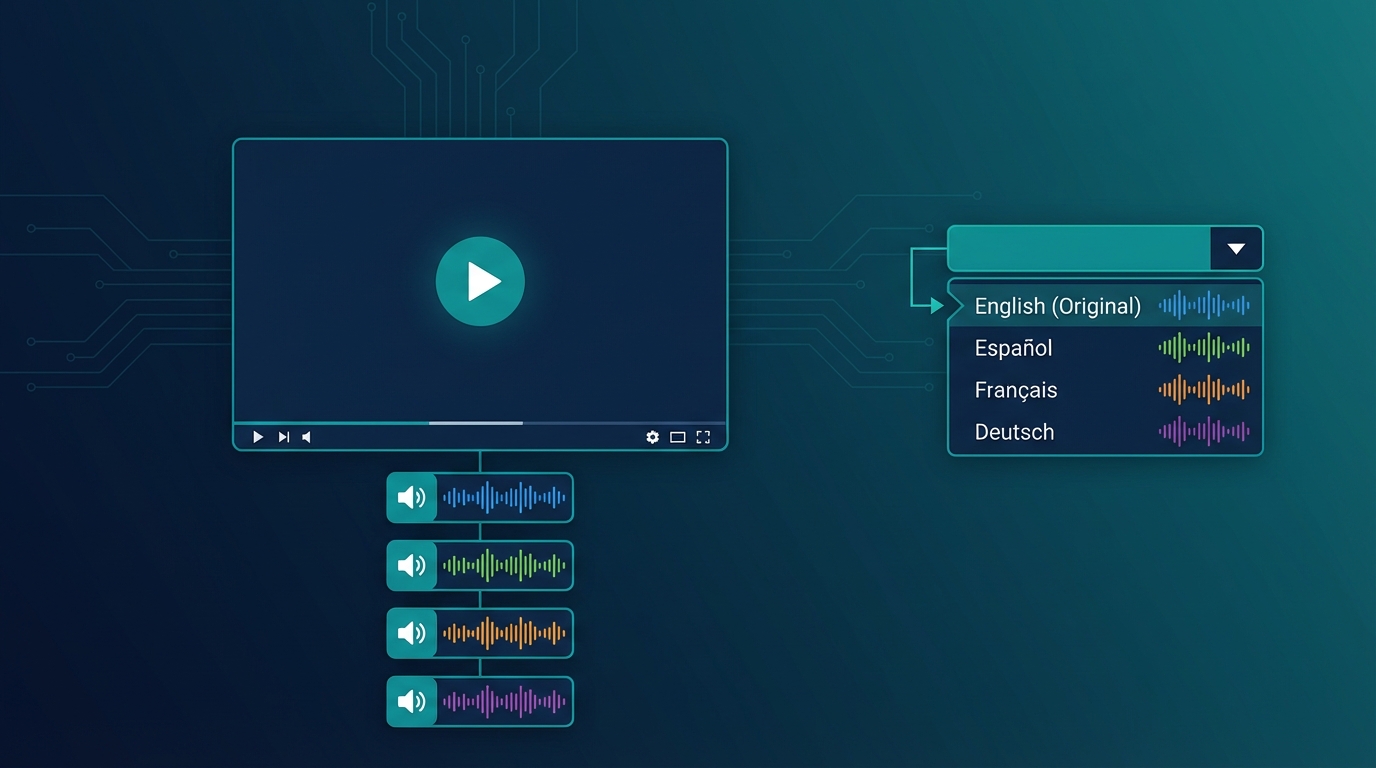
YouTube has introduced a feature that many creators still don't know about or fully utilize: Multi-Audio. This feature allows viewers to choose the audio language directly from the player, without having to search for secondary channels or alternative versions of the video. In this guide, I'll show you exactly how it works and how to use it to expand your global audience.Important: YouTube's Multi-Audio lets you upload up to 6 audio tracks in different languages on a single video. Viewers can switch languages with one click directly from the player.🔊 What Is YouTube Multi-Audio The Multi-Audio feature (also called "Audio Track" or "Multiple Audio Tracks") allows you to upload alternative audio versions of the same video. Viewers can select their preferred language by clicking the settings icon in the player. How it appears to viewers:Click the gear icon ⚙️ Select "Audio track" Choose from available languages Audio changes instantlyThe video stays the same, but the voice changes language. It's like having a remote control for dubbing. 💡 Multi-Audio vs Separate Channels: Pros and Cons Before implementing Multi-Audio, it's important to understand when to use it versus the separate channels strategy (MrBeast style). Multi-Audio Advantages ✅ Single video to manage: Unified metrics, centralized comments, less maintenance ✅ No additional channels: You don't have to build separate audiences from scratch ✅ Smooth user experience: International viewers find your video and choose the language ✅ Algorithm boost: YouTube tends to promote Multi-Audio videos in corresponding markets ✅ Ideal for evergreen content: Tutorials, how-tos, reviews that don't require frequent updates Multi-Audio Disadvantages ❌ Less SEO control: Single title/description (you can only translate in metadata) ❌ Aggregated statistics: Hard to understand which language performs better ❌ Mixed community: Comments in all languages in the same place ❌ Single thumbnail: You can't customize for each marketPro Tip: use Multi-Audio for tutorial/educational content and separate channels for entertainment/personality-driven content where localized community matters more.📝 Tutorial: Adding Multi-Audio to Your Videos RequirementsVerified channel At least 1,000 subscribers No active strikes Separate audio file (audio track only, not video)Step 1: Prepare the Audio Tracks For each language, you need an audio file:Format: AAC, MP3, WAV Exact same duration as original video Dubbed voice only (original music stays)How to get the tracks:Dub the video with NovaDub Download the complete version (video + dubbed audio) Extract only the audio with a tool like FFmpeg:ffmpeg -i dubbed_video.mp4 -vn -acodec copy audio_language.aacOr NovaDub can export the separate audio track directly. Step 2: Access YouTube StudioGo to studio.youtube.com Select the video to add tracks to Click "Subtitles" in the side menu Look for the "Audio tracks" sectionStep 3: Upload Audio TracksClick "Add audio track" Select the language Upload the audio file Give the track a title (e.g., "Español - AI Dub") Wait for processing (may take a few minutes) Repeat for each languageStep 4: Verify and PublishUse preview to verify synchronization Check that audio is aligned with video Save changes Tracks become active immediatelyWarning: synchronization is critical. If dubbed audio has a different duration by even a few seconds, it will be misaligned. Tools like NovaDub automatically handle timing.🎯 Best Practices for Multi-Audio Optimize Metadata YouTube allows you to add translated titles and descriptions:In YouTube Studio, go to "Details" Click "Add language" Enter translated title and description Repeat for each languageThis improves discoverability: when someone searches in Spanish, they can find your video with a Spanish title even if the original is English. Promote the Feature Many viewers don't know they can change language. Tell them explicitly: In the video: "This video is available in Spanish - click settings to change language" In description: Add a note about available languages In comments: Pin a comment explaining how to change language Monitor Performance Even though statistics are aggregated, you can deduce some information:Geolocation: YouTube Analytics shows where views come from Retention by country: See if certain markets have different retention Subscriber growth: Monitor which countries new subscribers come from🔄 Optimal Workflow with NovaDub Here's the most efficient process for adding Multi-Audio to your videos:Publish the original video on your channelUpload the same video to NovaDub and select target languagesDownload the dubbed versions (complete videos)Extract audio tracks from each versionUpload them as Multi-Audio on YouTube StudioTotal time: about 30-45 minutes for 3 languages (of which 20-25 waiting for processing) Cost example: 10-minute video × 3 languages = ~$50Note: if you use NovaDub subscription, cost drops significantly. With Creator plan (€49/month for 50 minutes) you can handle about 4-5 ten-minute videos per month in 3 languages.📊 When to Use Multi-Audio vs Separate ChannelsSituation Better ChoiceTutorial/educational channel Multi-AudioEntertainment/personality channel Separate channelsUnder 10K subscribers Multi-Audio (build main first)Over 100K subscribers Consider separate channelsEvergreen content Multi-AudioTrending/newsjacking content Separate channels (more timing control)Limited budget Multi-Audio (less overhead)Dedicated team Separate channels (maximum control)🚀 Hybrid Strategy Many successful creators use both approaches: Multi-Audio for:Pillar/cornerstone videos In-depth tutorials High-value evergreen contentSeparate channels for:Daily/weekly content Trend-sensitive videos Priority markets (e.g., only Spanish and Portuguese as separate channels)This hybrid strategy allows maximizing reach without multiplying workload. ✅ Conclusion YouTube's Multi-Audio is a powerful but underutilized tool. It allows you to reach global audiences without the complexity of managing multiple channels. To start today:Choose one of your best videos Dub it in 2-3 languages with NovaDub Extract the audio tracks Upload them as Multi-AudioIn under an hour, your video will be accessible to millions more people.Ready to make your videos multilingual? Try NovaDub free with 5 minutes included to test quality. Have you used YouTube Multi-Audio? Tell us your experience in the comments!
How MrBeast Conquered 100 Million Subscribers with Dubbing
In 2024, MrBeast did something that seemed impossible: he surpassed T-Series as the YouTube channel with the most subscribers in the world. But the most interesting data point isn't the total number - it's how he got there. The answer lies in a strategy every creator can replicate: systematic dubbing. Let's analyze in detail what MrBeast did and how you can apply the same strategies to your channel.Important: MrBeast didn't become the world's biggest YouTuber just with viral content. He built an empire of dubbed channels that reach billions of people in their native language.🏆 The MrBeast Empire Numbers Before analyzing the strategy, let's look at the numbers:Channel Language Subscribers (2026)MrBeast English 340M+MrBeast en Español Spanish 55M+MrBeast Brasil Portuguese 25M+MrBeast Deutsch German 8M+MrBeast Japan Japanese 5M+MrBeast Hindi Hindi 35M+MrBeast Arabic Arabic 18M++ other channels... Various 30M+Combined total: over 500 million subscribers across all channels. The main English channel represents "only" 68% of the total. The remaining 32% - about 160 million subscribers - comes from dubbed channels. These aren't marginal numbers. 💡 The Separate Channels Strategy MrBeast doesn't use subtitles. He doesn't use YouTube's Multi-Audio. He chose to create completely separate channels for each major language. Why this choice?Optimized Algorithm YouTube recommends content based on language. A 100% Spanish channel gets aggressively pushed to Spanish-speaking users. A mixed channel confuses the algorithm.Dedicated Communities Each channel has its own community with comments in the local language. Fans feel part of something specific to them, not second-class viewers of an English channel.Separate Monetization Each channel has its own AdSense, its own sponsors, its own partnerships. MrBeast can make deals with local brands for each market.Risk Reduction If one channel has problems (strikes, demonetization), the others continue independently.Pro Tip: the separate channels strategy works best for creators with "universal" content (entertainment, challenges, gaming). For specific niches, Multi-Audio might be more efficient.📊 The Production Model How does MrBeast manage so many channels? His system is industrialized: Step 1 - Original Production: The team produces the video in English with million-dollar budgets. Step 2 - Translation and Adaptation: Professional translators adapt scripts and jokes for each culture. Step 3 - Dubbing: Local voice actors (and increasingly AI) record the voices. Step 4 - Post-production: Each version is finalized separately. Step 5 - Coordinated Publishing: All channels publish simultaneously or with strategic slight delays. The cost? MrBeast invests millions in this process. But the ROI is clear: those extra 160 million subscribers generate hundreds of millions of dollars in additional revenue. 🎯 How to Apply the Strategy to Your Channel Don't have MrBeast's budget? It doesn't matter. AI has democratized this strategy. Phase 1: Choose Markets You don't need to cover 12 languages like MrBeast. Start with 2-3 strategic markets:Spanish: 550 million speakers, steady growth Portuguese: Brazil exploding, competition still low German: Premium CPM, loyal audiencePhase 2: Create Secondary Channels Simple naming convention:YourChannel (original) YourChannel ES (or Español) YourChannel PT (or Brasil)Maintain consistent branding: same logo, same graphics, same thumbnail style. Phase 3: Dub with AI Instead of hiring voice actors, use NovaDub:Upload the original video Select target languages In minutes you have dubbed versions With Social Sync, publish directly to channelsCost example: 10-minute video → 2 languages → ~$35 total Phase 4: Optimize for Each Market Dubbing alone isn't enough. Optimize:Titles: Research keywords in target language Descriptions: Translated and SEO-optimized Tags: Specific for each market Thumbnails: Consider versions with localized textPhase 5: Publish Consistently Consistency beats everything. MrBeast publishes on every channel with maniacal regularity. You should do the same:Every original video → versions in all languages Same day or within 24-48 hours Optimized times for each timezoneWarning: the most common mistake is starting enthusiastically then abandoning secondary channels. Better 2 consistent languages than 5 abandoned languages after a month.📈 Realistic Results What can you expect following this strategy? Obviously not MrBeast's numbers, but still significant results. Scenario: Tech channel with 50K subscribers After 6 months of multilingual strategy:Main channel: 50K → 65K (+30%) ES channel: 0 → 40K PT channel: 0 → 25KTotal: from 50K to 130K subscribers (+160%) Revenue: From ~$600/month to ~$1,800/month (+200%) These are realistic numbers based on case studies of average creators who applied this strategy consistently. 💼 The AI Advantage in 2026 MrBeast started with human voice actors because AI wasn't advanced enough. Today the situation is different. AI dubbing advantages:✅ 95% lower cost ✅ Speed: minutes instead of days ✅ Perfect voice consistency (voice cloning) ✅ Infinite scalability ✅ Free correctionsWhen MrBeast still uses humans:Videos with strong emotional component Markets with very high expectations (Japan) Content with lots of improvisationFor most creators, AI is sufficient - and often superior for consistency.Note: even major creators are switching to AI for secondary channels. The time and money savings allow investing more in original production.✅ 30-Day Action Plan Week 1:Create YouTube accounts for 2 additional languages Sign up at NovaDub (5 free minutes) Identify your 5 best videos to dubWeek 2:Dub the 5 selected videos Set up secondary channels (banner, descriptions, links) Publish first videosWeek 3-4:Dub every new video you publish Analyze performance with YouTube Analytics Optimize titles and thumbnails based on dataMonth 2+:Maintain consistency Consider third language Explore collaborations with local creators🚀 Conclusion: Your Multilingual Empire MrBeast has proven that global audience exists and wants content in their own language. He built a 500-million subscriber empire by systematically applying this strategy. You don't have his budget, but you have something he didn't have when he started: AI for dubbing. What cost him hundreds of thousands of dollars costs you just a few hundred per month. The question isn't IF you should expand globally, but WHEN you'll start.Ready to build your multilingual empire? Start with NovaDub - 5 free minutes to test quality. Already have channels in multiple languages? Share your experience in the comments!

How Much Does It Cost to Dub a Video? Complete Pricing Guide 2026
"How much will it cost to dub this video?" It's the question every creator asks before deciding whether to expand their content internationally. And the answer, until recently, was often discouraging: thousands of dollars for a single video. But 2026 has changed the game. Artificial intelligence has made dubbing accessible to everyone, with costs that are a fraction of traditional methods. Let's look at the real numbers.Important: in 2026, AI dubbing costs up to 95% less than traditional studio dubbing. A 10-minute video can be dubbed into 3 languages for under $50.💰 Traditional Dubbing: The Real Costs Let's start with the classic method. Professional studio dubbing involves:Professional translator Dialogue adapter Professional voice actor Audio technician Recording studio Post-productionAverage costs for a 10-minute video (one language):Cost Item Average PriceTranslation and adaptation $250-500Voice actor (hourly/daily rate) $400-1,000Recording studio $150-250Post-production and mixing $200-400Total $1,000-2,150Multiply by 3 languages and you're already at $3,000-6,500 for a single 10-minute video. For a creator who publishes 4 videos per week and wants to cover 3 international markets, we're talking about $48,000-104,000 per year just for dubbing. Numbers sustainable only for large productions. ⚡ AI Dubbing: The Cost Revolution The arrival of artificial intelligence dubbing has completely overturned the economics of video localization. Costs with NovaDub for a 10-minute video:Plan Price/minute Total (10 min, 1 language)Lite (with watermark) €0.99 (~$1.10) €9.90 (~$11)Pro (no watermark) €1.49 (~$1.65) €14.90 (~$16.50)To dub the same video in 3 languages:Lite plan: ~$33 Pro plan: ~$50Direct comparison: $50 vs $3,000-6,500. A savings of 98%.Pro Tip: if you produce content regularly, monthly subscriptions offer additional savings. The Creator plan (€49/month for 50 minutes) brings the effective cost down to €0.98/minute.📊 Complete Comparison TableFactor Traditional AI (NovaDub)Cost per 10 min (1 language) $1,000-2,150 $11-16.50Production time 3-7 days 10-15 minutesVoice quality Excellent Excellent (ElevenLabs)Voice consistency Variable (different actors) Perfect (voice cloning)Scalability Difficult ImmediateEdits/corrections Expensive (new session) Free (regenerate)Available languages Limited by budget 29+ languages🎯 Real Budget Examples Let's look at some concrete scenarios: Scenario 1: YouTuber with 1 video/weekAverage video: 12 minutes Target languages: Spanish, German Monthly volume: 48 minutes × 2 languages = 96 minutesTraditional cost: ~$8,000/month NovaDub Pro cost: ~$165/month (Creator plan + extra) Savings: $7,835/month = $94,020/year Scenario 2: Business with corporate videos5 onboarding videos: 30 minutes total Languages: Spanish, German, French, Japanese One-time projectTraditional cost: ~$12,000-18,000 NovaDub Pro cost: ~$200 (30 min × 4 languages × €1.49) Savings: $11,800-17,800 Scenario 3: High-volume TikTok creator20 videos/week at 1 minute each Languages: Spanish, Portuguese, German Monthly volume: 240 minutesTraditional cost: Impractical (~$48,000/month) NovaDub Business cost: €149/month (200 min included) + €59 extra Total: ~$230/monthNote: NovaDub subscription plans never have watermarks, regardless of tier. Watermark is only for Lite pay-as-you-go.💡 How to Calculate Dubbing ROI Cost is only half the equation. The other half is return on investment. Factors to consider:View increase: A video dubbed in 3 languages can easily triple potential audienceMonetization by market: CPM varies significantly:USA: $3-5 per 1000 views Germany: $3-4 Brazil: $0.50-1 India: $0.20-0.50Compound effect: Dubbed videos continue generating views for months/yearsROI calculation example:Original English video: 10,000 views, CPM $3 = $30 Spanish version: 8,000 views, CPM $1.50 = $12 German version: 5,000 views, CPM $3.50 = $17.50 Portuguese version: 6,000 views, CPM $1 = $6Total revenue: $65.50 vs $30 original = +118% Dubbing cost (3 languages, 10 min): $50 Net additional profit: $5.50 from first month, then all profit ⚠️ When Traditional Dubbing Still Makes Sense Despite AI's advantages, there are cases where traditional dubbing remains preferable: Premium films and TV series: For high-budget cinematic productions, the artistic direction of a human voice actor can make a difference. Content with strong emotional component: Dramas, touching documentaries - where every emotional nuance counts. Markets with specific expectations: Some countries (like Italy and Germany) have strong dubbing traditions and very demanding audiences. Luxury brands: Where budget isn't an issue and you want maximum creative control.Warning: don't choose traditional dubbing out of habit. Test AI first - you might be surprised by the quality and save budget for other areas.🚀 How to Start Saving If you're still paying thousands for dubbing (or giving up on localization entirely), here's how to change:Try free: NovaDub offers 5 free minutes - enough to test a short videoStart with pay-as-you-go: No monthly commitment, pay only for what you useScale gradually: Once you've verified quality, switch to subscriptions for additional savingsMonitor ROI: Use YouTube Analytics to track performance by marketReinvest savings: Budget saved can go into producing new content✅ Conclusion: Dubbing Is No Longer a Luxury In 2026, the excuse "it costs too much" no longer exists for not localizing your videos. With AI, dubbing has become accessible to any creator, from hobbyists to million-subscriber channels. The numbers speak clearly:Savings: 95-98% compared to traditional Speed: Minutes instead of days Quality: Indistinguishable from professional Scalability: InfiniteThe real question is no longer "can I afford to dub?" but "can I afford NOT to dub?". Every unlocalized video is lost audience, missed revenue, slowed growth.Calculate how much you could save. Try NovaDub free and discover the real cost for your videos. Have questions about dubbing costs? Write us at [email protected]!
AI Voice Cloning: Clone Your Voice for Multilingual Videos
There's something almost magical about hearing your own voice speaking fluently in a language you don't know. Not a generic voice, not an unknown voice actor, but your voice - with your timbre, your inflections, your personality - perfectly pronouncing words in Spanish, German, or Japanese. This is AI voice cloning, and it's radically changing how creators communicate with global audiences.Important: voice cloning isn't science fiction. It's a mature technology that lets you maintain your unique vocal identity in any language, creating an authentic experience for your international audience.🎙️ What Is AI Voice Cloning Voice cloning is a technology that uses artificial intelligence to analyze and replicate the unique characteristics of a human voice. This isn't simple imitation: the AI learns the timbre, rhythm, natural pauses, micro-inflections, and even the imperfections that make a voice recognizable. The result is a synthetic voice indistinguishable from the original that can pronounce any text in any supported language while maintaining the speaker's vocal identity. For content creators, this means reaching audiences worldwide without losing that personal connection created through voice. When a follower in Brazil hears a video dubbed with your cloned voice, they don't perceive a stranger speaking for you - they perceive you. 💡 How the Technology Works The voice cloning process is based on deep neural networks trained on massive vocal datasets. Here's what happens when you clone your voice: Phase 1 - Vocal Analysis: The AI analyzes samples of your voice (just a few minutes of clean audio) and extracts hundreds of parameters: fundamental frequency, formants, prosody, speech rate, breathing patterns. Phase 2 - Model Creation: These parameters are encoded into a unique vocal model - a kind of "fingerprint" of your voice that the AI can use to generate new audio. Phase 3 - Synthesis: When you provide text (in any language), the AI pronounces it using your vocal model. The result maintains your characteristics while perfectly articulating phonemes you might not even know how to pronounce.Pro Tip: for the best voice clone, provide high-quality audio recorded in a quiet environment. Avoid background music and ambient noise - the cleaner the sample, the more accurate the clone.⚡ ElevenLabs: The Technology Behind NovaDub Not all voice cloning technologies are equal. NovaDub uses ElevenLabs, universally recognized as the best voice synthesis platform on the market. What makes ElevenLabs superior? Naturalness: Generated voices include natural breaths, contextual pauses, and tonal variations that eliminate the typical "robotic" effect of traditional voice synthesis. Emotional Fidelity: The AI doesn't just replicate timbre - it also captures emotional nuances. An enthusiastic passage will sound enthusiastic, a serious one will sound serious. Cross-linguistic Quality: Many systems lose quality when changing languages. ElevenLabs maintains vocal fidelity even going from Italian to Japanese or English to Arabic. Accurate Lip-sync: The timing of generated audio naturally adapts to the original video's lip movement, avoiding that annoying desynchronization typical of traditional dubbing. 📝 Tutorial: Clone Your Voice in 5 Steps Here's how to use voice cloning with NovaDub to dub your videos: Step 1: Prepare the Source Audio Your original video serves as the vocal sample. For optimal results:Clear audio without music overlapping the voice At least 30 seconds of continuous speech Tonal variety (not monotone) No vocal overlappingStep 2: Upload the Video Log into NovaDub and upload your video. Supported formats: MP4, MOV, WebM up to 2GB. Step 3: Select Target Languages Choose which languages you want for dubbing. The most strategic for ROI are:Spanish - 550 million speakers Portuguese - Brazil is booming German - Very high CPM French - Solid European marketStep 4: Activate Voice Cloning NovaDub automatically analyzes your voice from the original video and creates the model for your clone. You don't need to do anything special - ElevenLabs technology handles everything in the background. Step 5: Generate and Publish In a few minutes you'll have the dubbed versions. You can download them or, with Social Sync, publish them directly to your YouTube and TikTok channels.Note: NovaDub offers 5 free minutes to test voice cloning quality on your voice. No credit card required.🎯 Use Cases for Content Creators Voice cloning opens possibilities that were previously unthinkable: YouTubers and content creators: Expand your channel into new markets while maintaining authenticity. Your international fans will hear you, not an unknown voice actor. Podcasters: Make your episodes accessible to non-English audiences without losing your radio personality. Online educators and coaches: Your courses can reach students worldwide with your voice, maintaining that personal relationship essential to teaching. Businesses and brands: Corporate videos, product demos, onboarding - all with a consistent voice in every market. Influencers: Sponsored campaigns that work in multiple markets simultaneously, with your authentic voice. ⚠️ Ethics and Limits of Voice Cloning Voice cloning raises important ethical questions. The fundamental rule is simple: only clone your own voice or voices for which you have explicit consent. Using voice cloning for:✅ Dubbing your own content ✅ Creating multilingual versions of your brand ✅ Projects with explicit consent from the voice owner ❌ Impersonating other people without consent ❌ Creating deceptive or fake content ❌ Voice fraud or scamsSerious platforms like NovaDub implement security measures to prevent abuse. Responsible use of technology is fundamental for its sustainable development.Warning: voice cloning should only be used on your own voice or with explicit consent. Improper use can have legal consequences and damage trust in the technology.💰 How Much Does Voice Cloning Cost? With NovaDub, voice cloning is included in the dubbing cost - there's no additional charge for vocal cloning. NovaDub Pricing:Lite: €0.99/minute (with watermark) Pro: €1.49/minute (no watermark) Subscriptions: from €19/month for 15 minutesFor a concrete example: dubbing a 10-minute video in 3 languages (Spanish, German, French) with your cloned voice costs about €45 with the Pro plan. Professional studio dubbing? At least €2,000-3,000 for the same languages. The ROI is evident: if those additional markets bring even just 30% more views, you've paid back the investment many times over. ✅ How to Get Started with NovaDub Ready to make your voice speak worldwide? Here's the action plan:Sign up free at NovaDub - get 2 trial minutes Upload a test video with your voice Select a language to test clone quality Verify the result - you'll hear your voice in the new language Scale with pay-as-you-go or subscription plansThe future of content creation is multilingual, and voice cloning makes it possible to maintain your authenticity everywhere. You're no longer limited by language - your voice can reach anyone, anywhere.Ready to clone your voice? Try NovaDub free and discover how your voice sounds in other languages. Have questions about voice cloning? Write us at [email protected] or leave a comment below!