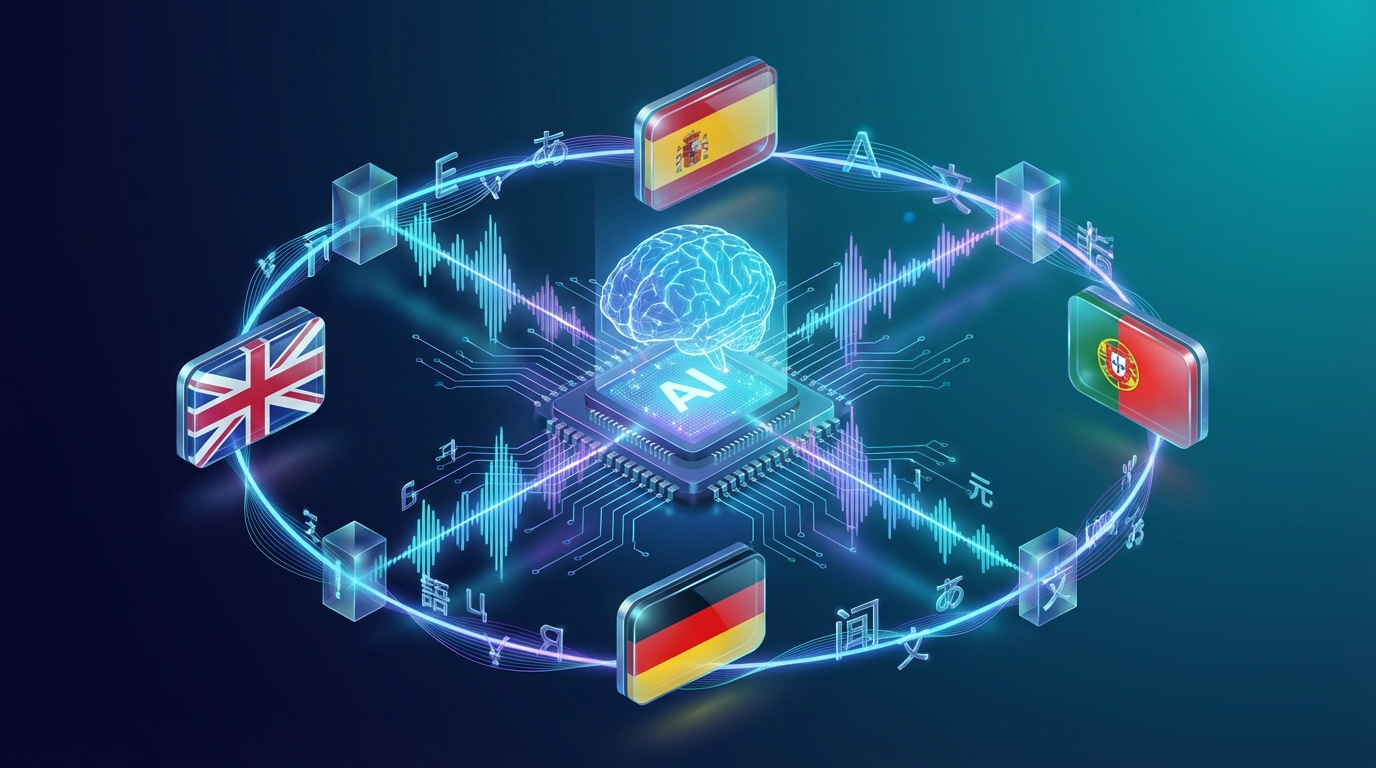

AI voice translation is transforming how creators, educators, and businesses reach global audiences. Instead of adding subtitles, you can now translate a video and replace the original voice with a natural-sounding AI voice in any language — in minutes.
This guide explains how AI voice translation works, the best tools available in 2026, and how to start translating your videos with voice today.
🤖 What Is AI Voice Translation?
AI voice translation is the process of automatically translating spoken audio in a video into another language, then generating a new audio track using an AI voice that sounds natural in the target language.
The result: your video speaks to viewers in their own language — no subtitles required.
How it differs from subtitling:
- Subtitles require viewers to read while watching
- AI voice translation replaces the spoken audio entirely
- Viewers hear content in their language, creating a native experience
How it differs from traditional dubbing:
- Traditional dubbing requires voice actors, studios, and weeks of production
- AI voice translation takes minutes and costs a fraction of the price
- Quality has improved dramatically — modern AI voices sound natural and expressive
⚙️ How AI Voice Translation Works
Modern AI voice translation combines several technologies:
- Speech-to-text (STT): The original audio is transcribed automatically
- Neural machine translation (NMT): The transcript is translated into the target language
- Text-to-speech (TTS): The translated text is converted into a natural AI voice
- Lip-sync alignment (optional): Some tools adjust audio timing to match the speaker’s lip movements
The entire process can happen in under 5 minutes for a short video.
🌍 Why AI Voice Translation Matters in 2026
The numbers make a compelling case:
- 72% of consumers prefer to buy products with information in their native language (CSA Research)
- YouTube now supports multiple audio tracks per video — letting creators serve multiple languages from one upload
- Non-English markets (Spanish, Portuguese, Hindi, Arabic) are growing faster than English on most platforms
- AI voice quality has reached human parity for most use cases — the “AI voice” stigma is fading fast
For creators and businesses, AI voice translation is no longer a nice-to-have — it’s a growth lever.
🏆 Best AI Voice Translation Tools in 2026
1. NovaDub
Best for: YouTubers, course creators, and businesses
NovaDub specializes in AI dubbing and voice translation for video content. Upload your video, choose target languages, and get a fully dubbed version in minutes.
- Supports 30+ languages
- Natural-sounding AI voices with emotional range
- YouTube multiple audio track integration
- Plans starting from €29/month
2. ElevenLabs
Best for: Voice cloning and high-end audio production
ElevenLabs offers industry-leading voice synthesis with voice cloning capabilities. More expensive and requires more manual setup, but delivers exceptional voice quality.
3. Rask AI
Best for: Enterprise video localization at scale
Rask targets enterprise customers needing to localize large video libraries. Higher price point, more complex workflow.
4. HeyGen
Best for: Avatar-based video translation with lip sync
HeyGen adds a visual dimension — it can translate the video and animate an AI avatar to match the new language, including lip movements.
5. Deepl + TTS (manual workflow)
Best for: Budget-conscious creators with time
You can chain Deepl (translation) + a TTS tool (voice generation) manually. Takes more time but costs less.
📋 How to Translate a Video with AI Voice: Step by Step
Here’s the general workflow using a tool like NovaDub:
Step 1: Upload your video Upload your original video file (MP4, MOV, or similar).
Step 2: Choose source and target languages Select the original language and the language(s) you want to translate into.
Step 3: Review the transcript The tool generates an automatic transcript. Review and correct any errors — translation quality depends on accurate transcription.
Step 4: Generate the translation and voice The tool translates the transcript and generates an AI voice in the target language. This takes 2–5 minutes.
Step 5: Review and adjust Listen to the result. Most tools let you re-generate specific segments or adjust timing.
Step 6: Export and publish Download your translated video or export directly to YouTube with multiple audio tracks.
🎯 Best Use Cases for AI Voice Translation
YouTube Creators: Expand to Spanish, Portuguese, Hindi, or any high-growth language market. With YouTube’s multiple audio track feature, one video can serve multiple language audiences.
Online Course Creators: Translate your Udemy, Teachable, or Kajabi courses into new languages to reach international students — without re-recording.
Marketing Teams: Localize product demo videos, explainer videos, and ads for international markets. A translated ad can outperform a subtitled one by 30-40% in engagement.
Corporate Training: Distribute training videos to global teams in their native languages. Improves comprehension and retention vs. subtitled content.
💡 Tips for Better AI Voice Translation Results
- Use clean audio in the original — background noise confuses speech-to-text
- Speak clearly and at moderate pace — cleaner transcript = better translation
- Review the transcript before translating — errors compound
- Choose the right voice — test a few options, some suit educational content better
- Start with your highest-performing content — maximizes ROI
💰 How Much Does AI Voice Translation Cost?
Traditional professional dubbing costs $500–2,000+ per video per language. AI voice translation brings this down to $5–15 per video at scale, with monthly plans starting around $29–60/month for most tools.
🚀 Getting Started
- Pick one high-performing video from your existing library
- Choose one target language (Spanish or Portuguese are high-ROI starting points)
- Try a free trial of NovaDub or another tool
- Publish the translated version and compare performance over 30 days
- If it works, scale — translate more content and add more languages
Ready to translate your first video?
Creators worldwide use NovaDub
"NovaDub revolutionized my channel. Now I reach audiences in 5 different languages with the same voice quality."
"The AI dubbing quality is incredible. My international followers can't believe it's automated!"
"We reduced localization costs by 80% while maintaining professional quality."
"Our courses now reach students worldwide. The audio quality is so natural it sounds like human dubbing."