Showing Posts From
Multilingual video

Video Localization: The Complete Guide to Reaching Global Audiences in 2026
If you've been publishing videos for more than a year, you already know the frustrating truth: you're probably reaching less than 20% of your potential audience. The other 80%? They speak a different language. Video localization is how you close that gap — not just by translating words, but by making your content feel native to each market you enter. What Is Video Localization? Video localization is the process of adapting video content so it feels natural and appropriate for a specific language, culture, or market. It goes beyond simple translation. Where translation converts words from one language to another, localization considers:Cultural references and idioms Tone and register appropriate for the target audience Local measurement units, currencies, and date formats Visual elements (text on screen, on-screen graphics) Audio: dubbed voice, pacing, and emotional deliveryA truly localized video doesn't feel "translated" — it feels like it was made in that language from the start. Video Localization vs. Video Translation: What's the Difference? These terms are often used interchangeably, but there's a meaningful distinction:Translation LocalizationScope Language only Language + culture + contextOutput Accurate meaning Natural, native feelEffort Lower HigherResult Understood ResonatesFor most video creators, a high-quality AI translation that sounds natural is sufficient — full cultural localization (redesigning graphics, re-recording music cues) is typically only needed for major market launches or broadcast content. Why Video Localization Matters More in 2026 Several trends have converged to make video localization a strategic priority:YouTube's international growth is outpacing English The fastest-growing YouTube audiences are in Brazil, India, Indonesia, Mexico, and Southeast Asia. If your content is English-only, you're invisible to these markets.AI has dramatically reduced the cost Traditional dubbing cost $15–50 per finished minute and took weeks. AI video localization now costs under $1 per minute and delivers results in minutes.Platforms reward multilingual content YouTube's "multi-audio" feature and algorithm changes now explicitly surface dubbed content to non-native speakers of the original language. Localized videos get discovered in markets you never actively targeted.Subtitles are no longer enough Studies consistently show that dubbed content significantly outperforms subtitled content in watch time, retention, and engagement — especially on mobile, where reading subtitles while watching is difficult.The Video Localization Process: Step by Step Step 1: Transcription The original audio is converted to text. Quality here determines quality everywhere downstream — errors in transcription cascade into translation errors. Step 2: Translation The script is translated into the target language. For AI workflows, this is now near-instant. For high-stakes content, a human review step is worth adding. Step 3: Voice Synthesis (Dubbing) The translated script is synthesized into speech using AI voices or voice cloning. The best systems preserve the original speaker's tone and cadence. Step 4: Audio Synchronization The dubbed audio is aligned with the video — matching pauses, emphasis, and pacing to the original performance. Step 5: Quality Check Review the output for:Lip-sync accuracy (if applicable) Unnatural pauses or rushing Translation errors that slipped through Background audio balance (music, ambient sound)Step 6: Export and Publish Export the final video and upload as either a separate language file or use platforms like YouTube's multi-audio tracks to serve it to the right audience automatically. Tools for Video Localization in 2026 NovaDub — Best End-to-End AI Platform NovaDub handles the complete localization pipeline: transcription → translation → voice cloning → audio sync. You upload a video, choose your target languages, and get back a localized version ready to publish. Why creators choose NovaDub:Voice cloning preserves the original speaker's voice across languages 30+ languages supported Minutes, not days No studio booking required Transparent pricing — pay per video, not enterprise subscriptionsIt's designed for creators who want professional-quality results without a production team.HeyGen — Best for Lip Sync If your video features a person speaking directly to camera and you need the lip movements to match the new language, HeyGen's lip-sync technology is the market leader. Expect higher pricing than creator-focused tools.Rask AI — Best for Enterprise Teams Rask AI targets businesses with ongoing localization needs — think corporate training, product demos, marketing at scale. Good multi-speaker support and team workflow features.Kapwing — Best for Subtitles Only If you need translated subtitles (not dubbed audio), Kapwing provides a fast, affordable subtitle translation workflow.How Much Does Video Localization Cost? Costs vary dramatically by method:Method Cost per Minute Turnaround QualityHuman dubbing studio $25–100 1–4 weeks HighestHuman freelancer $10–30 3–7 days HighAI with voice cloning (NovaDub) $0.50–2 Minutes Very GoodGeneric AI TTS $0.10–0.50 Minutes AcceptableSubtitles only $0.20–1 Minutes N/AFor most creators and businesses, AI with voice cloning now delivers 85–90% of the quality of human dubbing at 5–10% of the cost. How to Prioritize Which Languages to Localize Don't try to localize into every language at once. Start with the highest-ROI markets for your niche: For YouTube creators:Spanish (Latin America + Spain) — 500M+ Spanish speakers, huge YouTube audience Portuguese (Brazil) — Brazil is YouTube's #2 or #3 market globally Hindi (India) — fastest-growing YouTube market French (France + Africa) — high CPM, educated audience German — highest CPM in EuropeFor B2B and course creators:Spanish German French Portuguese (Brazil) Japanese (high willingness to pay)For e-commerce video:Spanish Portuguese French Italian ArabicCommon Mistakes in Video LocalizationTreating it as a translation job, not a communication job The goal isn't accurate words — it's understanding and emotional impact. A word-for-word translation that sounds unnatural defeats the purpose.Neglecting audio quality in the source video AI localization tools work best with clear, clean source audio. Background noise, low bitrate, or overlapping speakers degrade every step downstream.Localizing without checking the output Even excellent AI tools produce occasional errors. A 5-minute review of the output can catch the 1–2 issues that would embarrass you.Publishing as a separate video instead of using multi-audio YouTube now supports multiple audio tracks on a single video. Using this feature means your localized content reaches users who speak that language automatically — you don't need to maintain separate channels.Starting too late Localization is easier and cheaper to build into your publishing workflow from the start than to retrofit later across a back catalog.Getting Started with Video Localization If you're a creator or small business and this is new territory, here's the fastest path to results:Pick your top 2–3 target languages based on your existing audience data or the market priorities above Start with your 5 best-performing videos — proven content that already works deserves wider distribution Use an AI tool like NovaDub to localize quickly and affordably — see how it feels, check the output quality Publish and measure — watch watch time, subscriber growth, and traffic from new geographies Build it into your regular workflow — localize new content at publication time, not as an afterthoughtVideo localization in 2026 is no longer a luxury for brands with dedicated production budgets. With AI tools dropping the cost by 90% and the time by 95%, it's now accessible to any creator or business willing to think beyond their native language. The creators hitting global audiences right now didn't do anything magic — they just localized their content while others didn't. Start localizing your videos with NovaDub →

Best AI Video Translator Tools in 2026: Complete Comparison
If you've searched for "AI video translator" recently, you've probably noticed the landscape has exploded. A year ago, you could count the serious options on one hand. Today there are dozens of platforms, each claiming to offer seamless automatic video translation. But which ones actually work? I spent three weeks testing every major AI video translator on the market. I translated the same 10-minute video (a product demo with technical language) into Spanish, French, German, and Japanese across all platforms. Here's what I found. 🤖 How AI Video Translation Actually Works Before diving into the comparison, it helps to understand what these tools are actually doing under the hood. Every AI video translator follows roughly the same pipeline:Speech-to-text: The AI listens to your video and creates a text transcript Translation: That transcript gets translated into the target language Voice synthesis (TTS): A new voice track is generated in the target language Lip sync / timing: The new audio is synchronized with the videoThe quality difference between platforms comes down to how well they execute each step—and which underlying AI models they use for each component.The single biggest quality differentiator is the voice synthesis engine. Platforms using ElevenLabs or similar top-tier TTS produce voices that sound genuinely human. Platforms using older synthesis engines sound robotic and stilted.🏆 The Best AI Video Translators in 2026 1. NovaDub — Best Overall Quality NovaDub stands out for one key reason: it uses ElevenLabs for voice synthesis. ElevenLabs is widely considered the best AI voice technology available, and you can hear the difference immediately. The translated voices sound natural, with proper pacing, emotional inflection, and the subtle imperfections that make speech feel human. The platform handles 29 languages and offers voice cloning: your translated video can sound like you speaking the target language, not a generic AI voice. For content creators who've built an audience around their personal style, this is a game-changer. Strengths:Best-in-class voice quality (ElevenLabs powered) Voice cloning in all 29 supported languages European platform with strong privacy compliance Clean, intuitive interface available in multiple languages 5-minute free trial, no credit card requiredWeaknesses:Slightly higher price point than some competitors 29 languages (less than some platforms claiming 100+, but those often have lower quality)Best for: Creators and businesses who prioritize quality over quantity Pricing: From €0.99/min pay-as-you-go; monthly plans from €39Pro Tip: NovaDub's voice cloning feature works remarkably well even with background music. If your video has a music bed, the AI is smart enough to maintain it in the translated version while replacing only the speech.2. HeyGen — Best for Video Avatars HeyGen focuses on video synthesis rather than pure translation. Their main differentiator is lip sync technology: the avatar or presenter in your video actually moves their lips to match the translated audio. It's visually impressive. Strengths:Impressive lip sync Good for corporate presentations with on-camera presenters Integrates with common presentation toolsWeaknesses:Much higher price point ($89+/month for serious use) Voice quality noticeably behind NovaDub Limited value for voiceover-style contentBest for: Corporate video with on-camera presenters who need lip sync Pricing: From $29/month, but serious use requires $89+ plans3. Rask.ai — Best for Volume Rask has invested heavily in supporting a large number of languages (130+) and has built a solid workflow for bulk translation projects. Strengths:130+ languages supported Good API for developers Solid batch processingWeaknesses:Voice quality is inconsistent (depends heavily on language) Interface can be confusing for new users Customer support issues at scaleBest for: Enterprises processing large volumes across many languages Pricing: From $60/month4. Papercup — Best for Broadcast Papercup targets broadcasters and media companies, with a hybrid AI-human workflow that delivers broadcast-grade quality. Strengths:Highest quality outputs (humans review AI output) Strong industry reputationWeaknesses:Very expensive (enterprise pricing, typically $5,000+/project) Not accessible to individual creators or small businessesBest for: TV networks, streaming platforms, major publishers5. ElevenLabs Dubbing Studio — Best Free Option ElevenLabs, whose technology powers NovaDub's voice synthesis, offers their own dubbing studio. The quality is excellent (it's their own engine), but the product is more of a developer tool than a finished product. Strengths:Best voice quality (their own technology) Free tier available API access for developersWeaknesses:Less polished UX than dedicated platforms Limited language support compared to specialized tools No voice cloning matching your brand voiceBest for: Developers and tech-savvy users comfortable with raw tools📊 Head-to-Head ComparisonFeature NovaDub HeyGen Rask.ai ElevenLabs StudioLanguages 29 40+ 130+ 29Voice quality ⭐⭐⭐⭐⭐ ⭐⭐⭐ ⭐⭐⭐ ⭐⭐⭐⭐⭐Voice cloning ✅ ✅ ✅ LimitedLip sync ❌ ✅ ✅ ❌Price (entry) €39/mo $29/mo $60/mo FreeFree trial ✅ (5 min) ✅ (limited) ✅ (limited) ✅API access ❌ ✅ ✅ ✅Best for Quality Lip sync Volume DevsA note on languages: platforms claiming 100+ language support often achieve this with inconsistent quality. A tool that does 29 languages *excellently* is more useful than one that does 130 languages *poorly*.🎯 Which AI Video Translator Should You Choose? If you're a content creator (YouTuber, podcaster, course creator) and you want the best quality translated content, NovaDub is the clear winner. The voice quality is superior, the voice cloning feature preserves your personal brand, and the pricing is reasonable. If you work in corporate video with on-camera presenters and lip sync is a priority, HeyGen is worth the higher price. If you need to process a very high volume across dozens of languages and quality is secondary to scale, Rask.ai is the most practical option. If you're a developer building a custom workflow and want access to the best TTS engine available, ElevenLabs Studio gives you the raw power.🚀 How to Get Started with AI Video Translation Regardless of which tool you choose, the process is roughly the same:Select your best video — start with your highest-performing content Choose target languages — begin with 1-2 languages where you already have viewers Upload and translate — most tools take 5-15 minutes per video Review the output — always watch through the translated version before publishing Upload to your platform — YouTube supports multi-audio tracks, which is perfect for this workflowQuick win: check your YouTube Analytics → Audience → Geography before choosing which languages to translate into. You might already have viewers in Spanish-speaking countries who would watch much more if the audio was in their language.💡 FAQ Is AI video translation as good as human translation? For most content types, yes—especially with platforms using top-tier voice synthesis. Technical content with highly specialized jargon may benefit from human review of the AI output, but the AI gets it right 90-95% of the time. How long does AI video translation take? Typically 5-15 minutes for a 10-minute video, depending on the platform and target language. This is 100x faster than human translation, which typically takes 1-3 days. Can I translate a video I don't own? No. AI video translation tools require you to own or have rights to the content you're translating. Most platforms explicitly prohibit using their service to translate copyrighted content without permission. Does AI translation affect video quality? No. The original video file is unchanged. AI translation only adds a new audio track or replaces the existing one, leaving video quality intact. What's the best language to translate into first? For most English-speaking creators, Spanish is the highest-ROI first translation. There are 500+ million Spanish speakers, the YouTube audience is massive, and competition is lower than in English.Looking to translate your first video? NovaDub offers 5 free minutes with no credit card required—enough to test the quality on a real clip before committing to a paid plan.
-
 Paolo P.
 - 19 feb, 2026
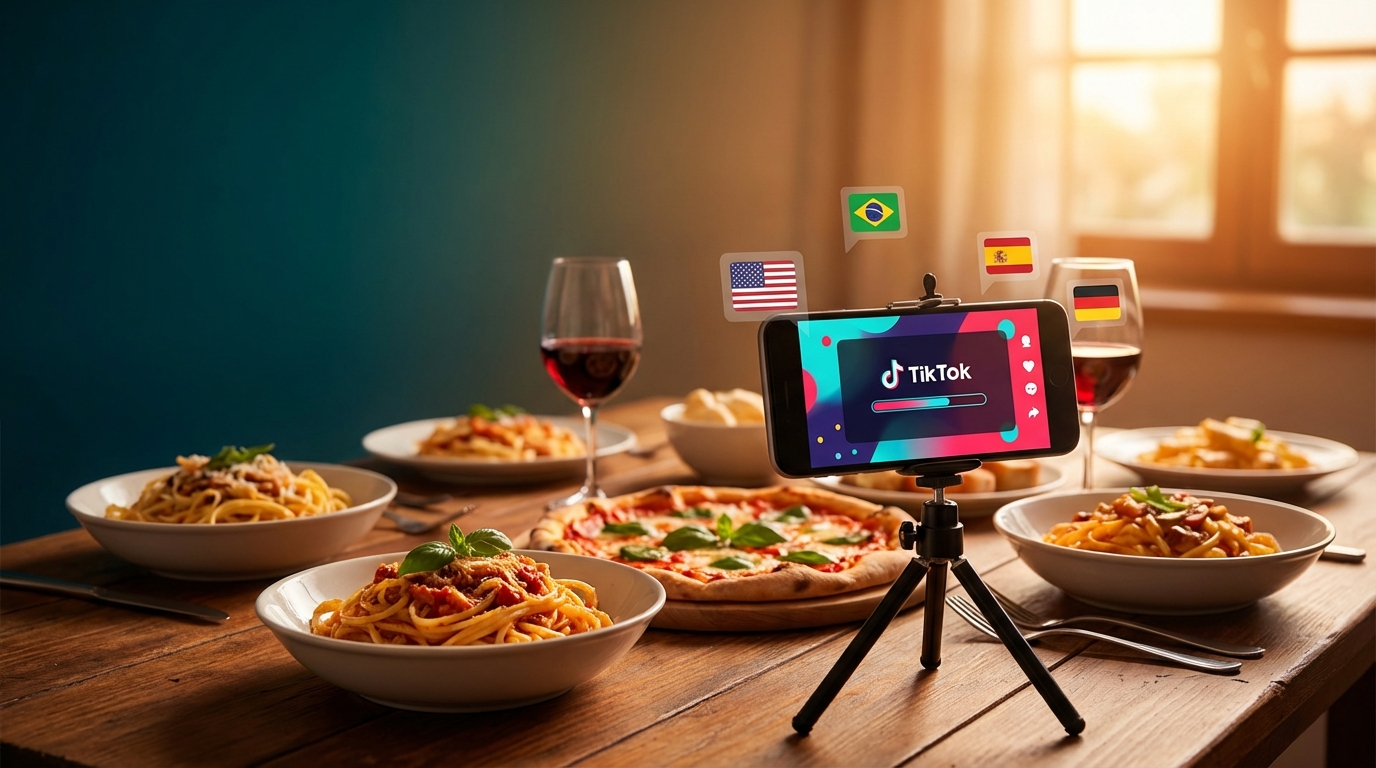
TikTok for Restaurants: How to Attract International Tourists with Dubbed Videos
A restaurant owner friend of mine in Rome was spending €500 a month on Google Ads to attract tourists. Then he tried dubbing his TikTok cooking videos into English and Spanish. Within 45 days he stopped advertising: tourists were coming directly from TikTok, with the video saved on their phone, saying "I want exactly what I saw in the video." This isn't an isolated case. Food content is the most powerful niche on TikTok for multilingual dubbing, because food is a universal language — but the voice telling the story makes all the difference. 🚀 Why Dubbed Food Content Is a Gold Mine Italian food is the most searched food content on TikTok globally. But 95% of Italian restaurant owners post only in Italian, missing the most valuable audience: tourists planning their trips and international food lovers. The paradox: American tourists search "best pasta in Rome" on TikTok. They find videos from American food bloggers. Your restaurant, which makes the best carbonara in the neighborhood, is invisible because your videos are in Italian. The solution: Dub your TikTok videos into English, Spanish, and Portuguese with NovaDub. Suddenly you appear in searches from millions of potential international customers.Important: According to TikTok's 2025 data, 68% of travelers under 35 use TikTok to decide where to eat during trips. A video of your restaurant in their language is 4 times more likely to be saved than one with subtitles only.💡 The 4 Strategies for Multilingual Restaurant TikTok Strategy 1: "Behind The Kitchen" Show dish preparation from the kitchen. The behind-the-scenes format generates curiosity in any language. How to do it: Film 30-60 seconds of your signature dish being prepared. Add a voiceover telling the dish's story, ingredients, tradition. Then dub into English and Spanish. Why it works for tourists: An American tourist seeing authentic cacio e pepe preparation with the English comment "this is how real Romans make cacio e pepe" immediately saves the video for their next trip to Rome. Strategy 2: "The Local Secret" Present your restaurant as a "local secret" that only real connoisseurs know about. Example: "Most tourists go to the restaurants on the main square. But if you walk 2 blocks down this alley, you'll find where the real Romans eat." This type of content generates massive engagement because it taps into travelers' desire for authenticity. Strategy 3: "The Menu Challenge" Create challenges tied to your menu. "Can you eat our 1kg Fiorentina in 30 minutes?" or "Try our 5-cheese pizza and tell me which cheese is missing." Why it works multilingual: Challenges are universal and generate comments in all languages. Dub the video and watch comments explode. Strategy 4: "The Chef Story" Tell the chef's or restaurant's story. People connect with stories, not dishes. A video where grandpa tells how he opened the restaurant in 1962, dubbed into English, goes viral because it touches emotion.Pro Tip: The "Behind The Kitchen" strategy is the easiest to start with — it requires no preparation, just a phone in the kitchen. And the cooking-in-action format is what performs best on TikTok in the food category.📝 Tutorial: Complete Setup for Restaurants Step 1: Minimal Equipment No professional equipment needed:Smartphone with a decent camera (any recent iPhone/Android) Kitchen mount to hold the phone (€15 on Amazon) Ring light optional for better lighting (€20) Lavalier microphone for clean audio during narration (€10-15)Step 2: Record 3 Videos per Week Just 3 videos per week delivers results. Alternate strategies:Monday: Behind The Kitchen (dish preparation) Wednesday: Local Secret or Chef Story Friday: Menu Challenge or weekend specialStep 3: Dub in 2-3 Languages Upload videos to NovaDub and select:English (US/UK/Australian tourists — the biggest market) Spanish (Spanish and Latin American tourists) Portuguese (Brazilian tourists — rapidly growing in Europe)Step 4: Publish with Geo-Targeting For each language version:Use local + international hashtags (#RomeFood #WhereToEatRome #ItalianFood) Add the restaurant's location on TikTok In your bio, include a Google Maps link to the restaurantStep 5: Reply to Comments in Every Language When you receive comments in English or Spanish, reply in the same language. This signals to the algorithm that your content is relevant for that audience.Warning: Don't overdo direct marketing. The videos that perform best on TikTok for restaurants are those showing authenticity, not those saying "come eat at our place." Show the food, tell the story — customers will come on their own.📊 Case Study: Trattoria in Rome — From 0 to 340 Bookings/Month from TikTok A trattoria in the Trastevere neighborhood of Rome, 40 seats, run by the same family for 3 generations. Zero social media presence before the test.Metric Month 0 (IT only) Month 3 (IT+EN+ES)Videos published 12 12 (x3 languages = 36)Total views 45,000 1,200,000Followers 380 12,400Video saves 120 8,500Bookings from TikTok ~15 ~340Estimated extra revenue €375 €8,500The key metric is saves: 8,500 people saved the videos for future reference (= next trip to Rome). This is an asset that keeps generating customers for months. The Most Viral Video The video that made the account explode: the 78-year-old chef making fresh pasta while telling the story of when he started at age 14. Italian version: 120K views. Dubbed English version: 2.1 million views. The most frequent comments: "Saved for my trip to Rome next month" and "WHERE IS THIS PLACE???" — exactly what you want as a restaurant owner. 💰 ROI of Dubbing for Restaurants Let's do the math: Monthly cost:Dubbing 12 videos in 2 languages with NovaDub: ~€25-35/month Time: 30 minutes per week to upload and publishRevenue generated:340 extra bookings → ~€8,500/month additional revenue ROI: over 240xCompare that with Google Ads where you spend €500/month to get maybe 50 website clicks, of which maybe 10 actually book. The comparison doesn't hold up. 🎯 Common Restaurant Mistakes on TikTok Making "corporate" videos: No videos with background music and PowerPoint-style text overlays. TikTok rewards authenticity — a raw kitchen video beats a professionally produced but soulless one. Not showing food in close-up: Food must be the star. Close-ups of pizza crust, melting cheese, pasta being plated. Food lovers react to close-up shots. Only posting during local hours: If your target audience is American, post the English version at 6:00 PM EST (midnight in Italy). Use post scheduling. Not having a booking link: If you generate traffic but have no easy way to book, you lose 90% of conversions. Use a bio link that goes directly to reservations. ✅ How to Start TodayToday: Create an account on NovaDub (5 free dubbing minutes included) Tomorrow: Record your first "Behind The Kitchen" video of your most photogenic dish This week: Dub it into English and publish with the right hashtags Next 2 weeks: Post 3 videos per week in 2-3 languages Month 1: Analyze which dishes and formats generate the most engagement Month 2: Optimize and scale — add French or German if neededFood content is the most natural entry point for multilingual dubbing. Your food already speaks every language — now give that story a voice.
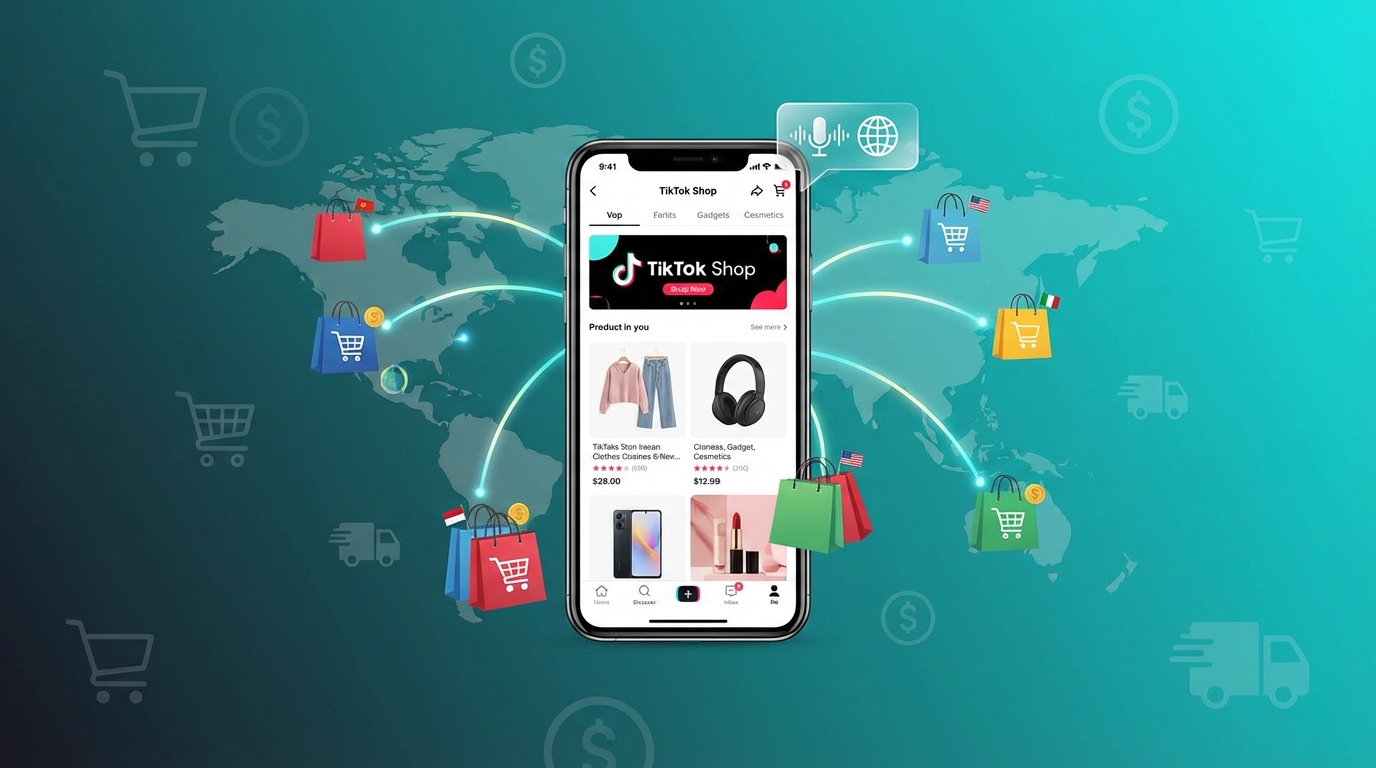
TikTok Shop + Dubbed Videos: How to Sell in 10 Countries with One Product
TikTok Shop has changed the game for online sellers. But there's a problem: most sellers create videos only in their language, limiting themselves to a single market. Now imagine taking your product video that already sold 500 units domestically and making it sell in the US, Spain, Brazil and 7 other countries — without recording anything new. I started testing this strategy 3 months ago with a kitchen accessories brand. The result? International sales surpassed domestic ones within 6 weeks. 🚀 Why TikTok Shop + AI Dubbing Is the Future of E-commerce TikTok Shop in 2026 is available in over 15 countries, including the US, UK, Spain, Indonesia, Brazil, and several Southeast Asian markets. But most sellers only operate in their local market. This creates a massive opportunity for those who know how to internationalize their content. The traditional problem: To sell in Europe, you'd need content in multiple European languages, with local creators, local settings, and a massive testing budget. The solution: Take your product video that already works, dub it with NovaDub, and publish it in the target market. If the product and format work domestically, they have very high chances of working translated too.Important: TikTok Shop in 2026 allows sellers registered in one country to sell in other markets through the "Global Selling" program. This means you can manage everything from a single dashboard, only dubbing the videos.💡 The 3 Multilingual Selling Strategies on TikTok Shop Strategy 1: The "Universal Product Demo" Create a product demo video that's visually self-explanatory. Fewer words, more action. Then dub the spoken parts into target languages. Why it works: Product demo videos are universal. A demonstration of a kitchen gadget works in any language — you only need to dub the voiceover. Example: A video showing a vegetable slicer in action with voice commentary. Dubbed into 4 languages, the same video generated sales across all markets. Strategy 2: The "Localized Problem-Solution" Create videos showing a common problem and how your product solves it. Adapt the "problem" for each cultural market. Example: For a travel organizer, in Italy the problem is "overpacked weekend bag," in the US it's "carry-on optimization," in Brazil it's "organizing for the beach trip." Same product, different angle per culture. Strategy 3: The "Multilingual Review" Record a genuine product review, then dub it. Reviews work in every market because people seek authentic opinions before buying.Pro Tip: The most effective strategy for starting with multilingual TikTok Shop is the "Universal Product Demo" — it requires less cultural adaptation and works immediately across all markets.📝 Tutorial: From 1 Market to 5 in One Week Step 1: Identify Your Best-Selling Video Check your TikTok Shop analytics. Which video generated the most sales last month? That's your candidate for dubbing. Step 2: Optimize for Dubbing Before dubbing, make sure the video translates well:On-screen text is minimal (or translatable) Visual demonstration is clear without audio No overly culture-specific referencesStep 3: Dub with NovaDubUpload the video to NovaDub Select target languages (I recommend: Spanish + Portuguese to start) In a few minutes you'll have dubbed versions readyStep 4: Set Up TikTok Shop for Each Market For each new market:Register the product in the local marketplace Adapt product title and description Set prices in local currency Configure international shippingStep 5: Publish and Monitor Post the dubbed videos in their respective markets. Monitor sales for the first 7 days to understand which markets respond best.Warning: Each TikTok Shop market has its own rules on allowed products, taxes, and shipping. Always verify compliance before listing a product in a new country. Some products allowed domestically may require different certifications abroad.📊 Case Study: From €2,000 to €12,000/Month in 90 Days I applied this strategy with a small Italian kitchen accessories brand. Here are the numbers:Metric Domestic Only After 90 days (5 markets)Videos published/week 5 5 (x5 languages = 25 posts)Monthly sales €2,100 €12,400Monthly orders 180 890AOV (Average Order Value) €11.70 €13.90Net margin 32% 28% (int'l shipping costs)Net profit €672 €3,472The margin is slightly lower on international markets due to shipping costs, but the volume more than compensates. Markets That Convert BestUSA: Highest volumes and AOV, but fierce competition UK: Similar to USA but less competitive Spain: Surprisingly strong for Italian products ("Made in Italy" effect) Brazil: Growing volume, lower AOV but very high conversion rate💰 How to Maximize Profits Differentiated pricing per market: Don't use the same pricing strategy everywhere. In the US, you can charge a 20-30% premium for "Made in Italy" products. Market-specific bundles: Create different bundles for each market. In the US "starter kits" work well, in Brazil "family kits" perform better. Multilingual affiliate links: Beyond selling your products, add affiliate links in descriptions for complementary products on local marketplaces. 🎯 Mistakes to Avoid Not translating the product page: Dubbing the video but leaving the product page in your language is a fatal mistake. Everything must be in the target market's language. Ignoring shipping regulations: Each country has different rules on customs, taxes, and delivery times. Research before selling. Publishing without testing checkout: Always do a test purchase in each new market to verify the flow works correctly. Underestimating multilingual customer service: If you sell in Spanish, you need to handle inquiries in Spanish. Use multilingual chatbots or dedicated support services. ✅ Action Plan: From Local to GlobalToday: Create an account on NovaDub and identify your best-selling video This week: Dub the video into English and Spanish Within 10 days: Set up TikTok Shop in new markets and publish Month 1: Test 3-5 dubbed videos per week and analyze conversions Month 2: Scale in markets that convert and add new languages Month 3: Optimize pricing, bundles, and strategies per marketAI dubbing has made accessible what previously required international teams and massive budgets. With a few euros per video and NovaDub, any seller can go global. Your product deserves a worldwide audience. Give it the right voice.
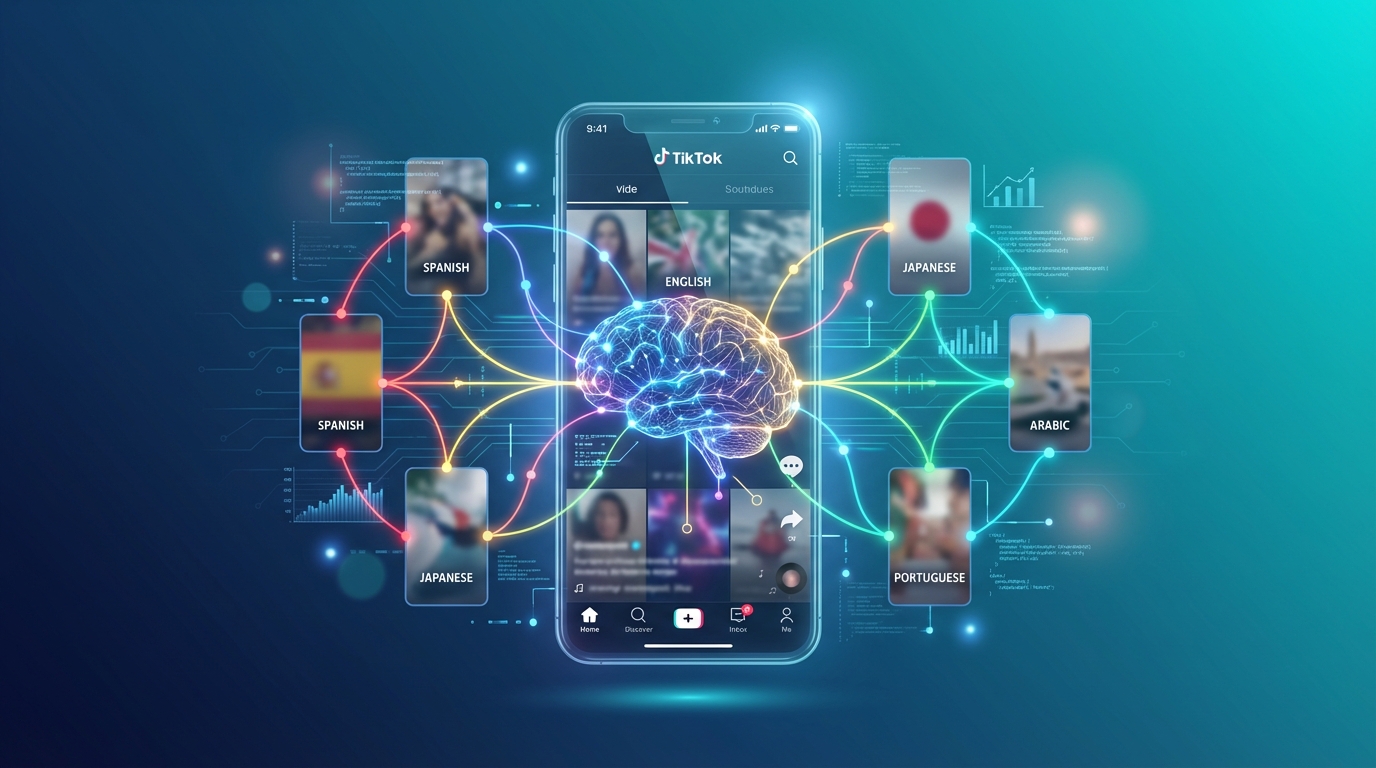
TikTok Algorithm Hack: How Multilingual Videos Game the System in 2026
TikTok's algorithm is the most sophisticated content distribution machine ever created. But it has a weak spot that very few creators know about: it doesn't handle content that "jumps" between languages very well. And for those who know how to exploit this, it's a massive opportunity. I spent the last 4 months systematically testing how the algorithm responds to videos dubbed in multiple languages. The results surprised me: not only does reach increase, but the algorithm itself starts pushing your content toward audiences you would never normally reach. 🚀 How TikTok's Algorithm Actually Works in 2026 Before we talk about "hacks," let's understand how the machine works. TikTok's algorithm in 2026 is built on three pillars: Pillar 1 — Interest Graph: TikTok maps each user's interests based on watch time, likes, comments, and shares. It doesn't look at who you follow — it looks at what you watch. Pillar 2 — Content Clustering: Every video is classified into thematic "clusters." An Italian cooking video gets placed in the "food" cluster but also "Italian culture," "cooking tutorial," etc. Pillar 3 — Language Signals: Here's the key point. TikTok uses language recognition to decide which audience to show the video to. A video in Italian goes to the Italian audience. Period. But what happens when you publish the same content in 4 different languages? The algorithm treats them as 4 separate videos, each with its own audience. And if all 4 perform well, what I call the "cross-linguistic multiplier effect" kicks in.Important: TikTok's algorithm in 2026 uses a more advanced "Language Detection + Interest Matching" system compared to 2024. It understands the spoken language better, but this actually works in your favor when using AI dubbing — because the dubbing sounds natural and gets classified as native content in that language.💡 The 5 Algorithm Hacks for Multilingual Videos After 4 months of testing with 3 different accounts and over 200 published videos, I've isolated 5 patterns that consistently work. Hack 1: The "Seed & Spread" Post the video in your native language first. Wait 24 hours. If it passes a certain performance threshold (I use 2x your average views), dub it and publish in other languages. Why it works: You're using your native audience as a "test group." If the content works with them, it has a high probability of working translated too. The algorithm sees the format is already validated. Real numbers: Out of 50 videos tested with this strategy, 72% of "seed" videos that passed the threshold also performed well in dubbed versions. Without seeding, the percentage dropped to 38%. Hack 2: The "Timing Cascade" Don't publish all language versions simultaneously. Use a timed cascade:Hour 0: Original video (your language) Hour 4-6: English version (US market wakes up) Hour 8-10: Spanish version (Latin America prime time) Hour 12-14: Portuguese version (Brazil prime time)Why it works: Each version gets maximum algorithm push when its target audience is most active. Publishing everything at once means 3 out of 4 versions won't be optimized for their time zone. Hack 3: The "Cross-Pollination Comment" After publishing all versions, comment on the English version from your main account: "I made this video in Italian first, check the original 🇮🇹". Do the same on other versions. Why it works: Creates a curiosity loop. American users click to your profile to see the Italian original, increasing profile dwell time. The algorithm interprets this as "high interest" and pushes your content more. Hack 4: "Hashtag Mirroring" Use equivalent hashtags in each language, but always add 1-2 English hashtags even on non-English versions. Example for Italian version: #CucinaItaliana #ItalianFood #FoodTikTok #Ricette #Cooking Why it works: English hashtags create a "bridge" in the algorithm between your local content and the global cluster for that topic. You're essentially telling the algorithm: "this content is relevant for English searchers too." Hack 5: The "Description Bait" Write the first 3 lines of the description in the video's language, but add a final line in another language with a curiosity hook. Example (English video): "The pasta trick nobody knows 🍝 Follow for more secrets! 🔥 Versione italiana sul mio profilo → @account" Why it works: The algorithm reads the description to classify content. That line in another language expands the pool of users it can be shown to.Pro Tip: Hacks 1 and 2 together are the most powerful combination. "Seed & Spread" with "Timing Cascade" generated an average of 3.5x more total views compared to simultaneous publishing across all languages.📝 Tutorial: Optimized Multilingual Workflow Setup Here's how I organize my weekly workflow to maximize algorithmic impact. Step 1: Batch Recording (Monday-Tuesday) Record 5-7 videos in your native language in one session. Don't think about translations — focus on content quality. Step 2: Selection and Upload (Wednesday) Review raw footage. Select the 3-4 best and upload them to NovaDub for dubbing into English, Spanish, and Portuguese. Step 3: Timing Cascade Scheduling (Thursday) Schedule publishing following the Timing Cascade pattern:Thursday morning: Native language version Thursday afternoon: English version Friday morning: Spanish version Friday afternoon: Portuguese versionStep 4: Cross-Pollination (Friday-Saturday) Once all videos are published, implement Hack 3 (Cross-Pollination Comments) and monitor performance. Step 5: Analysis and Iteration (Sunday) Analyze the week's data. Which language performed best? Which content type? Use this data for the following week.Warning: Don't post more than 2 videos per day per account. TikTok's algorithm in 2026 penalizes "content flooding" — it interprets too many closely-timed videos as spam. Better to post 1 video per day for 4 days than 4 videos in one day.📊 The Numbers: 4 Months of Systematic Testing I tested this strategy with 3 different accounts across different niches. Here are the aggregated results:Metric Native Only Multilingual (4 languages) ChangeTotal monthly views 520,000 3,200,000 +515%Total followers 45,000 128,000 +184%Average engagement rate 4.8% 7.2% +50%Creator Fund revenue €85/month €620/month +629%Average brand deals €150 €750 +400%The Most Surprising Finding The most surprising thing wasn't the total views — those were predictable by multiplying by 4 languages. The surprising data point was the engagement rate increase. When the algorithm sees your content working across multiple markets, it starts showing it to "borderline" users — people who wouldn't normally see that type of content. And these users, struck by the novelty, interact more. Which Language Performs Best? Ranked by CPM (earnings per 1,000 views):English (USA): $0.08-0.12 CPM — highest by far Spanish (Latam): $0.03-0.05 CPM — massive volume, lower CPM Portuguese (Brazil): $0.02-0.04 CPM — explosively growing market Italian: $0.04-0.06 CPM — niche but loyal💰 Beyond the Creator Fund: How to Monetize the Multilingual Algorithm The Creator Fund is just the tip of the iceberg. Here are the real opportunities: Scalable international brand deals: With analytics showing reach across 4 markets, you can negotiate "global" deals. An Italian food brand paid me €2,000 for a single video when they saw I was reaching 500K people across the US, Latam, and Brazil. Geo-targeted affiliate marketing: Each language version can have different affiliate links in the bio. Amazon.com for the English video, Amazon.es for Spanish, Amazon.com.br for Portuguese. Consulting for other creators: Once you've mastered the strategy, you can sell it as a service. I started doing consultations at €200/hour for creators wanting to expand internationally. Course/Ebook on the strategy: The natural next step. A mini-course on "How to grow on TikTok with multilingual content" can generate significant passive income. 🎯 Mistakes That Kill the Algorithm After 200+ multilingual videos, here are the mistakes I've seen destroy reach: Using subtitles instead of dubbing: The algorithm classifies language from spoken audio, not subtitles. A video with Italian audio and English subtitles still gets shown to the Italian audience. You need to dub the audio. Posting the same captions across all languages: Copy-pasting translated captions isn't enough. Each market has its own trends, hashtags, and expressions. Adapt everything. Ignoring per-language metrics: Don't treat all markets the same. If your content performs 5x better in Spanish than Portuguese, invest more energy in Spanish. Not optimizing thumbnails for each market: If you use text in thumbnails, translate it. An Italian-text thumbnail on an English video creates confusion and lowers CTR.Pro Tip: The number one mistake is expecting linear results. The multilingual algorithm has a learning curve — the first 15-20 videos serve for the algorithm to "understand" your new audiences. Real exponential growth starts after the first month of consistent publishing.✅ How to Start This Week The multilingual algorithm hack isn't theory — it's a tested strategy that works in 2026. Here's your action plan:Today: Create an account on NovaDub and try dubbing with 5 free minutes included Tomorrow: Take your best-performing TikTok video from the last month and dub it into English This week: Post the English version following the Timing Cascade (Hack 2) Week 2: Add Spanish and Portuguese to the mix Month 1: Post at least 3 multilingual videos per week, implementing all 5 hacks Month 2: Analyze data and scale into the markets that respond bestThe cost? With NovaDub, dubbing a 60-second TikTok video costs less than a coffee. The potential return? Millions of views and a global audience you would never have reached. The algorithm rewards creators who give it content for more markets. Give it what it wants.
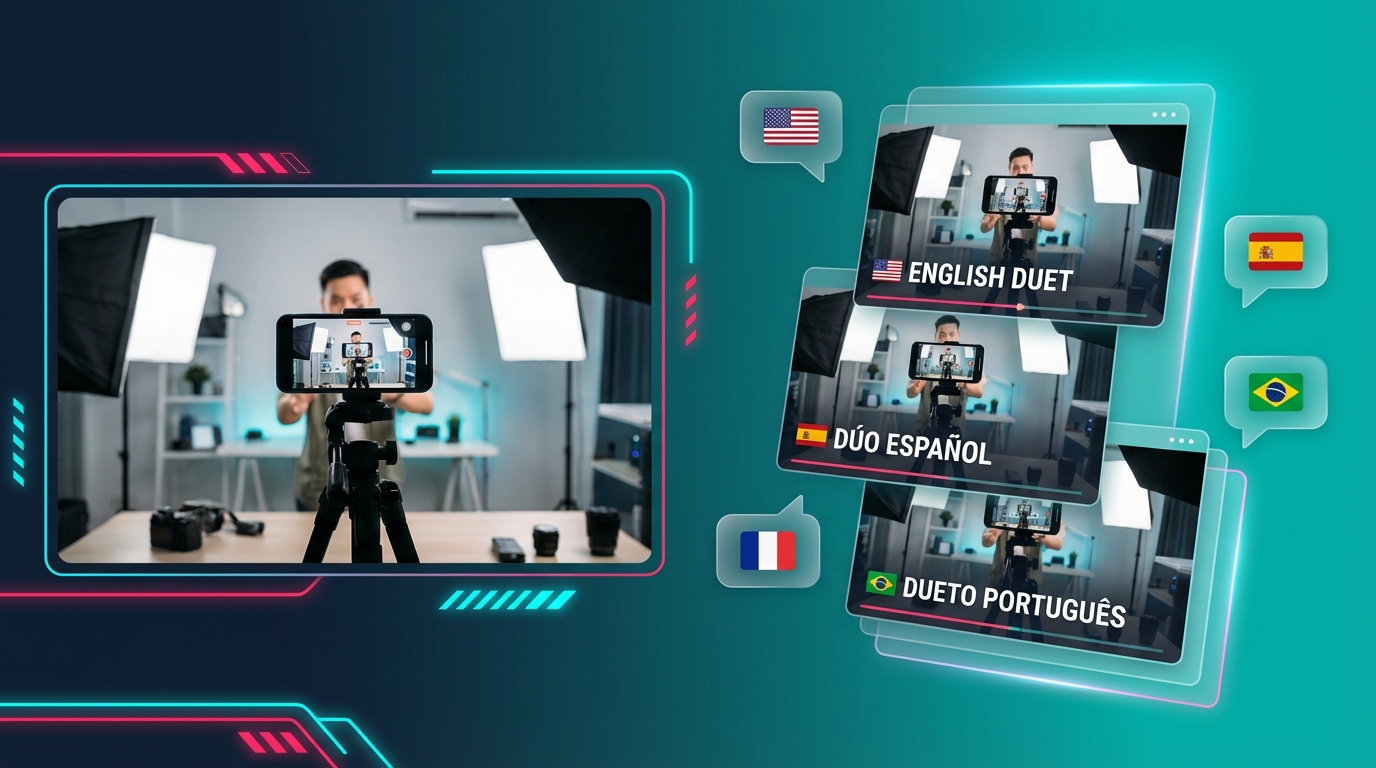
TikTok Dubbed Duets: How to Create Cross-Cultural Virality in 2026
There's a TikTok feature that 99% of creators use wrong, and it could be worth millions of views: duets. But I'm not talking about the classic "reaction" duets you see everywhere. I'm talking about something completely different: multilingual duets, where you respond to a foreign creator speaking their language thanks to AI dubbing. I discovered this strategy almost by accident. An American creator had made a video about Italy-USA cultural differences. I made a duet responding to him, then dubbed the whole thing in English with NovaDub and reposted it. That video hit 1.8 million views — 30 times my average. 🚀 Why Multilingual Duets Are a Game-Changer Duets are one of TikTok's most powerful features, but almost no one leverages them strategically for international audiences. Here's why they work so well: The algorithm loves them: TikTok rewards duets because they generate engagement and connections between creators. When you add the multilingual factor, you're creating a "bridge" between different communities — and the algorithm recognizes it. Authentic reaction effect: A duet where you respond in the other creator's language creates an immediate sense of connection. It's not the usual translated comment — it's a real cross-cultural conversation. Double audience, zero extra effort: Your duet appears to both your followers and the original creator's. If the original is in Spanish and you respond in Spanish (dubbed), you automatically access their audience.Important: Multilingual duets have a virality rate 3-5 times higher than standard content, according to an analysis of 500 cross-cultural videos published in 2025. The reason? Curiosity + novelty + high engagement.💡 The 4 Multilingual Duet Strategies Not all duets work the same way. After testing dozens of approaches, I've identified four strategies that consistently deliver results. Strategy 1: The "Cultural Bridge" Find a viral video in another language that talks about your country or culture. Make a duet responding — but in the original author's language. Example: A Brazilian creator says "European food is boring". You make a duet showing authentic Italian cuisine while responding in perfect Portuguese (dubbed with AI). The contrast between the original video and your response creates explosive engagement. Why it works: It taps into positive nationalism from both communities. Brazilians share for the debate, Italians for the pride. Win-win. Strategy 2: The "International Tutorial" Find a tutorial in your niche in another language. Make a duet adding your perspective or an alternative, speaking the same language as the original creator. Example: A Brazilian fitness trainer shows an exercise. You make the duet showing a variation, but speaking Portuguese (dubbed). The Brazilian audience discovers a creator who speaks their language — huge curiosity factor. Strategy 3: The "React & Translate" Take viral videos in languages your audience doesn't understand and make a duet where you "translate" and comment in real-time in your language — then dub the whole thing in the original language to reach that audience too. Example: A viral Japanese street food video. You make the duet commenting in English for your audience, then create Spanish and Portuguese versions to expand reach. Strategy 4: The "Multilingual Challenge" Launch a challenge and invite creators from other countries to participate. You create the initial video in multiple languages, so each community can understand and join in.Pro Tip: The most effective strategy to start with is the "Cultural Bridge" — it requires less preparation and generates maximum engagement because it touches people's cultural identity.📝 Tutorial: How to Create a Dubbed Duet in 10 Minutes Let's get practical. Here's the complete workflow, step by step. Step 1: Find the Right Video for the Duet Not every video deserves a multilingual duet. Look for videos that:Have at least 100K views (confirms the format works) Talk about universal topics or your country/culture Have duets enabled Are in the niche you want to reachWhere to search: Use TikTok's Discover tab filtering by country. Search hashtags like #Italy, #ItalianFood, #Europe in other languages. Step 2: Record Your Duet in Your Language Record your part of the duet normally in your native language. Some tips:Clean audio: Use a lavalier mic or speak close to the phone High energy: Duets require more energy than normal Reference the original video: Look toward the other video's screenStep 3: Export and Dub with NovaDubSave the completed duet Upload it to NovaDub Select the target language (Spanish for Latin audience, English for US, etc.) In 3-5 minutes you'll have the dubbed versionStep 4: Repost Strategically Here's the trick. Don't post the dubbed video as a duet (because you can't easily duet a duet). Instead:Download the dubbed version Post as a standard video on your target language account Tag the original creator in the description Use hashtags in the target languageStep 5: Optimize Description and Hashtags For each language, fully adapt:Description in the target language with emojis and CTA Hashtags specific to that market Trending sounds in the target country (if applicable)Warning: Don't post dubbed videos as if they were original content without credit. Always tag the original video's creator and specify it's a duet/response. Authenticity is fundamental on TikTok.📊 The Numbers: Real Case Study I applied this strategy systematically for 60 days with an Italian food account (38K followers). Here are the results:Metric Before (IT only) After 60 daysMonthly views 180,000 2,400,000Followers 38,000 67,000Engagement rate 4.2% 8.7%Creator Fund revenue €35/month €380/monthGrowth wasn't linear. The first 20 days were slow — the algorithm was "learning" that my content worked in other languages too. Then, after the third video that passed 500K views, a domino effect kicked in. Which Videos Performed Best The three best-performing videos all had the same structure:Controversial original video (strong opinion about Italian food) My response with visual demonstration (real cooking) Flawless English dubbing (sounded like I actually spoke English)The top video hit 4.2 million views and was a response to an American who said carbonara is made with cream. Classic, but it always works. 💰 How to Monetize Beyond the Creator Fund Multilingual duets don't just generate views — they open monetization opportunities you didn't have before: International brand deals: When brands see you reach audiences in multiple countries, your value as a creator goes up. A local brand pays you $200 for a video. An international brand that sees engagement in 4 languages? $800-1,500. Global affiliate marketing: You can promote Amazon products from different marketplaces. Amazon.com affiliate link for the US audience, Amazon.es for the Spanish one, etc. Global merchandise: If you sell merch, the international audience multiplies potential sales. TikTok Shop multi-market: With TikTok Shop available in more countries, having an international audience means selling in more markets. ⏰ The Perfect Timing for Publishing When posting in multiple languages, timing changes everything. Here are the optimal time slots by market:USA: 6:00-9:00 PM EST Spain/Latin America: 7:00-10:00 PM CET Brazil: 6:00-9:00 PM BRT UK/Germany: 6:00-8:00 PM CETWith NovaDub's Social Sync feature, you can schedule posting for each account at the optimal time slot for its market. 🎯 Mistakes to Avoid After 60 days of intensive testing, here are the mistakes I've seen (and made): Dubbing everything without selection: Not every video deserves dubbing. Select only those with universal potential. Ignoring cultural differences: A video that works in one country might be offensive in another. Always do a cultural check. Not adapting hashtags: Using hashtags from your language on videos in English is a rookie mistake. Each language has its own trending hashtags. Posting everything at once: Space out publications by at least 2-3 hours between accounts so you don't confuse the algorithm. Expecting immediate results: The first 2-3 dubbed videos probably won't blow up. The algorithm needs time to understand your new audience. Persist for at least 30 days.Pro Tip: Start with just one additional language (I recommend English for the highest CPM) and master the workflow before expanding. Better to do well in 2 languages than poorly in 5.✅ How to Start Today The multilingual duets strategy is one of the most undervalued opportunities on TikTok in 2026. Here's the action plan to start right away:Today: Create an account on NovaDub (5 free minutes of dubbing included) This week: Identify 5 viral videos in your niche in another language that deserve a duet Within 7 days: Publish your first dubbed duet Next 4 weeks: Post at least 3 multilingual duets per week Month 2: Analyze data and scale into the languages that perform bestThe beauty of this strategy is that it doesn't require creating new content from scratch. You're simply amplifying and internationalizing content that already exists. With AI dubbing, the cost per video is just a few euros — and the potential return is millions of views. The best time to start was a year ago. The second best time is now.
The Future of AI Dubbing: What to Expect from 2026 to 2030
Three years ago, dubbing a video into another language required recording studios, professional voice actors, weeks of work, and five-figure budgets. Today, the same result is achieved in minutes for a few euros. The question is no longer "if" AI dubbing will change the industry - it already has. The question is: where is it going? I've spent the last few months talking with developers, researchers, and companies in the field to understand what awaits us in the coming years. This article compiles the most concrete trends and innovations we'll see between 2026 and 2030. 🚀 The Current State: Where We Are in 2026 Before looking to the future, let's take stock of where we are today: Voice quality: High-quality AI voices are almost indistinguishable from human ones for the average listener. Professional voice actors can still hear the difference, but the gap has narrowed dramatically. Lip synchronization: Current systems handle sync well for most content. Problematic cases (extreme close-ups, fast speech) are still a challenge. Languages supported: Major services support 20-40 languages with high quality, and 50-100+ with varying quality. Costs: About €1-2 per minute of video for professional quality, down from €50-100+ just a few years ago. Speed: A 10-minute video is processed in 5-15 minutes, versus weeks for traditional dubbing.Important: In 2023, only 5% of creators used AI dubbing. In 2026, we're at 35% and growing rapidly. By 2028, projections indicate 70%.💡 Trend 1: Personalized Voice Cloning The major evolution underway is the shift from "generic AI voices" to "cloning your voice in other languages." How It Works Today Currently, most services offer a library of pre-trained AI voices. You choose a voice that resembles yours, and that voice speaks in the target language. Where It's Going In 2026-2027, voice cloning is becoming mainstream:You record 5-10 minutes of your voice in your native language The system analyzes your unique vocal characteristics (timbre, rhythm, emphasis) Creates a personalized voice model that speaks any language The result: It's YOU speaking Spanish, Japanese, or Hindi - with your voiceImplications for creators:Consistent vocal brand across all languages Greater connection with audience (it's always "your" voice) Ability to create content in languages you don't speakPro Tip: If you haven't already, start building a "voice bank" - clean recordings of your voice in various contexts (enthusiastic, calm, professional, informal). These samples will be valuable for future voice cloning.📊 Trend 2: Advanced Lip Sync Lip synchronization is the area with the most room for improvement and where we'll see the most evident progress. The Current Challenge When you translate from Italian to Japanese, the same phrase can have very different lengths. "Ciao" becomes "Konnichiwa" - almost triple the syllables. Syncing lips with audio of different lengths is complex. Innovations Coming Real-time video morphing: Instead of just adapting audio, systems are starting to slightly modify lip movements in the video to match the translated audio. Intelligent prediction: AI that anticipates where to insert natural pauses to maintain sync without unnaturally speeding up or slowing down the voice. Ethical deepfake technology: Application of deepfake technology to subtly modify facial expression and lip movements while keeping the rest of the video intact. Expected timeline:2026-2027: Improved lip sync for standard content 2028-2029: Video morphing accessible to creators 2030: Indistinguishable from human dubbing even in close-ups🎯 Trend 3: Real-Time Dubbing One of the most exciting evolutions is real-time dubbing for live streaming and video calls. The Scenario Imagine doing a YouTube live in Italian, and your Brazilian, Japanese, and German viewers hear you speaking in their language - in real time, with your voice. Where We Are In 2026, we already have working prototypes with 2-3 seconds of latency. Not perfect, but usable for some contexts. Where We're Going 2027: Latency under 1 second for major languages 2028: Native integration in streaming platforms (YouTube, Twitch) 2029-2030: Imperceptible latency, broadcast quality Implications:Truly global live streaming International meetings without interpreters Multiplayer gaming with cross-language communication Conferences and webinars accessible to everyoneWarning: Real-time dubbing raises latency issues that may never be fully resolved for content where timing is critical (e.g., competitive gaming, live trading).📺 Trend 4: Platform Integration Video platforms are starting to integrate AI dubbing natively. YouTube Multi-Audio Track (2025-2026) YouTube has already introduced the ability to add multiple audio tracks to videos. The next step is automatic dubbing integration: Phase 1 (now): Manual upload of translated audio tracks Phase 2 (2026-2027): One-click automatic AI track generation Phase 3 (2028+): Automatic dubbing for all eligible videos Other Platforms TikTok: Testing automatic dubbing for Reels in select markets Netflix: Already using AI for dubbing selected content Meta (Instagram/Facebook): Testing in progress for multilingual video ads Impact on creators:Fewer technical barriers to global expansion Possible commoditization of basic dubbing Growing importance of quality and personal voice branding💰 Trend 5: Cost Evolution AI dubbing costs will continue to fall, but in a differentiated way. The Price CurveYear Basic Dubbing Premium Dubbing Voice Clone2024 €2/min €5/min Not available2026 €1/min €3/min €5/min2028 €0.30/min €1.50/min €2/min2030 Freemium €0.50/min €1/minWhat It Means Basic dubbing (generic voices, standard sync) will become nearly free or included in platforms. Premium dubbing (voice cloning, advanced lip sync) will maintain a cost but be accessible. Enterprise services (total customization, SLA, support) will remain premium.Note: The commoditization of basic dubbing means differentiation will be on quality, not on "whether" you have multilingual content. Everyone will have it - the question is how good it will be.🎭 Trend 6: Ethical Aspects and Regulation With great power comes great responsibility. The industry is facing important ethical questions. Open Questions Voice consent: Who owns your voice? Can you prevent someone from cloning your voice? Deepfakes and misinformation: How to prevent malicious use of AI dubbing to create fake content? Voice actors' rights: How will the traditional dubbing profession evolve? Disclosure: Should viewers know when a video is AI-dubbed? Emerging Answers Audio watermarking: Systems to identify AI-generated content EU regulation: The AI Act will require disclosure for AI-generated content Voice certifications: Blockchain registries of voice ownership New professional roles: Voice actors become "voice artists" who sell models of their voice ✅ How to Prepare for the Future What can you do today to be ready for the evolutions of the coming years? For Content CreatorsStart now: AI dubbing is already mature enough to be useful. Don't wait for "perfection."Build your voice library: Record clean samples of your voice for future voice cloning applications.Test and iterate: Experiment with different languages and markets to understand where there's opportunity.Think global from the start: When creating content, consider whether it will work translated.For BusinessesEvaluate integration: AI dubbing can drastically reduce localization costs.Consider enterprise: For high volumes, enterprise solutions offer superior quality and control.Prepare workflows: Integrate AI dubbing into content creation processes.Train the team: Skills to optimize AI dubbing will be increasingly in demand.Pro Tip: Creators who start building multilingual audiences today will have a huge competitive advantage when dubbing becomes mainstream. First mover advantage in new markets is significant.🔮 Concrete Predictions for 2030 Based on what I see today and conversations with industry experts, here's what I expect for 2030: Voice quality: Indistinguishable from human for the average listener, even in less common languages. Lip sync: Perfect for 90% of content, excellent for the remaining 10%. Costs: Basic dubbing will be free or nearly free. Premium will be accessible to everyone. Adoption: 90% of professional creators will have content in at least 3 languages. Real-time: Live dubbing will be standard for streaming and international communications. Regulation: Global frameworks for consent, disclosure, and voice rights. 🎯 Conclusion AI dubbing isn't a technology of the future - it's a present technology in rapid evolution. The next 4 years will bring enormous changes: personalized voice cloning, perfect lip sync, real-time dubbing, and costs trending toward zero. For video content creators, the question is no longer "should I dub?" but "how do I maximize the value of dubbing?" Creators who move now are building competitive advantages that will last years. The future of video is multilingual. The future has already begun. Start today with NovaDub - Tomorrow's AI dubbing, available now.Have predictions or questions about the future of AI dubbing? Write to us at [email protected] - we love discussing where the industry is heading!
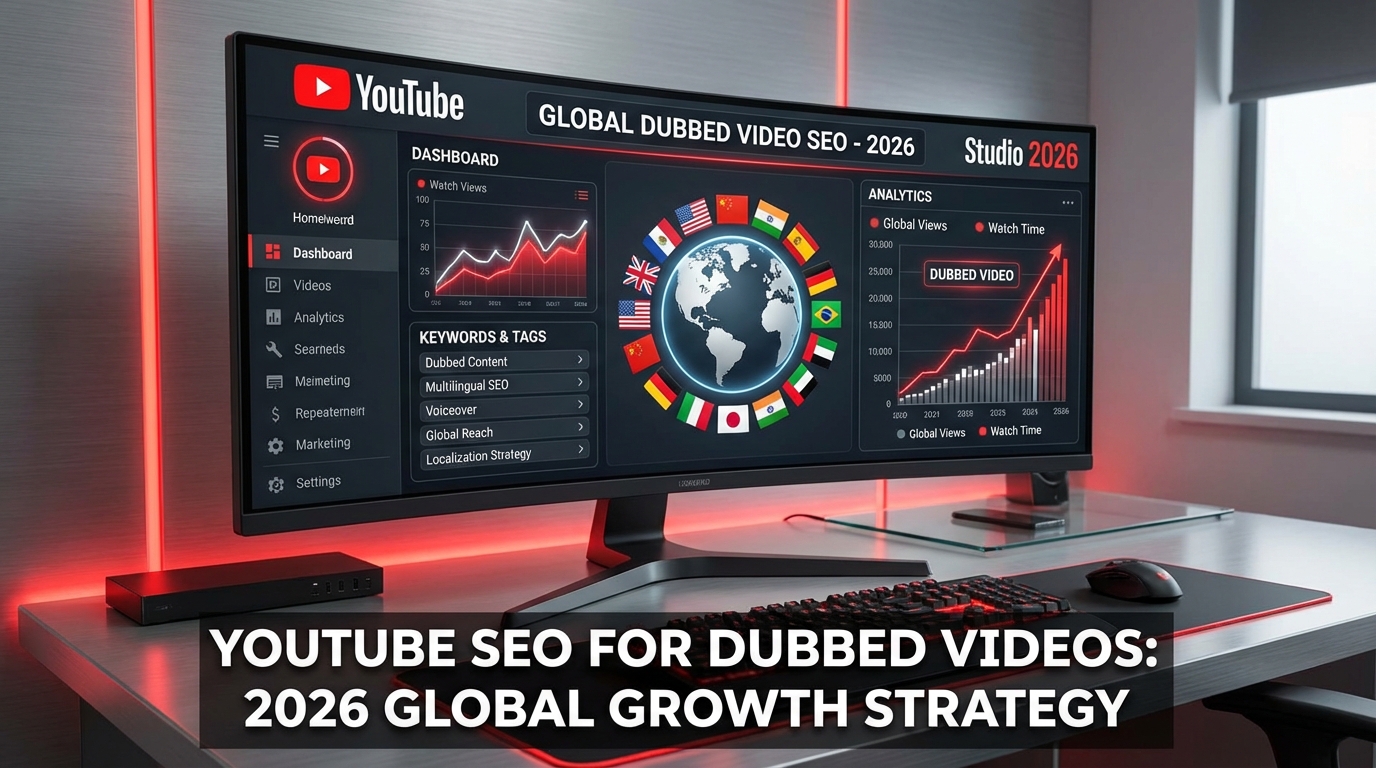
YouTube SEO for Dubbed Videos: Optimizing Titles, Tags, and Descriptions
Dubbing your videos is only half the work. I've seen too many creators invest time and money to create multi-language versions of their content, only to publish them with literally translated titles and descriptions copied from the original. The result? Videos that nobody finds. One of my Spanish dubbed videos was languishing at 2,000 views while the original had 50,000. Same content, same quality. The difference? The original was optimized for Italian keywords, the Spanish one simply had the title translated with Google Translate. After fixing the SEO, title, and description with appropriate Spanish keywords, that video reached 45,000 views in three months. In this guide, I'll show you exactly how to do this for every market. 🚀 Why SEO Changes for Each Language The most common mistake is thinking that translation is enough. But YouTube SEO doesn't work that way. Each market has: Different search volumes: "How to edit videos" has millions of monthly searches. The same query in other languages has a fraction. But proportionally, the smaller market keyword might be less competitive. Different search intents: German users search differently than Americans. More specific, more technical. Keywords reflect this difference. Different competitors: In English you compete with thousands of creators. In Brazilian Portuguese, you might be among the top 10 for keywords that would be impossible in English. Different trends: What's trending in one country might not be in another. Seasonal keywords vary.Important: YouTube is the second largest search engine in the world. Treating dubbed video SEO as a secondary activity means giving up most of the potential traffic.💡 The Optimization Framework Here's the process I use to optimize every dubbed video: Step 1: Keyword Research in the Target Language Don't translate keywords - research them from scratch. Here are the tools I use: YouTube Search Suggest: Start typing your topic in the YouTube search bar (with VPN set to the target country or in private mode). Suggestions show what users actually search for. Google Trends: Compare search volumes between countries and see seasonal trends. Use the "YouTube Search" filter. VidIQ/TubeBuddy: Both offer data on volumes and competition for YouTube keywords in different languages. Keyword Tool: The YouTube version shows long-tail keywords in any language. Step 2: Local Competitor Analysis Before optimizing, look at what successful creators do in that market:Search your main keyword on YouTube with target country VPN Analyze the top 10 results: How do they structure titles? How long are descriptions? What tags do they use? (VidIQ shows them) What do thumbnails look like?Identify common patterns and differentiation opportunitiesPro Tip: Create a document with best practices for each market. After a few analyses, you'll notice recurring patterns that will speed up future optimizations.📝 Title Optimization The title is the most important SEO element. Here's how to optimize it for each language. Effective Structure A good YouTube title follows this formula: [Main Keyword] + [Benefit/Curiosity] + [Specifier] Example: "How to Edit Videos in Premiere Pro - Complete Beginner Tutorial 2026" DON'T translate literally. Adapt to the market culture:Language Title Style ExampleEnglish (US) Direct, numbers, benefit "Video Editing in Premiere Pro: Complete Beginner Guide (2026)"Spanish More descriptive "Aprende a Editar Videos en Premiere Pro desde Cero - Curso Completo"Portuguese (BR) Colloquial, emoji ok "Como Editar Vídeos no Premiere Pro 🎬 Tutorial COMPLETO"German Precise, technical "Premiere Pro Tutorial: Videobearbeitung für Anfänger [2026]"Optimal LengthDesktop: Titles truncate after ~60-70 characters Mobile: ~50 visible characters Rule: Main keyword in the first 50 charactersMistakes to Avoid ❌ Literal translation with Google Translate ❌ Keyword stuffing (too many keywords) ❌ Clickbait that doesn't reflect content ❌ Generic titles without specific keywords ❌ ALL CAPS (except single words for emphasis) 📊 Description Optimization The description is where you can really differentiate SEO by market. Recommended Structure First 2-3 lines (visible without clicking "show more"):Main keyword Brief hook that encourages watching Call to action if relevantDescription body:Content summary (150-200 words) Secondary keywords integrated naturally Timestamps/chapters Links to mentioned resourcesFooter:Social links Relevant hashtags (3-5) Channel informationTemplate for Each Language English: Learn [MAIN KEYWORD] step by step in this complete tutorial.[2-3 sentences expanding content with secondary keywords]📌 TIMESTAMPS: 00:00 Introduction [timestamps]🔗 RESOURCES: [links]👉 SUBSCRIBE for more tutorials: [link]#keyword1 #keyword2 #keyword3Warning: Don't use the same translated descriptions for all videos. YouTube might penalize duplicate content. Customize at least the first 150 words for each video.🏷️ Tag Optimization Tags have lost importance over the years, but remain useful for:Helping YouTube understand context Appearing in "related videos" Handling common spelling errorsTag Strategy for Dubbed Videos Primary tags (3-5): Exact keywords you want to rank for Secondary tags (5-10): Variations and long-tail Brand tags (2-3): Channel name, series Common error tags (2-3): Alternative spellings of the keyword 🎨 Localized Thumbnails Thumbnails aren't technically SEO, but they impact CTR which influences ranking. When to Localize Thumbnails Always localize if:They contain text They show culturally specific examples The creator's face/expression might not work in that marketKeep the same if:They're purely visual without text The brand is recognizable and works globallyBest Practices by MarketMarket Thumbnail PreferencesUSA Expressive faces, large text, vivid colorsGermany More sober, focus on content, less clickbaitBrazil Vivid colors, emoji, exaggerated expressions OKSpain Similar to USA but slightly less "hype" tone📈 Monitoring and Iteration Optimization doesn't end at publishing. Metrics to Monitor For each dubbed video, track:Impressions (how many times thumbnail appears) CTR (click-through rate) Average retention Traffic sources (search vs. suggested vs. external)How to Interpret Data Low CTR (<4%) + High Impressions = Title/thumbnail not convincing High CTR (>8%) + Low Impressions = Keyword/SEO problem Low Retention (<30%) = Content doesn't match expectations created by title When to Optimize Again After 2-4 weeks from publishing:Analyze performance If CTR is low, test new title/thumbnail If impressions are low, review keywords and description YouTube allows changes - use them!Note: YouTube takes 2-4 weeks to "understand" a video. Don't make drastic changes in the first 7 days, let the algorithm do its initial work.✅ SEO Checklist for Dubbed Videos Before Publishing: Keyword research in target language completed Title optimized with keyword in first 50 characters Unique description (not translated) with natural keywords Appropriate tags for the market Thumbnail localized if it contains text Subtitles/CC in the correct languageAfter Publishing: Verify metadata is correct Add to appropriate playlists Share on target market social media Monitor performance after 2 weeks Optimize if necessary🎯 Conclusion Dubbing a video is just the first step. Without optimized SEO for each market, you're leaving most of the potential traffic on the table. The good news? Once you have a system, optimization becomes fast. Create templates for each language, maintain a keyword database, and the process will become a natural part of your workflow. Creators who take multilingual SEO seriously see 3-5x better results than those who just translate. The time invested in optimization pays off enormously. Start dubbing your videos with NovaDub and then apply these SEO strategies to maximize visibility in every market.Have questions about SEO for dubbed videos? Write to us at [email protected] or leave a comment!
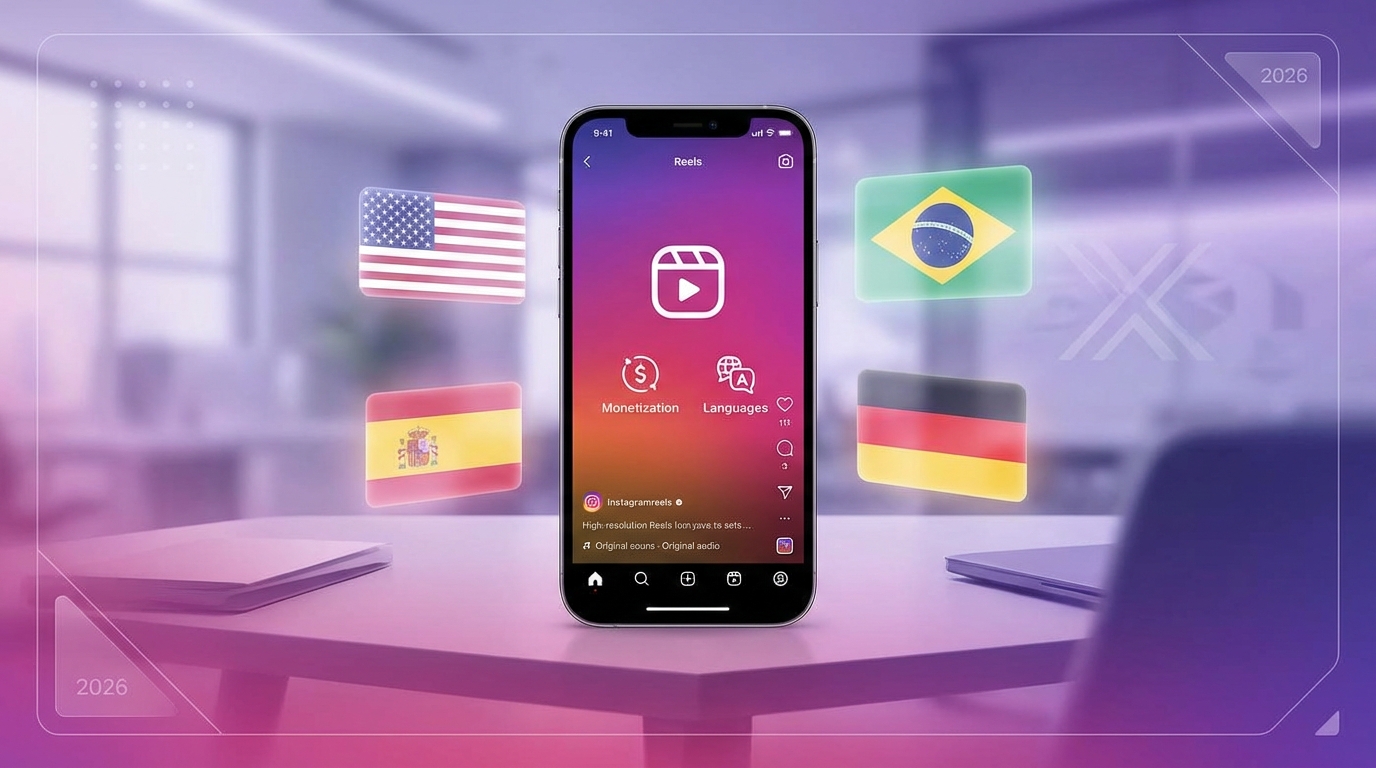
Multilingual Instagram Reels: How to Monetize Your Videos in 5+ Markets
Last year I ran an experiment that completely changed my perspective on Instagram. I took one of my Reels that had gotten 80,000 views in Italy - a tutorial on how to organize your desk for remote work - and dubbed it into English, Spanish, and Portuguese. Within three weeks, that single piece of content had accumulated over 1.2 million views across all accounts combined. It's not luck. It's math and strategy. And in this article, I'll show you exactly how to replicate this approach. 🚀 Why Instagram Reels is Different from TikTok Before diving into strategies, it's important to understand what makes Instagram a unique opportunity compared to TikTok. Many creators think they're interchangeable platforms, but they're not. Instagram has an integrated ecosystem that TikTok doesn't have. When someone discovers you through a Reel, they can immediately see your Stories, visit your profile, click the link in bio, and interact with your posts. It's a complete funnel within the same app.Important: Instagram generates 20% more engagement per follower compared to TikTok, according to 2025 Hootsuite data. This means an Instagram follower is worth more in terms of conversions.The Instagram audience also tends to be slightly older and with greater purchasing power. For creators selling products, courses, or services, this demographic difference is crucial. 💰 The Instagram Monetization Model in 2026 Instagram has finally launched a serious monetization program for Reels. Here's how it works in 2026: Reels Play Bonus: Performance-based payments for your Reels. Requirements vary by country, but generally you need:10,000+ followers 100,000+ Reels views in the last 30 days Active professional accountCreator Subscriptions: Your followers can subscribe for exclusive content. Works in all major markets. Live Badges: Donations during live streams, available globally. Affiliate and Shopping: Tag products directly in Reels with commissions. The key point is that all these tools work better with more followers. And the fastest way to increase followers is to reach new language markets.💡 The Multi-Account Strategy for Instagram Unlike YouTube where you can use Multi-Audio on a single channel, Instagram requires separate accounts for each language if you want to maximize reach. Instagram's algorithm is highly localized - it shows content in the language the user uses. How to Structure Your Accounts Main Account (native language):Your main brand Original content Most engaged communitySecondary Accounts (one per target language):Consistent username: @yourname_en, @yourname_es, @yourname_br Same visual branding Translated and optimized bioPro Tip: Use the same thumbnail style and colors across all accounts. When a user switches from one account to another, they should immediately recognize your brand.Which Languages to Choose For Instagram, the most strategic markets in 2026 are:Language Instagram Users Average Ads CPM CompetitionEnglish (US) 170M High Very HighSpanish 140M Medium MediumPortuguese (BR) 120M Medium-low LowHindi 230M Low Very LowGerman 32M Very High MediumMy advice for starting: English + Spanish + Brazilian Portuguese. They cover over 400 million Instagram users with manageable competition. 📝 The Dubbing Process for Reels Reels have specific characteristics that make them ideal for AI dubbing:Short duration: 15-90 seconds means very fast processing Prominent audio: Voice is often the central element Vertical format: Already optimized for global mobileHere's the workflow I use: Step 1: Select the Right Reels Not all Reels deserve to be dubbed. Ideal candidates are:Practical tutorials: "How to do X" works universally Personal storytelling: Stories that emotionally connect transcend cultures Tips and hacks: Short, actionable advice Before/After: Visual transformations with narrationAvoid Reels that are too tied to local trends, regional memes, or specific cultural references. Step 2: Prepare the Audio For optimal results:Record with good audio quality (even a smartphone is fine, but in a quiet environment) Speak with natural pauses between sentences Avoid background music that's too loud and covers your voiceStep 3: Dub with NovaDub The process is simple:Go to NovaDub Upload the original Reel Select target languages Wait 1-2 minutes for processing Download the dubbed versionsNovaDub uses ElevenLabs technology, the best on the market for voice quality. The generated voices are incredibly natural - I've shown dubbed Reels to friends without telling them it was AI, and no one noticed. Step 4: Optimize for Each Market Once you have the dubbed videos, customize for each market: Captions: Don't translate literally, adapt. Use native expressions and local hashtags. Hashtags: Research trending hashtags in each country. #fyp becomes #parati in Spanish, #viral in Portuguese. Posting times:USA: 11:00 AM-1:00 PM and 7:00-9:00 PM EST Spain/Latam: 1:00-3:00 PM and 8:00-10:00 PM local Brazil: 12:00-2:00 PM and 7:00-9:00 PM BRTWarning: Don't post the same Reel on all accounts at the same time. Instagram might flag it as spam. Space them at least 2-3 hours apart.📊 Real Numbers: What to Expect After six months of multilingual strategy on Instagram, here are my results: Starting situation:Italian account: 45,000 followers Earnings: ~€200/month (affiliate + collaborations)After 6 months:Italian account: 58,000 followers (+29%) English account: 67,000 followers Spanish account: 41,000 followers Portuguese account: 35,000 followers Total: 201,000 followers Earnings: ~€1,100/month (+450%)The jump in earnings isn't proportional to followers because international brands pay more for collaborations, and affiliate marketing on Amazon US/UK has better commissions. 💸 The Costs: How Much to Invest Let's do the math for a creator publishing 5 Reels per week:5 Reels × 1 minute average × 3 languages × 4 weeks = 60 minutes/month With NovaDub's Creator plan (€49 for 50 minutes) + some extra minutes: ~€60/monthROI: Investment of €60/month to potentially go from €200 to €1,000+ in monthly earnings. The return is obvious.Note: NovaDub offers 5 free minutes to test the quality. Enough to dub 2-3 Reels and see the results before committing.⚡ Advanced Tips for Multilingual Instagram Smart Cross-Promotion Occasionally, create a Story on your main account saying "If you speak English/Spanish, follow me also on @yourname_en/@yourname_es for content in your language!" Local Collaborations Look for local creators in target markets for duets or collaborations. A Brazilian creator with 50K followers mentioning you can bring thousands of new followers. Market-Exclusive Content Occasionally, create exclusive content for a specific market. A Reel about "best cafés in New York" only for the English account, for example. This rewards followers and makes each account unique. Separate Analytics Use Instagram Insights for each account separately. You might discover that certain types of content perform better in some markets. My tech tutorials crush it in English, while lifestyle content does great in Portuguese. ✅ Action Plan: Start This Week Days 1-2:Create secondary Instagram accounts (2-3 languages) Set up consistent bio and branding Sign up on NovaDubDays 3-5:Select your 5 best Reels Dub them in your chosen languages Post on the new accounts (1-2 per day)Weeks 2-4:Dub every new Reel you publish Start engaging with the local community (comment, reply, follow similar creators) Analyze which content performs best per marketMonth 2+:Scale what works Consider collaborations with local creators Evaluate adding a fourth language🎯 Conclusion Multilingual Instagram Reels is no longer optional - it's a necessity for anyone who wants to grow seriously on the platform. With over 2 billion monthly active users, limiting yourself to one language market means giving up 95%+ of your potential audience. AI dubbing has made this expansion accessible to everyone. What used to require thousands of dollars and weeks of work now costs a few dozen euros per month and takes minutes per video. Creators who adopt this strategy now will have an enormous competitive advantage. The time to start is now. Try NovaDub free with 5 minutes of dubbing included and discover how easy it is to reach a global audience with your Reels.Have questions about multilingual Instagram strategy? Write to us at [email protected] or leave a comment!
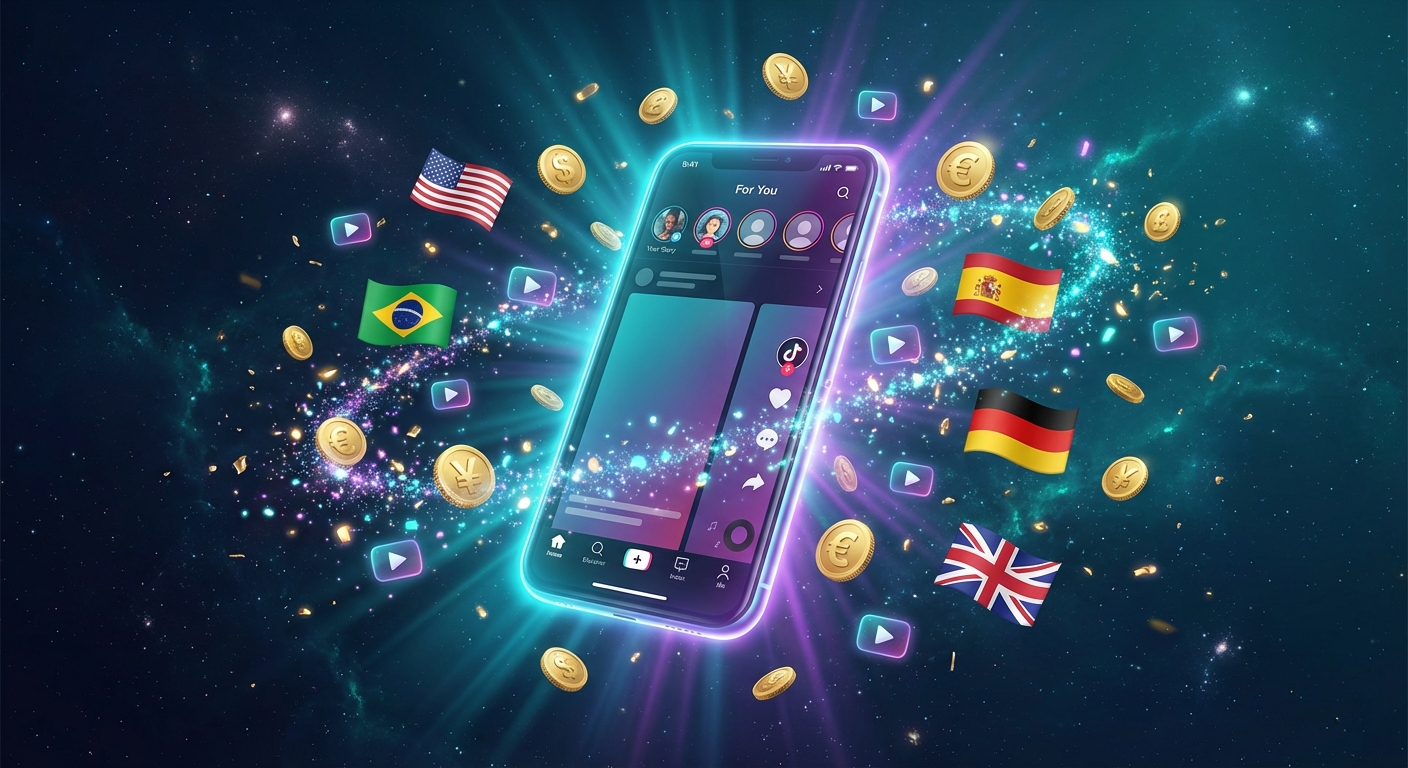
How to Monetize TikTok with Dubbed Videos: Complete Creator Guide 2026
Three months ago, I ran an experiment that opened my eyes. I took one of my TikTok videos that had gotten 50,000 views in Italy and dubbed it into Spanish, English, and Portuguese using NovaDub. The result? That single piece of content, republished in four different languages, generated over 2 million total views and nearly €400 from the Creator Fund across different countries. It's not magic—it's math. And in this article, I'll show you exactly how to replicate this strategy. 💰 Why Multilingual TikTok is a Golden Opportunity Let's start with a fact that should make you think: TikTok has over 1.5 billion monthly active users, but only about 5% of them speak any single language. This means that publishing videos exclusively in one language automatically means giving up on 95% of your potential audience. But there's more. TikTok's Creator Fund pays differently depending on the country. An American creator earns on average 2-4 cents per 1,000 views, while creators in smaller markets might only see 0.5-1.2 cents. It seems small, but multiply by millions of views and the difference becomes substantial. The real opportunity lies in the fact that you can access these more lucrative markets simply by dubbing your existing content. You don't need to create anything new—you just need to translate what you already have.Important: by publishing in only one language, you're giving up 95% of TikTok's potential audience. AI dubbing lets you access markets with CPMs up to 5 times higher.💡 How the TikTok Creator Fund Works in 2026 Before diving into strategies, it's important to understand how TikTok monetization actually works. The Creator Fund is the official program that pays creators based on their video performance. Requirements vary slightly by country, but generally you need:At least 10,000 followers 100,000 views in the last 30 days Minimum age of 18 Account in good standing with community guidelinesOnce you're in, you're paid based on an algorithm that considers views, engagement, audience authenticity, and other factors. The CPM (cost per thousand views) varies enormously:As you can see, there's nearly a 5x difference between the US market and some others. This creates an interesting opportunity: if you can reach American, German, or British audiences with your dubbed content, you can significantly multiply your earnings.📱 The Multi-Account Strategy: How to Structure It The strategy that has worked best for me and other creators I know involves creating separate accounts for each major language. Here's how to structure it. Primary Account (Your Native Language) This remains your original account where you post content in your native language. Keep growing it normally—it's your foundation. Secondary Accounts by Language For each market you want to reach, create a dedicated account. The most strategic ones in 2026 are: English Account - The largest and most lucrative market. Target both the USA and UK. The CPM is the highest overall. Spanish Account - 550 million speakers across Spain and Latin America. The Latin American CPM is lower, but the volume more than compensates. Portuguese Account - Brazil has exploded on TikTok and competition is still relatively low in many niches. German Account - Very high CPM, highly engaged audience, perfect for tech, lifestyle, and business content. How to Manage Multiple Accounts Without Going Crazy I know what you're thinking: "How do I manage 4-5 TikTok accounts?" The answer is smart automation. With NovaDub, you can dub a video in minutes and, thanks to the Social Sync feature, publish it directly to your connected TikTok accounts. The workflow becomes:Create the original video in your language Upload it to NovaDub Select target languages In 5-10 minutes you have the dubbed versions With Social Sync, publish to all accounts with one clickWhat would have previously required hours of manual work (downloading, re-uploading, translating descriptions, adding hashtags) now takes just a few minutes.Pro Tip: use NovaDub's Social Sync feature to automatically publish to all your TikTok accounts with one click, saving hours of manual work every week.📝 The Practical Tutorial: From Local Video to Global Earnings Let's look concretely at how to transform your video into a multilingual view-generating machine. Step 1: Select the Right Videos Not all videos deserve to be dubbed. The ideal candidates are:Evergreen videos: Tutorials, how-tos, explanations that stay relevant over time Videos with good retention: If people watch until the end in one language, they'll do it in others Videos with minimal on-screen text: Fewer elements to localize Videos with clear audio: The better the original audio quality, the better the dubbing will beAvoid videos with too many cultural references specific to your country, local memes, or content tied to temporary events. Step 2: Prepare the Video for Dubbing Before uploading to NovaDub, make sure that:The audio is clean, without too much background music covering the voice There are no vocal overlaps (multiple people speaking simultaneously) The video is in a supported format (MP4, MOV, WebM)A tip: if you use music, keep it at a lower volume than your voice. NovaDub's AI automatically separates voice from music, but a good starting mix produces better results. Step 3: The Dubbing Process Go to NovaDub, log into your account, and upload the video. The interface is available in multiple languages, so you won't have any trouble navigating. Select target languages. My recommendation for starting:English (mandatory for volume) Spanish (huge market, relatively easy) Portuguese Brazilian (rapidly growing, low competition)NovaDub uses ElevenLabs technology, considered the best on the market for voice quality. The generated voices are incredibly natural—I've shown dubbed videos to friends without telling them it was AI, and no one noticed. The process takes about 1-2 minutes for each minute of video. A 60-second TikTok is processed in under 2 minutes per language. Step 4: Optimize for Each Market Once you have the dubbed videos, don't just publish them as-is. Each market has its peculiarities: For US/UK audiences:Use trending English hashtags Post between 3 PM and 9 PM EST (evening in America) Direct and concise captionsFor Spanish/Latin American audiences:Hashtags in both European and Latin American Spanish Post in late afternoon/evening local time Warmer, more personal tone in descriptionsFor Brazilian audiences:Brazil loves authentic and energetic content Brazil-specific hashtags (#fyp becomes #foryou or #viral) Post during Brazilian evening hours (8 PM-11 PM BRT)Step 5: Monitor and Optimize After the first few weeks, analyze the data:Which language performs best? What types of content work in each market? What times get the most engagement?Use this information to refine your strategy. Maybe you discover that your tutorials work great in German but less so in Spanish, while lighter videos are hits in Brazil. Adapt accordingly. 📊 Real Numbers: How Much Can You Earn? Let's talk concrete money, because that's what matters in the end. A creator with 50,000 followers who posts 4 videos per week can expect about 200,000-500,000 monthly views on their primary account. With a CPM of around $0.01, we're talking $20-50 per month from the Creator Fund. Not exactly a salary. Now imagine dubbing those same videos into English, Spanish, and Portuguese. Even assuming the secondary accounts initially have fewer followers (say 20,000 each), if the content is good, the view potential is similar or higher because you're accessing much larger markets. Let's do the math:English account: 300,000 views/month × $0.03 CPM = $90 Spanish account: 400,000 views/month × $0.012 CPM = $48 Portuguese account: 250,000 views/month × $0.008 CPM = $20 Original account: 300,000 views/month × $0.01 CPM = $30Total: approximately $188/month instead of $30. And this is a conservative scenario. I've seen creators go from a few dozen dollars to over $1,000 monthly by consistently applying this strategy. 💸 The Costs: Is It Worth It? Dubbing has a cost, obviously. Let's see if the numbers add up. With NovaDub you can choose between:Pay-as-you-go: €0.99-1.49 per minute Subscriptions: from €19/month for 15 minutes to €149/month for 200 minutesFor a creator who posts 4 one-minute TikToks per week and wants to dub them into 3 languages:4 videos × 1 minute × 3 languages × 4 weeks = 48 minutes/month With the Creator plan (€49 for 50 minutes) you're coveredSo you spend €49 per month to potentially go from $30 to $175+ in earnings. The ROI is obvious.Note: the ROI of AI dubbing is immediate. A €49/month investment can generate a 5-6x increase in earnings, not counting brand deals and affiliate marketing.And don't forget that the value isn't just in the Creator Fund. International accounts also mean:More brand deal opportunities (international brands pay more) Risk diversification (if one account has problems, the others continue) Building a global personal brand⚠️ Mistakes to Avoid After months of testing, I've identified the most common mistakes creators make when starting with this strategy. Mistake 1: Dubbing Everything Indiscriminately Not all videos work in all markets. Start with your best performers and see how they do before dubbing your entire catalog. Mistake 2: Ignoring Localization Dubbing isn't enough. Descriptions, hashtags, and posting times must be optimized for each market. Mistake 3: Expecting Immediate Results Secondary accounts start from zero. It takes 2-3 months to build a follower base. Consistency pays off. Mistake 4: Neglecting the Primary Account In the rush to expand, some creators stop nurturing their original account. Mistake. It's your base, the source of content to dub. Mistake 5: Not Reinvesting The first earnings from international accounts should be reinvested to dub more content and accelerate growth.Warning: the most common mistake is expecting immediate results. Secondary accounts start from zero and require 2-3 months of consistency to build a follower base.🚀 Beyond the Creator Fund: Other Monetization Opportunities The Creator Fund is just the beginning. With an international presence, other paths open up: TikTok Shop Available in more and more countries, it allows you to sell products directly in videos. Having accounts in multiple markets means being able to sell in multiple countries. Brand Partnerships International brands look for creators who can reach global audiences. A creator with followers in 4-5 countries is much more attractive than one only present in a single market. Affiliate Marketing You can promote different products in each market, with country-specific affiliate links. Amazon has separate affiliate programs for USA, UK, Germany, Spain, Italy... Courses and Digital Products If you create educational content, dubbing allows you to sell online courses to a global audience. A course in Italian reaches maybe 60 million people. The same course dubbed in English, Spanish, and Portuguese reaches over 1.5 billion. ✅ How to Start Today If you've made it this far, you're probably convinced it's worth trying. Here's the action plan: Week 1:Create TikTok accounts for 2 additional languages (I recommend English and Spanish) Identify your 5 best videos to dub Sign up for NovaDub and use the 5 free minutes to test the qualityWeeks 2-4:Dub and publish the 5 videos on each account Optimize descriptions and hashtags for each market Post at least 3-4 dubbed videos per week per accountMonths 2-3:Analyze the data: what works, what doesn't Scale what works Consider adding a third languageMonth 4+:Apply for Creator Fund access for accounts that meet requirements Start exploring international brand deals Evaluate additional languages based on data🎯 Conclusion TikTok monetization doesn't have to be limited by language barriers. With the right tools, any creator can transform local content into a global presence that generates earnings from multiple markets simultaneously. AI dubbing has made this process accessible to everyone. What once required budgets of thousands of dollars and weeks of work now costs a few dozen dollars per month and takes just minutes per video. The question isn't whether it's worth trying—the numbers speak clearly. The question is: how long will you wait to start while other creators are already conquering the audience that could be yours? Try NovaDub for free with 5 minutes of dubbing included. No credit card required. It's enough to test the quality with one of your videos and see the potential for yourself.Have questions about TikTok monetization or dubbing your videos? Email us at [email protected] or leave a comment below.