Showing Posts From
Localize video content
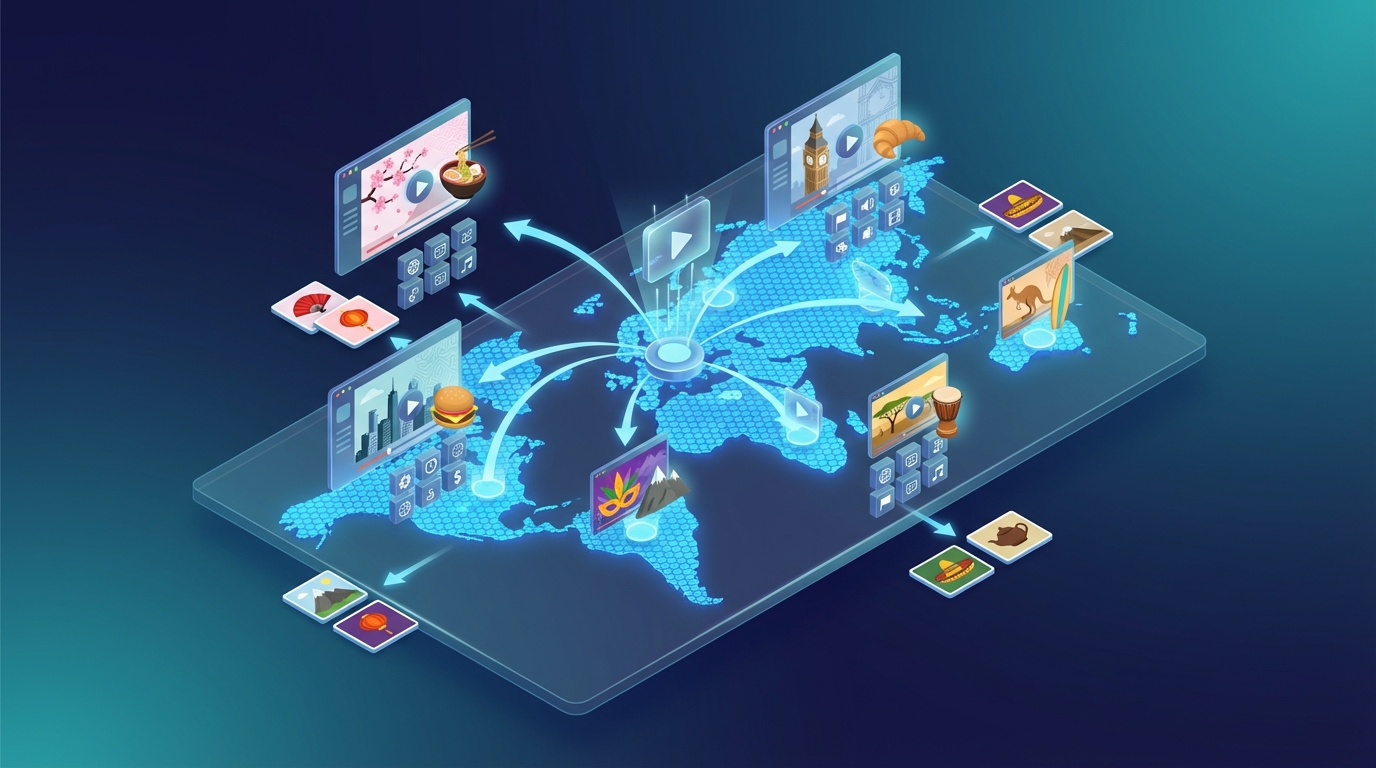

Video Localization: The Complete Guide to Reaching Global Audiences in 2026
If you've been publishing videos for more than a year, you already know the frustrating truth: you're probably reaching less than 20% of your potential audience. The other 80%? They speak a different language. Video localization is how you close that gap — not just by translating words, but by making your content feel native to each market you enter. What Is Video Localization? Video localization is the process of adapting video content so it feels natural and appropriate for a specific language, culture, or market. It goes beyond simple translation. Where translation converts words from one language to another, localization considers:Cultural references and idioms Tone and register appropriate for the target audience Local measurement units, currencies, and date formats Visual elements (text on screen, on-screen graphics) Audio: dubbed voice, pacing, and emotional deliveryA truly localized video doesn't feel "translated" — it feels like it was made in that language from the start. Video Localization vs. Video Translation: What's the Difference? These terms are often used interchangeably, but there's a meaningful distinction:Translation LocalizationScope Language only Language + culture + contextOutput Accurate meaning Natural, native feelEffort Lower HigherResult Understood ResonatesFor most video creators, a high-quality AI translation that sounds natural is sufficient — full cultural localization (redesigning graphics, re-recording music cues) is typically only needed for major market launches or broadcast content. Why Video Localization Matters More in 2026 Several trends have converged to make video localization a strategic priority:YouTube's international growth is outpacing English The fastest-growing YouTube audiences are in Brazil, India, Indonesia, Mexico, and Southeast Asia. If your content is English-only, you're invisible to these markets.AI has dramatically reduced the cost Traditional dubbing cost $15–50 per finished minute and took weeks. AI video localization now costs under $1 per minute and delivers results in minutes.Platforms reward multilingual content YouTube's "multi-audio" feature and algorithm changes now explicitly surface dubbed content to non-native speakers of the original language. Localized videos get discovered in markets you never actively targeted.Subtitles are no longer enough Studies consistently show that dubbed content significantly outperforms subtitled content in watch time, retention, and engagement — especially on mobile, where reading subtitles while watching is difficult.The Video Localization Process: Step by Step Step 1: Transcription The original audio is converted to text. Quality here determines quality everywhere downstream — errors in transcription cascade into translation errors. Step 2: Translation The script is translated into the target language. For AI workflows, this is now near-instant. For high-stakes content, a human review step is worth adding. Step 3: Voice Synthesis (Dubbing) The translated script is synthesized into speech using AI voices or voice cloning. The best systems preserve the original speaker's tone and cadence. Step 4: Audio Synchronization The dubbed audio is aligned with the video — matching pauses, emphasis, and pacing to the original performance. Step 5: Quality Check Review the output for:Lip-sync accuracy (if applicable) Unnatural pauses or rushing Translation errors that slipped through Background audio balance (music, ambient sound)Step 6: Export and Publish Export the final video and upload as either a separate language file or use platforms like YouTube's multi-audio tracks to serve it to the right audience automatically. Tools for Video Localization in 2026 NovaDub — Best End-to-End AI Platform NovaDub handles the complete localization pipeline: transcription → translation → voice cloning → audio sync. You upload a video, choose your target languages, and get back a localized version ready to publish. Why creators choose NovaDub:Voice cloning preserves the original speaker's voice across languages 30+ languages supported Minutes, not days No studio booking required Transparent pricing — pay per video, not enterprise subscriptionsIt's designed for creators who want professional-quality results without a production team.HeyGen — Best for Lip Sync If your video features a person speaking directly to camera and you need the lip movements to match the new language, HeyGen's lip-sync technology is the market leader. Expect higher pricing than creator-focused tools.Rask AI — Best for Enterprise Teams Rask AI targets businesses with ongoing localization needs — think corporate training, product demos, marketing at scale. Good multi-speaker support and team workflow features.Kapwing — Best for Subtitles Only If you need translated subtitles (not dubbed audio), Kapwing provides a fast, affordable subtitle translation workflow.How Much Does Video Localization Cost? Costs vary dramatically by method:Method Cost per Minute Turnaround QualityHuman dubbing studio $25–100 1–4 weeks HighestHuman freelancer $10–30 3–7 days HighAI with voice cloning (NovaDub) $0.50–2 Minutes Very GoodGeneric AI TTS $0.10–0.50 Minutes AcceptableSubtitles only $0.20–1 Minutes N/AFor most creators and businesses, AI with voice cloning now delivers 85–90% of the quality of human dubbing at 5–10% of the cost. How to Prioritize Which Languages to Localize Don't try to localize into every language at once. Start with the highest-ROI markets for your niche: For YouTube creators:Spanish (Latin America + Spain) — 500M+ Spanish speakers, huge YouTube audience Portuguese (Brazil) — Brazil is YouTube's #2 or #3 market globally Hindi (India) — fastest-growing YouTube market French (France + Africa) — high CPM, educated audience German — highest CPM in EuropeFor B2B and course creators:Spanish German French Portuguese (Brazil) Japanese (high willingness to pay)For e-commerce video:Spanish Portuguese French Italian ArabicCommon Mistakes in Video LocalizationTreating it as a translation job, not a communication job The goal isn't accurate words — it's understanding and emotional impact. A word-for-word translation that sounds unnatural defeats the purpose.Neglecting audio quality in the source video AI localization tools work best with clear, clean source audio. Background noise, low bitrate, or overlapping speakers degrade every step downstream.Localizing without checking the output Even excellent AI tools produce occasional errors. A 5-minute review of the output can catch the 1–2 issues that would embarrass you.Publishing as a separate video instead of using multi-audio YouTube now supports multiple audio tracks on a single video. Using this feature means your localized content reaches users who speak that language automatically — you don't need to maintain separate channels.Starting too late Localization is easier and cheaper to build into your publishing workflow from the start than to retrofit later across a back catalog.Getting Started with Video Localization If you're a creator or small business and this is new territory, here's the fastest path to results:Pick your top 2–3 target languages based on your existing audience data or the market priorities above Start with your 5 best-performing videos — proven content that already works deserves wider distribution Use an AI tool like NovaDub to localize quickly and affordably — see how it feels, check the output quality Publish and measure — watch watch time, subscriber growth, and traffic from new geographies Build it into your regular workflow — localize new content at publication time, not as an afterthoughtVideo localization in 2026 is no longer a luxury for brands with dedicated production budgets. With AI tools dropping the cost by 90% and the time by 95%, it's now accessible to any creator or business willing to think beyond their native language. The creators hitting global audiences right now didn't do anything magic — they just localized their content while others didn't. Start localizing your videos with NovaDub →