Showing Posts From
Automatic dubbing
Automatic Video Dubbing in 2026: How AI Has Changed Everything
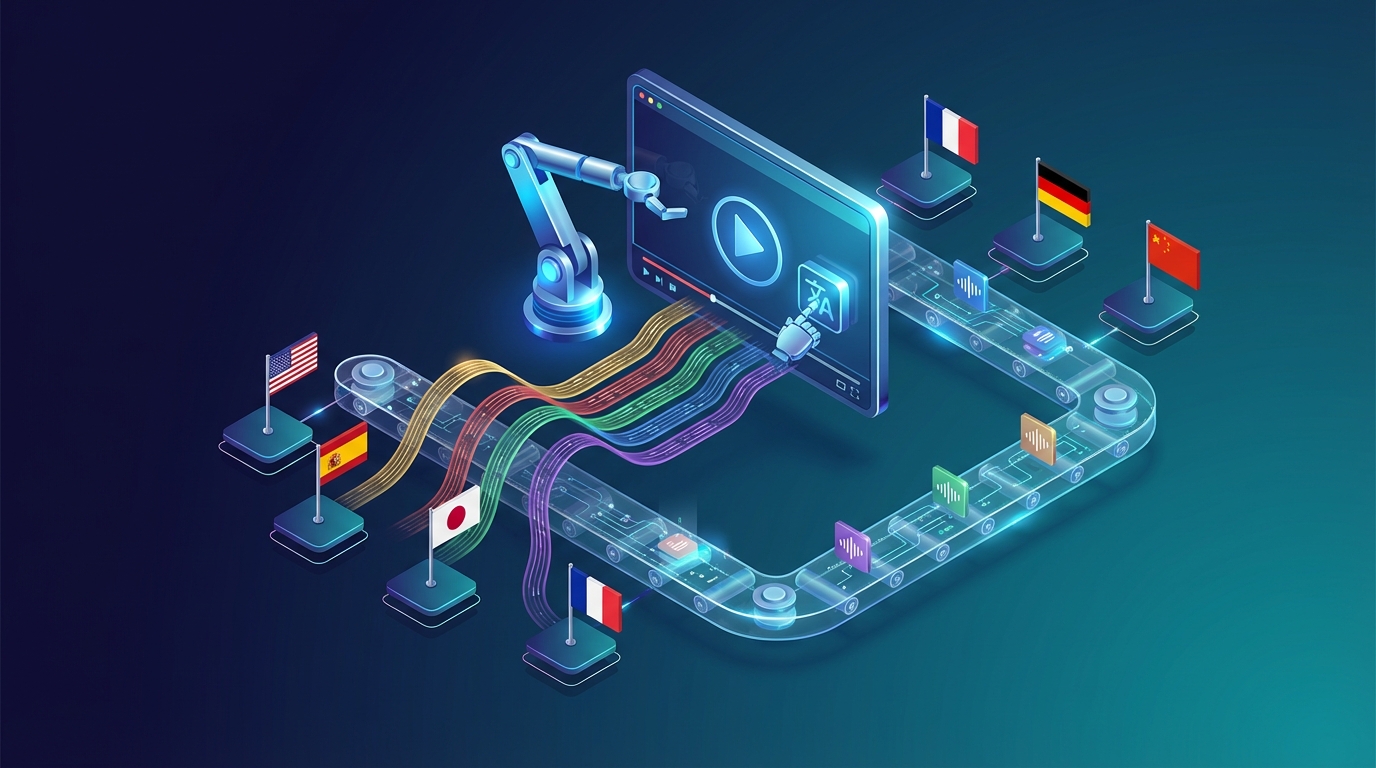
Three years ago, dubbing a video into another language meant booking a studio, hiring voice actors, working with a director, and waiting weeks for the final delivery. Costs started at hundreds of dollars per finished minute. Today, you upload your video and get a dubbed version back in minutes. That shift is the story of automatic video dubbing — and it's one of the most practical AI developments for creators and businesses in the past few years. What Is Automatic Video Dubbing? Automatic video dubbing (also called AI dubbing or auto dubbing) is the process of using machine learning to replace the spoken audio in a video with a translated version in a different language — automatically, without human voice actors or recording studios. A complete automatic dubbing pipeline typically does:Transcription — converts the original speech to text using speech-to-text AI Translation — converts the transcript to the target language Voice synthesis — generates new audio in the target language using AI voices or voice cloning Timing alignment — synchronizes the dubbed audio with the original video timing Audio mixing — blends the new speech with preserved background music and ambient soundThe output is a video file where the original language has been replaced by the target language — sounding like it was recorded in that language. How Automatic Dubbing Works The Technical Pipeline Modern automatic dubbing uses a chain of specialized AI models: Speech-to-Text (STT): Models like OpenAI Whisper detect the exact timing of each spoken word, speaker changes, and pauses. This creates a precise transcript with timestamps. Neural Machine Translation (NMT): Models translate the timed transcript. This isn't simple word substitution — modern NMT understands context, adjusting idioms and expressions to sound natural in the target language. Text-to-Speech (TTS) / Voice Cloning: This is where the magic (and the quality difference between tools) happens. Basic TTS uses a generic AI voice. Voice cloning analyzes the original speaker's voice characteristics and generates speech that sounds like that person speaking the target language. Audio Processing: The system aligns the dubbed speech to match pauses and emphasis from the original, preserves background music and ambient sound, and produces a clean mix. Why Voice Cloning Matters The difference between automatic dubbing with generic AI voices vs. voice cloning is massive. With a generic voice:The dubbed video sounds like a different person speaking The emotional connection to the speaker is broken It feels like a machine translationWith voice cloning (like NovaDub uses):Your voice translates with you Viewers connect with the same person they followed It sounds like you actually recorded in that languageFor creators building personal brands, voice cloning isn't optional — it's the whole point. Automatic Dubbing vs. Traditional Dubbing: A Real ComparisonFactor Traditional Dubbing Automatic (AI) DubbingCost $25–100/min $0.50–2/minTime 1–4 weeks MinutesSetup Studio booking, casting, direction Upload and clickVoice quality Highest (human actors) Very good (voice cloning)Languages Limited by available actors 30+ (any supported language)Scalability Very limited UnlimitedVoice continuity Requires same actor every time Automatic (cloned)For most video content, AI dubbing now delivers 85–95% of the quality of traditional dubbing at 5–10% of the cost. The remaining gap — the cases where traditional dubbing still wins — is high-stakes broadcast content where absolute perfection matters and budget is not a constraint. For YouTube channels, online courses, corporate training, and most business video content, automatic dubbing is the right call. Automatic Dubbing vs. Subtitles: Which Is Better? This question comes up constantly. Short answer: dubbing beats subtitles for engagement, subtitles win on cost.Subtitles Automatic DubbingWatch time Lower (reading fatigue) Higher (native-like experience)Mobile experience Poor GoodAccessibility Good (reading) Good (listening)SEO Subtitle text indexable Audio SEO via transcriptEmotional connection Reduced PreservedCost ~$0.20–0.50/min ~$0.50–2/minPlatform features Broad support YouTube multi-audio, etc.Increasingly, the answer is both — publish with dubbed audio and add translated subtitles for maximum accessibility and SEO. Best Automatic Dubbing Tools in 2026 1. NovaDub — Best for Creators NovaDub is built specifically for the automatic dubbing use case: upload a video, get a dubbed version back. No setup, no studio, no voice actors needed. Key features:Voice cloning (sounds like you, in any language) 30+ languages Preserved background audio (music stays, voice swaps) Minutes per video Pay-per-video pricing — no subscriptions requiredIf you're a YouTuber, course creator, or content marketer who wants to go multilingual, NovaDub is the most direct path.2. HeyGen — Best for Lip Sync HeyGen specializes in videos where the speaker is visible on camera and lip movements need to match the dubbed audio. Strong results for talking-head content. Higher pricing than creator-focused tools.3. Rask AI — Best for Enterprise Scale Rask AI serves organizations with ongoing, high-volume dubbing needs — corporate L&D, marketing localization across many markets, multi-speaker content. Good workflow integrations.4. Papercup — Best for Broadcast Quality Papercup targets professional broadcast and streaming media. Human-assisted AI dubbing with quality oversight. Significantly more expensive but appropriate for content where broadcast standards apply.How to Get Started with Automatic Dubbing Here's the simplest workflow to launch automatic dubbing for your content: Step 1: Choose Your Target Languages Start with 2–3 languages where you have (or want) audience. Spanish and Portuguese (Brazil) are almost always the right first choices for English content given the audience size and engagement rates. Step 2: Select Your Best-Performing Videos Don't start by dubbing everything. Pick 5–10 of your strongest existing videos — proven content that deserves wider distribution. Step 3: Process Through an AI Tool Upload to NovaDub (or your chosen tool). Select source language, target language, submit. Step 4: Review the Output Watch the dubbed version with fresh ears. Check:Does the voice sound natural? Are there any translation errors? Do pauses align reasonably with the video? Is background audio balanced?Most AI dubbing output today needs no edits. Occasionally you'll catch something worth fixing. Step 5: Publish Using Multi-Audio On YouTube, use the multi-audio track feature to add the dubbed version to your existing video. The platform automatically serves the Spanish version to Spanish-speaking viewers — no separate channel required. Step 6: Build It Into Your Regular Workflow Going forward, dub new videos at publication time. Localizing at creation is far more efficient than going back and dubbing an existing catalog.The Real Impact of Automatic Dubbing The numbers are real:YouTube reports 60%+ of watch time comes from outside the creator's home country Channels that dub into Spanish typically see 40–120% total view increase Dubbed content consistently achieves 25–50% higher watch time vs. subtitled equivalents Course creators report 2–5x sales increase from Spanish and Portuguese versionsThese aren't projections — they're outcomes from creators who went multilingual. The barrier used to be cost and complexity. In 2026, with automatic AI dubbing, the barrier is just deciding to do it.The question is no longer "can I afford to dub my videos?" The question is "can I afford not to?" Start dubbing your videos automatically with NovaDub →
The Future of AI Dubbing: What to Expect from 2026 to 2030
Three years ago, dubbing a video into another language required recording studios, professional voice actors, weeks of work, and five-figure budgets. Today, the same result is achieved in minutes for a few euros. The question is no longer "if" AI dubbing will change the industry - it already has. The question is: where is it going? I've spent the last few months talking with developers, researchers, and companies in the field to understand what awaits us in the coming years. This article compiles the most concrete trends and innovations we'll see between 2026 and 2030. 🚀 The Current State: Where We Are in 2026 Before looking to the future, let's take stock of where we are today: Voice quality: High-quality AI voices are almost indistinguishable from human ones for the average listener. Professional voice actors can still hear the difference, but the gap has narrowed dramatically. Lip synchronization: Current systems handle sync well for most content. Problematic cases (extreme close-ups, fast speech) are still a challenge. Languages supported: Major services support 20-40 languages with high quality, and 50-100+ with varying quality. Costs: About €1-2 per minute of video for professional quality, down from €50-100+ just a few years ago. Speed: A 10-minute video is processed in 5-15 minutes, versus weeks for traditional dubbing.Important: In 2023, only 5% of creators used AI dubbing. In 2026, we're at 35% and growing rapidly. By 2028, projections indicate 70%.💡 Trend 1: Personalized Voice Cloning The major evolution underway is the shift from "generic AI voices" to "cloning your voice in other languages." How It Works Today Currently, most services offer a library of pre-trained AI voices. You choose a voice that resembles yours, and that voice speaks in the target language. Where It's Going In 2026-2027, voice cloning is becoming mainstream:You record 5-10 minutes of your voice in your native language The system analyzes your unique vocal characteristics (timbre, rhythm, emphasis) Creates a personalized voice model that speaks any language The result: It's YOU speaking Spanish, Japanese, or Hindi - with your voiceImplications for creators:Consistent vocal brand across all languages Greater connection with audience (it's always "your" voice) Ability to create content in languages you don't speakPro Tip: If you haven't already, start building a "voice bank" - clean recordings of your voice in various contexts (enthusiastic, calm, professional, informal). These samples will be valuable for future voice cloning.📊 Trend 2: Advanced Lip Sync Lip synchronization is the area with the most room for improvement and where we'll see the most evident progress. The Current Challenge When you translate from Italian to Japanese, the same phrase can have very different lengths. "Ciao" becomes "Konnichiwa" - almost triple the syllables. Syncing lips with audio of different lengths is complex. Innovations Coming Real-time video morphing: Instead of just adapting audio, systems are starting to slightly modify lip movements in the video to match the translated audio. Intelligent prediction: AI that anticipates where to insert natural pauses to maintain sync without unnaturally speeding up or slowing down the voice. Ethical deepfake technology: Application of deepfake technology to subtly modify facial expression and lip movements while keeping the rest of the video intact. Expected timeline:2026-2027: Improved lip sync for standard content 2028-2029: Video morphing accessible to creators 2030: Indistinguishable from human dubbing even in close-ups🎯 Trend 3: Real-Time Dubbing One of the most exciting evolutions is real-time dubbing for live streaming and video calls. The Scenario Imagine doing a YouTube live in Italian, and your Brazilian, Japanese, and German viewers hear you speaking in their language - in real time, with your voice. Where We Are In 2026, we already have working prototypes with 2-3 seconds of latency. Not perfect, but usable for some contexts. Where We're Going 2027: Latency under 1 second for major languages 2028: Native integration in streaming platforms (YouTube, Twitch) 2029-2030: Imperceptible latency, broadcast quality Implications:Truly global live streaming International meetings without interpreters Multiplayer gaming with cross-language communication Conferences and webinars accessible to everyoneWarning: Real-time dubbing raises latency issues that may never be fully resolved for content where timing is critical (e.g., competitive gaming, live trading).📺 Trend 4: Platform Integration Video platforms are starting to integrate AI dubbing natively. YouTube Multi-Audio Track (2025-2026) YouTube has already introduced the ability to add multiple audio tracks to videos. The next step is automatic dubbing integration: Phase 1 (now): Manual upload of translated audio tracks Phase 2 (2026-2027): One-click automatic AI track generation Phase 3 (2028+): Automatic dubbing for all eligible videos Other Platforms TikTok: Testing automatic dubbing for Reels in select markets Netflix: Already using AI for dubbing selected content Meta (Instagram/Facebook): Testing in progress for multilingual video ads Impact on creators:Fewer technical barriers to global expansion Possible commoditization of basic dubbing Growing importance of quality and personal voice branding💰 Trend 5: Cost Evolution AI dubbing costs will continue to fall, but in a differentiated way. The Price CurveYear Basic Dubbing Premium Dubbing Voice Clone2024 €2/min €5/min Not available2026 €1/min €3/min €5/min2028 €0.30/min €1.50/min €2/min2030 Freemium €0.50/min €1/minWhat It Means Basic dubbing (generic voices, standard sync) will become nearly free or included in platforms. Premium dubbing (voice cloning, advanced lip sync) will maintain a cost but be accessible. Enterprise services (total customization, SLA, support) will remain premium.Note: The commoditization of basic dubbing means differentiation will be on quality, not on "whether" you have multilingual content. Everyone will have it - the question is how good it will be.🎭 Trend 6: Ethical Aspects and Regulation With great power comes great responsibility. The industry is facing important ethical questions. Open Questions Voice consent: Who owns your voice? Can you prevent someone from cloning your voice? Deepfakes and misinformation: How to prevent malicious use of AI dubbing to create fake content? Voice actors' rights: How will the traditional dubbing profession evolve? Disclosure: Should viewers know when a video is AI-dubbed? Emerging Answers Audio watermarking: Systems to identify AI-generated content EU regulation: The AI Act will require disclosure for AI-generated content Voice certifications: Blockchain registries of voice ownership New professional roles: Voice actors become "voice artists" who sell models of their voice ✅ How to Prepare for the Future What can you do today to be ready for the evolutions of the coming years? For Content CreatorsStart now: AI dubbing is already mature enough to be useful. Don't wait for "perfection."Build your voice library: Record clean samples of your voice for future voice cloning applications.Test and iterate: Experiment with different languages and markets to understand where there's opportunity.Think global from the start: When creating content, consider whether it will work translated.For BusinessesEvaluate integration: AI dubbing can drastically reduce localization costs.Consider enterprise: For high volumes, enterprise solutions offer superior quality and control.Prepare workflows: Integrate AI dubbing into content creation processes.Train the team: Skills to optimize AI dubbing will be increasingly in demand.Pro Tip: Creators who start building multilingual audiences today will have a huge competitive advantage when dubbing becomes mainstream. First mover advantage in new markets is significant.🔮 Concrete Predictions for 2030 Based on what I see today and conversations with industry experts, here's what I expect for 2030: Voice quality: Indistinguishable from human for the average listener, even in less common languages. Lip sync: Perfect for 90% of content, excellent for the remaining 10%. Costs: Basic dubbing will be free or nearly free. Premium will be accessible to everyone. Adoption: 90% of professional creators will have content in at least 3 languages. Real-time: Live dubbing will be standard for streaming and international communications. Regulation: Global frameworks for consent, disclosure, and voice rights. 🎯 Conclusion AI dubbing isn't a technology of the future - it's a present technology in rapid evolution. The next 4 years will bring enormous changes: personalized voice cloning, perfect lip sync, real-time dubbing, and costs trending toward zero. For video content creators, the question is no longer "should I dub?" but "how do I maximize the value of dubbing?" Creators who move now are building competitive advantages that will last years. The future of video is multilingual. The future has already begun. Start today with NovaDub - Tomorrow's AI dubbing, available now.Have predictions or questions about the future of AI dubbing? Write to us at [email protected] - we love discussing where the industry is heading!