Showing Posts From
Algorithm
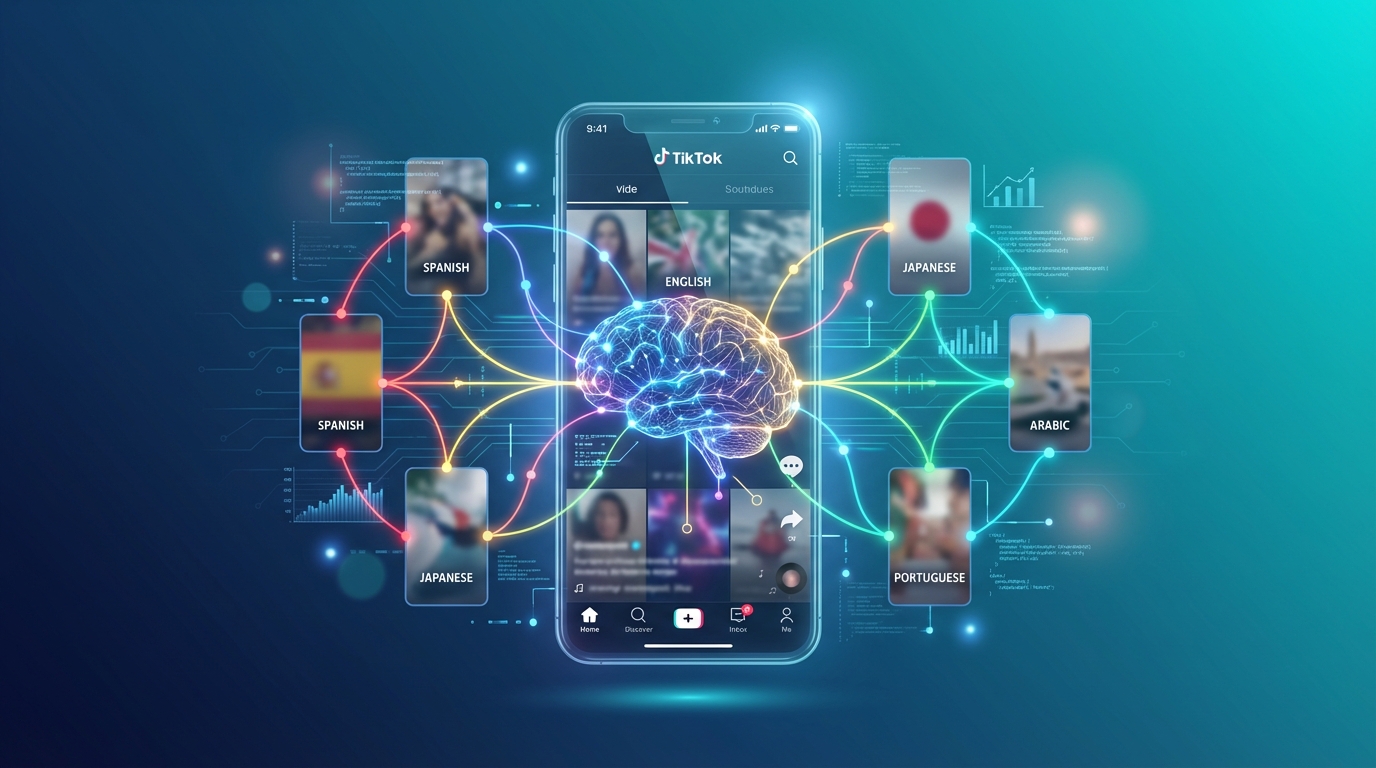

TikTok Algorithm Hack: How Multilingual Videos Game the System in 2026
TikTok's algorithm is the most sophisticated content distribution machine ever created. But it has a weak spot that very few creators know about: it doesn't handle content that "jumps" between languages very well. And for those who know how to exploit this, it's a massive opportunity. I spent the last 4 months systematically testing how the algorithm responds to videos dubbed in multiple languages. The results surprised me: not only does reach increase, but the algorithm itself starts pushing your content toward audiences you would never normally reach. 🚀 How TikTok's Algorithm Actually Works in 2026 Before we talk about "hacks," let's understand how the machine works. TikTok's algorithm in 2026 is built on three pillars: Pillar 1 — Interest Graph: TikTok maps each user's interests based on watch time, likes, comments, and shares. It doesn't look at who you follow — it looks at what you watch. Pillar 2 — Content Clustering: Every video is classified into thematic "clusters." An Italian cooking video gets placed in the "food" cluster but also "Italian culture," "cooking tutorial," etc. Pillar 3 — Language Signals: Here's the key point. TikTok uses language recognition to decide which audience to show the video to. A video in Italian goes to the Italian audience. Period. But what happens when you publish the same content in 4 different languages? The algorithm treats them as 4 separate videos, each with its own audience. And if all 4 perform well, what I call the "cross-linguistic multiplier effect" kicks in.Important: TikTok's algorithm in 2026 uses a more advanced "Language Detection + Interest Matching" system compared to 2024. It understands the spoken language better, but this actually works in your favor when using AI dubbing — because the dubbing sounds natural and gets classified as native content in that language.💡 The 5 Algorithm Hacks for Multilingual Videos After 4 months of testing with 3 different accounts and over 200 published videos, I've isolated 5 patterns that consistently work. Hack 1: The "Seed & Spread" Post the video in your native language first. Wait 24 hours. If it passes a certain performance threshold (I use 2x your average views), dub it and publish in other languages. Why it works: You're using your native audience as a "test group." If the content works with them, it has a high probability of working translated too. The algorithm sees the format is already validated. Real numbers: Out of 50 videos tested with this strategy, 72% of "seed" videos that passed the threshold also performed well in dubbed versions. Without seeding, the percentage dropped to 38%. Hack 2: The "Timing Cascade" Don't publish all language versions simultaneously. Use a timed cascade:Hour 0: Original video (your language) Hour 4-6: English version (US market wakes up) Hour 8-10: Spanish version (Latin America prime time) Hour 12-14: Portuguese version (Brazil prime time)Why it works: Each version gets maximum algorithm push when its target audience is most active. Publishing everything at once means 3 out of 4 versions won't be optimized for their time zone. Hack 3: The "Cross-Pollination Comment" After publishing all versions, comment on the English version from your main account: "I made this video in Italian first, check the original 🇮🇹". Do the same on other versions. Why it works: Creates a curiosity loop. American users click to your profile to see the Italian original, increasing profile dwell time. The algorithm interprets this as "high interest" and pushes your content more. Hack 4: "Hashtag Mirroring" Use equivalent hashtags in each language, but always add 1-2 English hashtags even on non-English versions. Example for Italian version: #CucinaItaliana #ItalianFood #FoodTikTok #Ricette #Cooking Why it works: English hashtags create a "bridge" in the algorithm between your local content and the global cluster for that topic. You're essentially telling the algorithm: "this content is relevant for English searchers too." Hack 5: The "Description Bait" Write the first 3 lines of the description in the video's language, but add a final line in another language with a curiosity hook. Example (English video): "The pasta trick nobody knows 🍝 Follow for more secrets! 🔥 Versione italiana sul mio profilo → @account" Why it works: The algorithm reads the description to classify content. That line in another language expands the pool of users it can be shown to.Pro Tip: Hacks 1 and 2 together are the most powerful combination. "Seed & Spread" with "Timing Cascade" generated an average of 3.5x more total views compared to simultaneous publishing across all languages.📝 Tutorial: Optimized Multilingual Workflow Setup Here's how I organize my weekly workflow to maximize algorithmic impact. Step 1: Batch Recording (Monday-Tuesday) Record 5-7 videos in your native language in one session. Don't think about translations — focus on content quality. Step 2: Selection and Upload (Wednesday) Review raw footage. Select the 3-4 best and upload them to NovaDub for dubbing into English, Spanish, and Portuguese. Step 3: Timing Cascade Scheduling (Thursday) Schedule publishing following the Timing Cascade pattern:Thursday morning: Native language version Thursday afternoon: English version Friday morning: Spanish version Friday afternoon: Portuguese versionStep 4: Cross-Pollination (Friday-Saturday) Once all videos are published, implement Hack 3 (Cross-Pollination Comments) and monitor performance. Step 5: Analysis and Iteration (Sunday) Analyze the week's data. Which language performed best? Which content type? Use this data for the following week.Warning: Don't post more than 2 videos per day per account. TikTok's algorithm in 2026 penalizes "content flooding" — it interprets too many closely-timed videos as spam. Better to post 1 video per day for 4 days than 4 videos in one day.📊 The Numbers: 4 Months of Systematic Testing I tested this strategy with 3 different accounts across different niches. Here are the aggregated results:Metric Native Only Multilingual (4 languages) ChangeTotal monthly views 520,000 3,200,000 +515%Total followers 45,000 128,000 +184%Average engagement rate 4.8% 7.2% +50%Creator Fund revenue €85/month €620/month +629%Average brand deals €150 €750 +400%The Most Surprising Finding The most surprising thing wasn't the total views — those were predictable by multiplying by 4 languages. The surprising data point was the engagement rate increase. When the algorithm sees your content working across multiple markets, it starts showing it to "borderline" users — people who wouldn't normally see that type of content. And these users, struck by the novelty, interact more. Which Language Performs Best? Ranked by CPM (earnings per 1,000 views):English (USA): $0.08-0.12 CPM — highest by far Spanish (Latam): $0.03-0.05 CPM — massive volume, lower CPM Portuguese (Brazil): $0.02-0.04 CPM — explosively growing market Italian: $0.04-0.06 CPM — niche but loyal💰 Beyond the Creator Fund: How to Monetize the Multilingual Algorithm The Creator Fund is just the tip of the iceberg. Here are the real opportunities: Scalable international brand deals: With analytics showing reach across 4 markets, you can negotiate "global" deals. An Italian food brand paid me €2,000 for a single video when they saw I was reaching 500K people across the US, Latam, and Brazil. Geo-targeted affiliate marketing: Each language version can have different affiliate links in the bio. Amazon.com for the English video, Amazon.es for Spanish, Amazon.com.br for Portuguese. Consulting for other creators: Once you've mastered the strategy, you can sell it as a service. I started doing consultations at €200/hour for creators wanting to expand internationally. Course/Ebook on the strategy: The natural next step. A mini-course on "How to grow on TikTok with multilingual content" can generate significant passive income. 🎯 Mistakes That Kill the Algorithm After 200+ multilingual videos, here are the mistakes I've seen destroy reach: Using subtitles instead of dubbing: The algorithm classifies language from spoken audio, not subtitles. A video with Italian audio and English subtitles still gets shown to the Italian audience. You need to dub the audio. Posting the same captions across all languages: Copy-pasting translated captions isn't enough. Each market has its own trends, hashtags, and expressions. Adapt everything. Ignoring per-language metrics: Don't treat all markets the same. If your content performs 5x better in Spanish than Portuguese, invest more energy in Spanish. Not optimizing thumbnails for each market: If you use text in thumbnails, translate it. An Italian-text thumbnail on an English video creates confusion and lowers CTR.Pro Tip: The number one mistake is expecting linear results. The multilingual algorithm has a learning curve — the first 15-20 videos serve for the algorithm to "understand" your new audiences. Real exponential growth starts after the first month of consistent publishing.✅ How to Start This Week The multilingual algorithm hack isn't theory — it's a tested strategy that works in 2026. Here's your action plan:Today: Create an account on NovaDub and try dubbing with 5 free minutes included Tomorrow: Take your best-performing TikTok video from the last month and dub it into English This week: Post the English version following the Timing Cascade (Hack 2) Week 2: Add Spanish and Portuguese to the mix Month 1: Post at least 3 multilingual videos per week, implementing all 5 hacks Month 2: Analyze data and scale into the markets that respond bestThe cost? With NovaDub, dubbing a 60-second TikTok video costs less than a coffee. The potential return? Millions of views and a global audience you would never have reached. The algorithm rewards creators who give it content for more markets. Give it what it wants.

10 Strategies to Grow on YouTube with Multilingual Videos in 2026
There's a statistic that should make every serious creator pause and think: in 2026, those who publish videos in a single language are leaving roughly 90% of their potential audience on the table. That's not an exaggeration. Over 500 million YouTube users don't speak English as their first language, and three-quarters of viewers prefer consuming content in their native tongue. The smartest creators figured this out long ago, and they're using AI dubbing to transform local channels into global brands. In this article, I want to share the strategies I've seen work best—the ones that have allowed average creators to grow from a few thousand subscribers to millions.Important: those who publish videos in a single language are losing about 90% of their potential audience. AI dubbing finally makes international expansion accessible to all creators.📺 The Secondary Channel Question The most widespread strategy among major creators is creating dedicated channels for each primary language. MrBeast does it, tech channels do it, gaming channels do it. The reason is simple: YouTube's algorithm works better when it can clearly categorize your content for a specific audience. When you create a secondary channel—say, "YourChannel EN" for the English-speaking audience—you're essentially giving YouTube a clear signal: this content is for this audience. The algorithm can then recommend it to the right viewers, subscribers are more engaged because they only see content in their language, and monetization works separately for each market. Implementation is relatively straightforward. You create the secondary channel while maintaining consistent branding, dub your best videos with a tool like NovaDub, and publish regularly. Two or three dubbed videos per week is a good starting point. Meanwhile, promote the secondary channel in your main channel's description to capture international viewers who already follow you. 🎯 Not All Videos Deserve to Be Dubbed Here's a mistake I see often: dubbing everything indiscriminately. The reality is that some videos have far more potential than others for international audiences. The ideal candidates are evergreen content: tutorials and how-to guides, reviews of popular products, educational videos, lists and rankings. These videos continue generating views for months or years, and the dubbing cost pays off quickly. Conversely, videos with very specific time references, those too culturally localized, or those with low audio/video quality aren't worth the investment. A useful trick: check the retention curves of your videos. Those with the flattest curve are the best dubbing candidates because they hold viewers' attention regardless of language.Warning: don't dub everything indiscriminately. Start with your evergreen content that already has good retention curves—these will generate views for months or years.🔍 The Other Half of the Work: Multilingual SEO Dubbing a video is only half the job. If you really want to maximize views, you need to optimize every element for each target language's SEO. This means not literally translating the title, but adapting it for the most searched keywords in that market. The description must include target language keywords. Tags should be those actually searched in each country. And if your thumbnail contains text, consider creating localized versions. Tools like TubeBuddy and VidIQ are invaluable for multilingual keyword research and analyzing local competitors. Google Trends lets you compare search volumes between markets. It's extra work, but it makes an enormous difference in results.Pro Tip: don't literally translate titles and descriptions. Use TubeBuddy or VidIQ to discover the most searched keywords in each market and optimize specifically for each language.🔊 YouTube's Multi-Audio Feature YouTube introduced a feature that many creators still don't leverage: Multi-Audio. It allows viewers to choose the audio language directly from the player, without having to visit a separate channel. The process is simple: you upload the video with the original audio, then add dubbed audio tracks as alternative tracks. Viewers can switch languages with a single click. The main advantage is that one video serves multiple languages without managing separate channels. And YouTube tends to promote these videos in local markets because it offers a better user experience. The flip side is that you have less control over discovery and statistics are aggregated. For some creators, separate channels work better; for others, Multi-Audio is the ideal solution. It depends on your overall strategy. 🤝 International Collaborations AI dubbing opens doors to a type of collaboration that was nearly impossible before: content exchanges with creators from other countries. The mechanism is simple. You find a creator in your niche from another market, propose a dubbed video exchange, and cross-promote on your respective channels. They publish your video dubbed in their language, you do the same with one of theirs. Both of you gain exposure in a new market with minimal investment. I've seen Italian tech reviewers collaborate with Spanish ones, French food bloggers collaborate with Germans, American fitness channels collaborate with Brazilians. In every case, both parties win. 🌍 Choosing the Right Markets Not all languages have the same potential for your content. Before expanding, do a serious market analysis. There are four factors to consider. First, market size: how many speakers? Second, competition: how saturated is that market in your niche? Third, local CPM: how much does advertising pay in that country? Fourth, cultural affinity: does your content suit that culture?Note: always analyze markets before expanding. Not all languages have the same potential for your specific content. Consider size, competition, CPM, and cultural affinity.In 2026, the markets with the best potential are Spanish (550 million speakers and growing CPM), Portuguese (Brazil is booming and competition is still low), Japanese (very high CPM and tech-savvy audience), German (top CPM and loyal audience), and Hindi (huge volume and growing CPM). But the optimal choice depends on your specific niche. ✨ Consistency in Branding, Flexibility in Content When you expand into multiple languages, you need to balance consistency and adaptation. Branding should remain recognizable: logo, colors, thumbnail style, intro and outro, music and sound effects. These elements create continuity and allow viewers to recognize you immediately. But other elements should be adapted. The communication tone might need to be different: what works in Italy might sound too formal in Brazil or too casual in Japan. Cultural references obviously need localizing. And calls to action might need to differ depending on market habits. ⏰ Publication Timing Every market has its peak hours, and publishing at the wrong time can halve your initial views. For Italy, the optimal time is between 6 and 9 PM. For the USA, between 3 and 6 PM EST (which corresponds to 9 PM to midnight Italian time). For the UK, between 5 and 8 PM GMT. For Brazil, between 7 and 10 PM BRT. For Japan, between 8 and 11 PM JST. YouTube Studio lets you schedule videos in advance, so you can prepare everything and let the system publish at the optimal time for each market. 💬 Multilingual Engagement Engagement is fundamental to the algorithm, and this includes responding to comments. But what do you do when comments arrive in languages you don't speak? There are several solutions. The simplest is using Google Translate to understand and respond. It won't be perfect, but viewers appreciate the effort. Alternatively, you can respond in English as a lingua franca. For larger channels, it might be worth hiring a part-time native-speaking moderator. And for the most common comments, you can create template responses to customize on the fly. The important thing is not to ignore comments. A comment with a response generates more engagement than an ignored one, and the algorithm notices. 📊 Measure to Improve You can't improve what you don't measure. For each language, track average watch time, thumbnail CTR, retention curve, subscriber growth, and revenue. YouTube Analytics lets you filter by geography and compare performance between markets. This data tells you where you're succeeding and where you need to improve. Maybe your content performs great in Spain but poorly in Mexico. Maybe your thumbnails work in Germany but not in France. Without data, you're navigating blind. 💼 A Real Case Marco, an Italian tech tutorial creator, used these strategies to grow from 10,000 to over one million subscribers in 18 months. He started by dubbing his 50 best videos into English and Spanish using NovaDub, created two secondary channels, optimized SEO for each market, and maintained consistent publication of three videos per week per channel. The results? The Italian channel grew from 300,000 to 400,000 subscribers. The English channel, starting from zero, reached 450,000. The Spanish channel, also starting from zero, hit 200,000. Revenue increased by 400%. 💰 What Does It Really Cost? Let's do a realistic calculation. If you publish four ten-minute videos per week and want to add two languages, we're talking about 320 minutes of dubbing per month. With NovaDub Pro at €1.49 per minute, that's about €475 per month. Seems like a lot? It depends on the return. If you double your views, you also double your revenue. A channel earning €1,000 per month that goes to €2,000 has a 110% ROI in the first month. And the advantage grows over time because dubbed videos continue generating views. 🚀 The Time to Act Is Now AI technology has made dubbing accessible to everyone. What used to cost thousands of euros and weeks of work now costs a few hundred euros and requires just a few hours. Those who move first build a competitive advantage that will become increasingly difficult to close. My advice: identify your ten best videos, choose one or two target languages based on market analysis, dub those videos with NovaDub, publish, and monitor results. Then scale based on data. It's an iterative process, and each step teaches you something about your international audience.Ready to conquer the world? Try NovaDub free and start dubbing your videos today. Have you already tried expanding your channel to other languages? Share your experience in the comments!
10 Strategie per Crescere su YouTube con Video Multilingua nel 2026
C'è un dato che dovrebbe far riflettere ogni creator serio: nel 2026, chi pubblica video in una sola lingua sta lasciando sul tavolo circa il 90% del potenziale pubblico. Non è un'esagerazione. Sono oltre 500 milioni gli utenti YouTube che non parlano inglese come prima lingua, e tre quarti degli spettatori preferiscono consumare contenuti nella propria lingua madre. I creator più intelligenti l'hanno capito da tempo, e stanno usando il doppiaggio AI per trasformare canali locali in brand globali. In questo articolo voglio condividere le strategie che ho visto funzionare meglio, quelle che hanno permesso a creator medi di passare da poche migliaia di iscritti a milioni.Importante: chi pubblica video in una sola lingua sta perdendo circa il 90% del potenziale pubblico. Il doppiaggio AI rende finalmente accessibile l'espansione internazionale a tutti i creator.📺 La Questione dei Canali Secondari La strategia più diffusa tra i grandi creator è creare canali dedicati per ogni lingua principale. MrBeast lo fa, i canali tech lo fanno, i canali di gaming lo fanno. Il motivo è semplice: l'algoritmo di YouTube funziona meglio quando può categorizzare chiaramente il tuo contenuto per un pubblico specifico. Quando crei un canale secondario, ad esempio "TuoCanale EN" per il pubblico anglofono, stai essenzialmente dando a YouTube un segnale chiaro: questo contenuto è per questo pubblico. L'algoritmo può quindi consigliarlo agli spettatori giusti, gli iscritti sono più engaged perché vedono solo contenuti nella loro lingua, e la monetizzazione funziona separatamente per ogni mercato. L'implementazione è relativamente semplice. Crei il canale secondario mantenendo un branding coerente, doppi i tuoi video migliori con uno strumento come NovaDub, e pubblichi regolarmente. Due o tre video doppiati a settimana sono un buon punto di partenza. Nel frattempo, promuovi il canale secondario nella descrizione del canale principale per catturare gli spettatori internazionali che ti seguono già. 🎯 Non Tutti i Video Meritano di Essere Doppiati Questo è un errore che vedo fare spesso: doppiare tutto indiscriminatamente. La realtà è che alcuni video hanno molto più potenziale di altri per il pubblico internazionale. I candidati ideali sono i contenuti evergreen: tutorial e guide how-to, recensioni di prodotti popolari, video educativi, liste e classifiche. Questi video continuano a generare visualizzazioni per mesi o anni, e il costo del doppiaggio si ammortizza rapidamente. Al contrario, i video con riferimenti temporali molto specifici, quelli culturalmente troppo localizzati, o quelli con qualità audio/video bassa non meritano l'investimento. Un trucco utile: controlla le retention curve dei tuoi video. Quelli con la curva più piatta sono i migliori candidati per il doppiaggio, perché tengono l'attenzione degli spettatori indipendentemente dalla lingua.Attenzione: non doppiare tutto indiscriminatamente. Inizia con i tuoi contenuti evergreen che hanno già buone retention curve - questi genereranno visualizzazioni per mesi o anni.🔍 L'Altra Metà del Lavoro: La SEO Multilingue Doppiare un video è solo metà del lavoro. Se vuoi davvero massimizzare le visualizzazioni, devi ottimizzare ogni elemento per la SEO di ogni lingua target. Questo significa non tradurre letteralmente il titolo, ma adattarlo per le keyword più cercate in quel mercato. La descrizione deve includere le keyword della lingua target. I tag devono essere quelli effettivamente cercati in ogni paese. E se la tua thumbnail contiene testo, considera di crearne versioni localizzate. Strumenti come TubeBuddy e VidIQ sono preziosi per fare keyword research multilingue e analizzare i competitor locali. Google Trends ti permette di confrontare i volumi di ricerca tra mercati. È lavoro extra, ma fa una differenza enorme nei risultati.Consiglio Pro: non tradurre letteralmente titoli e descrizioni. Usa TubeBuddy o VidIQ per scoprire le keyword più cercate in ogni mercato e ottimizza specificamente per ogni lingua.🔊 La Funzione Multi-Audio di YouTube YouTube ha introdotto una funzione che molti creator ancora non sfruttano: il Multi-Audio. Permette agli spettatori di scegliere la lingua dell'audio direttamente dal player, senza dover visitare un canale separato. Il processo è semplice: carichi il video con l'audio originale, poi aggiungi le tracce audio doppiate come tracce alternative. Gli spettatori potranno switchare lingua con un click. Il vantaggio principale è che un solo video serve multiple lingue, senza dover gestire canali separati. E YouTube tende a promuovere questi video nei mercati locali, perché offre un'esperienza migliore agli utenti. Il rovescio della medaglia è che hai meno controllo sulla discovery e le statistiche sono aggregate. Per alcuni creator funziona meglio avere canali separati, per altri il Multi-Audio è la soluzione ideale. Dipende dalla tua strategia complessiva. 🤝 Collaborazioni Internazionali Il doppiaggio AI apre le porte a un tipo di collaborazione che prima era quasi impossibile: gli scambi di contenuto con creator di altri paesi. Il meccanismo è semplice. Trovi un creator nella tua nicchia in un altro mercato, proponi uno scambio di video doppiati, e vi cross-promuovete sui rispettivi canali. Lui pubblica un tuo video doppiato nella sua lingua, tu fai lo stesso con un suo video. Entrambi guadagnate exposure in un mercato nuovo, con un investimento minimo. Ho visto tech reviewer italiani collaborare con spagnoli, food blogger francesi collaborare con tedeschi, canali di fitness americani collaborare con brasiliani. In ogni caso, entrambe le parti vincono. 🌍 Scegliere i Mercati Giusti Non tutte le lingue hanno lo stesso potenziale per il tuo contenuto. Prima di espanderti, fai un'analisi seria dei mercati. I fattori da considerare sono quattro. Primo, la dimensione del mercato: quanti parlanti? Secondo, la competizione: quanto è saturo quel mercato nella tua nicchia? Terzo, il CPM locale: quanto paga la pubblicità in quel paese? Quarto, l'affinità culturale: il tuo contenuto si adatta a quella cultura?Nota: analizza sempre i mercati prima di espanderti. Non tutte le lingue hanno lo stesso potenziale per il tuo contenuto specifico. Considera dimensione, competizione, CPM e affinità culturale.Nel 2026, i mercati con il miglior potenziale sono lo spagnolo (550 milioni di parlanti e CPM in crescita), il portoghese (il Brasile è in boom e la competizione è ancora bassa), il giapponese (altissimo CPM e audience tech-savvy), il tedesco (CPM top e audience fedele), e l'hindi (volume enorme e CPM in crescita). Ma la scelta ottimale dipende dalla tua nicchia specifica. ✨ Coerenza nel Branding, Flessibilità nel Contenuto Quando ti espandi in più lingue, devi bilanciare coerenza e adattamento. Il branding deve rimanere riconoscibile: logo, colori, stile delle thumbnail, intro e outro, musiche ed effetti sonori. Questi elementi creano continuità e permettono agli spettatori di riconoscerti immediatamente. Ma altri elementi vanno adattati. Il tono della comunicazione potrebbe dover essere diverso: ciò che funziona in Italia potrebbe suonare troppo formale in Brasile o troppo casual in Giappone. I riferimenti culturali ovviamente vanno localizzati. E le call to action potrebbero dover essere diverse a seconda delle abitudini del mercato. ⏰ Tempismo delle Pubblicazioni Ogni mercato ha i suoi orari di picco, e pubblicare nel momento sbagliato può dimezzare le visualizzazioni iniziali. Per l'Italia, l'orario ottimale è tra le 18 e le 21. Per gli USA, tra le 15 e le 18 EST (che corrispondono alle 21-24 italiane). Per il UK, tra le 17 e le 20 GMT. Per il Brasile, tra le 19 e le 22 BRT. Per il Giappone, tra le 20 e le 23 JST. YouTube Studio ti permette di programmare i video in anticipo, quindi puoi preparare tutto e lasciare che il sistema pubblichi all'orario ottimale per ogni mercato. 💬 Engagement Multilingue L'engagement è fondamentale per l'algoritmo, e questo include rispondere ai commenti. Ma cosa fai quando arrivano commenti in lingue che non parli? Ci sono diverse soluzioni. La più semplice è usare Google Translate per capire e rispondere. Non sarà perfetto, ma gli spettatori apprezzano lo sforzo. In alternativa, puoi rispondere in inglese come lingua franca. Per canali più grandi, potrebbe valere la pena assumere un moderatore madrelingua part-time. E per i commenti più comuni, puoi creare risposte template da personalizzare al volo. La cosa importante è non ignorare i commenti. Un commento con risposta genera più engagement di uno ignorato, e l'algoritmo se ne accorge. 📊 Misurare per Migliorare Non puoi migliorare ciò che non misuri. Per ogni lingua, traccia il watch time medio, il CTR delle thumbnail, la retention curve, la crescita iscritti e la revenue. YouTube Analytics ti permette di filtrare per geografia e confrontare le performance tra mercati. Questi dati ti dicono dove stai funzionando e dove devi migliorare. Magari il tuo contenuto performa benissimo in Spagna ma male in Messico. Magari le thumbnail funzionano in Germania ma non in Francia. Senza dati, stai navigando alla cieca. 💼 Un Caso Reale Marco, un creator italiano di tutorial tech, ha usato queste strategie per passare da 10.000 a oltre un milione di iscritti in 18 mesi. Ha iniziato doppiando i suoi 50 video migliori in inglese e spagnolo con NovaDub, ha creato due canali secondari, ha ottimizzato la SEO per ogni mercato, e ha mantenuto una pubblicazione costante di tre video a settimana per canale. I risultati? Il canale italiano è passato da 300.000 a 400.000 iscritti. Il canale inglese, partito da zero, ha raggiunto 450.000. Il canale spagnolo, anche lui partito da zero, è arrivato a 200.000. La revenue è aumentata del 400%. 💰 Quanto Costa Davvero? Facciamo un calcolo realistico. Se pubblichi quattro video da dieci minuti a settimana e vuoi aggiungere due lingue, parliamo di 320 minuti di doppiaggio al mese. Con NovaDub Pro a €1,49 al minuto, sono circa €475 al mese. Sembra tanto? Dipende dal ritorno. Se raddoppi le visualizzazioni, raddoppi anche la revenue. Un canale che guadagna €1.000 al mese e passa a €2.000 ha un ROI del 110% nel primo mese. E il vantaggio cresce nel tempo, perché i video doppiati continuano a generare visualizzazioni. 🚀 Il Momento di Agire è Adesso La tecnologia AI ha reso il doppiaggio accessibile a tutti. Quello che prima costava migliaia di euro e settimane di lavoro ora costa poche centinaia di euro e richiede poche ore. Chi si muove per primo costruisce un vantaggio competitivo che sarà sempre più difficile colmare. Il mio consiglio: identifica i tuoi dieci video migliori, scegli una o due lingue target basandoti sull'analisi dei mercati, doppia quei video con NovaDub, pubblica e monitora i risultati. Poi scala basandoti sui dati. È un processo iterativo, e ogni passo ti insegna qualcosa sul tuo pubblico internazionale.Pronto a conquistare il mondo? Prova NovaDub gratis e inizia a doppiare i tuoi video oggi stesso. Hai già provato a espandere il tuo canale in altre lingue? Condividi la tua esperienza nei commenti!